
COUNTY News:
Dogs and cats often come into contact with ticks when they are outside. Like humans, pets can get sick with tickborne diseases. In addition, pets can transport ticks from outside the home to inside, where the ticks may then bite people. Dogs can also be infested by the brown dog tick, which is unique in that it can infest indoor spaces like homes and kennels.
Watch your pet closely for changes in behavior or appetite if you know or suspect a tick has bitten it. Signs of tickborne disease may not appear for 7-21 days or longer after a tick bite. Except for Lyme disease in dogs, pets cannot be vaccinated against tickborne diseases. Talk to your veterinarian about tickborne diseases that occur in your local area, or if you are considering a Lyme disease vaccine for your dog.
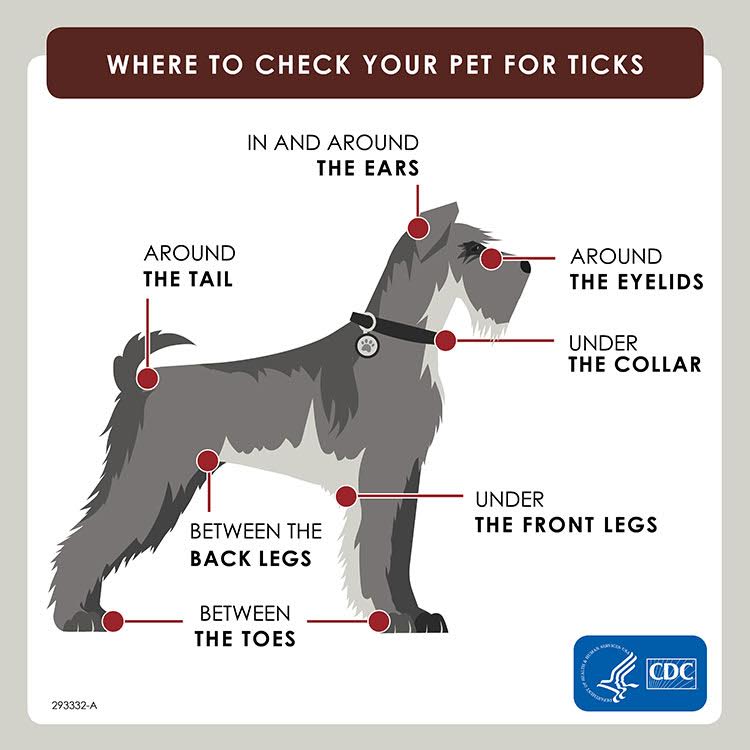
Check pets who go outdoors daily for ticks
Do daily checks to find and remove ticks crawling on or biting your pets to help keep them healthy. They may also prevent crawling ticks from getting onto your home and biting a person. Ticks crawling on or biting a pet can be hard to spot, especially for breeds with long and dark fur. Visit the Centers for Disease Control (CDC) website for tips and information for finding and removing ticks: https://www.cdc.gov/ticks/prevention/preventing-ticks-on-pets.html
Use a tick preventive product
It’s important to use a tick preventive product on your dog. Dogs are very susceptible to tick bites and tickborne diseases. Vaccines are not available for most of the tickborne diseases that dogs can get, and they don’t keep the dogs from bringing ticks into your home.
Cats are extremely sensitive to a variety of chemicals. Do not apply any tick prevention products to your cats without first asking your veterinarian!
To further reduce the chances that a tick bite will make you or your dog sick:
- If you find a tick on your pet, remove it right away.
- Reduce tick habitat in your yard.
Reducing the risk of tick exposure around homes:
- Create a tick-safe zone to reduce ticks in the yard
Simple landscaping techniques that can help reduce tick populations:
- Remove leaf litter.
- Clear tall grasses and brush around homes and at the edge of lawns.
- To restrict tick migration into recreational areas, place a 3-ft-wide barrier of wood chips or gravel between lawns and wooded areas.
- Mow the lawn frequently.
- Stack wood neatly and in a dry area (discourages rodents).
- Keep playground equipment, decks, and patios away from yard edges and trees.
- Construct fences to discourage unwelcome animals (such as deer, raccoons, and stray dogs) from entering your yard.
- Remove old furniture, mattresses, or trash from the yard that may give ticks a place to hide.
The CDC recommends applying pesticides outdoors to control ticks
Use of pesticides can reduce the number of ticks in treated areas of your yard. However, you should not rely on spraying to reduce your risk of infection.
When using pesticides, always follow label instructions. Before spraying, check with local health or agricultural officials about:
- The best time to apply pesticides in your area
- The best type of pesticides to use
- Rules and regulations regarding pesticide application on residential properties
Learn more on the CDC website: https://www.cdc.gov/ticks/prevention/index.html