
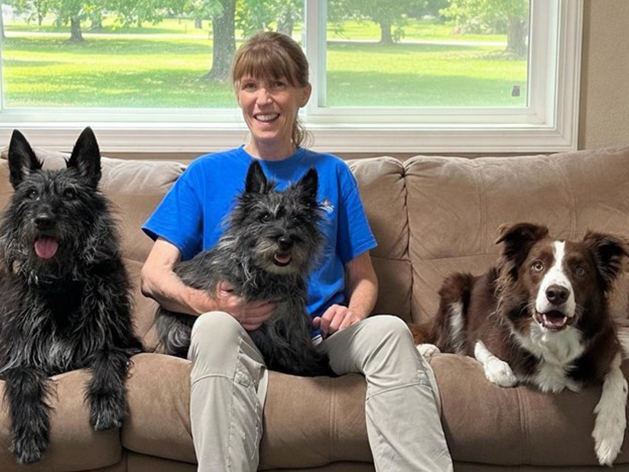
 Mary Torrano, canine behavior consultant and dog trainer. Courtesy photo
By MARLENE WILDEN
Los Alamos Daily Post
marlene@ladailypost.com
If you think your dog is “just being a dog”, local trainer Mary Torrano wants you to look again. Dogs are constantly talking to us, even if not in words.
“The real question is whether we’re listening,” she said.
“Dogs are always communicating,” Torrano explained. “We often don’t notice until they bark, growl, or whine. But by the time a dog makes noise, that’s already high up the ladder of communication. They’ve been trying to tell us something long before that.”
Torrano, who moved to Los Alamos last year, is an American Kennel Club and Fear Free Certified Professional dog trainer with a master’s degree in physiology and behavioral biology. She specializes in behavior modification for anxiety, reactivity and aggression. She also teaches classes such as Canine Good Citizen, Trick Dog and FIT Dog.
Beyond credentials, she sees her work as equal parts scientist, coach and translator — helping dogs and their humans understand one another.
The Subtle Signals
One of the biggest mistakes owners make, Torrano said, is focusing only on a dog’s tail.
“Most of us have a good intuition for what a happy dog looks like,” she said. “But where we get into trouble is misreading excitement. A wagging tail, for example, only means arousal. You have to look at the whole body: the face, ears, mouth and posture.”
Among the early signs owners often miss are a dog looking away to diffuse tension; lip licking as a sign of uncertainty; yawning, which often signals stress rather than fatigue; sniffing the ground to avoid confrontation; and scratching or shaking off as a way to reset.
On the flip side, relaxed signals are just as important. A loose, wiggly body, soft eyes, an open mouth or a playful bow often mean a dog feels safe and happy.
Listening Builds Trust
For Torrano, teaching communication is as much about coaching humans as training dogs.
“Successful trainers are interpreters,” she said. “I help people understand what their dog is saying, and then guide them in how to respond.”
That is especially important with dogs that have histories of fear or neglect. Torrano volunteers with Española Humane, where she evaluates rescue dogs and provides six free training sessions for new adopters.
“It’s a great model,” she said. “It helps people feel supported and helps the dogs succeed in their new homes.”
“We expect a lot from dogs, but what they really need is patience and understanding,” said Madeleine Zinn, behavior and training manager at Española Humane. “Go slow. Let a new dog explore their surroundings little by little. Small treats along the way aren’t just rewards; they serve as markers that show the dog they’re doing the right thing.”
Zinn added that one of the most common mistakes new owners make is misreading a dog’s tolerance as enjoyment.
“Just because a dog lets you pet them doesn’t mean they enjoy it,” Zinn said. “Sometimes they freeze because they’re too scared to move. Let them sniff — it’s their version of reading the news. It does wonders for their wellbeing.”
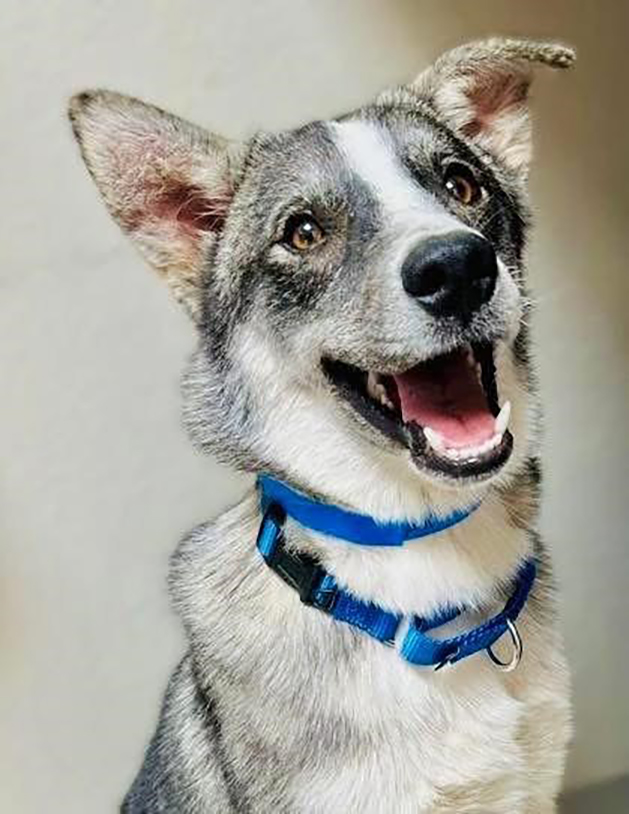 Freddy, a 1-year-old mixed-breed neutered male. Courtesy/Española Humane
 Dior, a 1-year-old mixed-breed neutered male. Courtesy/Española Humane
 Angelica, a 1-year-old mixed-breed spayed female. Courtesy/Española Humane
Adopting With Eyes Wide Open
Shelter adoptions can be tricky when people misinterpret body language. A dog showing “whale eye” — the whites of the eyes exposed while turning away — may appear sad, but in fact the dog is terrified and asking for space.
“Because we connect to dogs through eye contact and dopamine, we see a sad-eyed dog and our hearts melt,” Torrano said. “But that’s not necessarily an indication of a good match. People fall in love first and ask questions later. It’s important to go in with both your heart and your head.”
Paul Sena, manager of the Los Alamos County Animal Shelter, said his team helps adopters look past the obvious signals.
“Really, dogs are like humans. You have to take time to learn their personality, not just pick them in two seconds because they ‘look cute,’” he said.
Sena said he will not do behavioral assessments the minute a dog walks in.
“I wait until they’ve calmed down, because I’m not going to set them up to fail when their whole world just changed,” he said.
His staff guides adopters in looking at the whole picture.
“Is the dog hiding in the back of the kennel or charging up to say hello? Shaking with fear or bouncing with energy? Rolling over nervously or locking eyes to show trust?” Sena said. “Often, what looks like a behavioral problem is really just situational stress. Paying attention to these details helps people tell the difference between a dog that’s excited and one that’s truly fearful.”
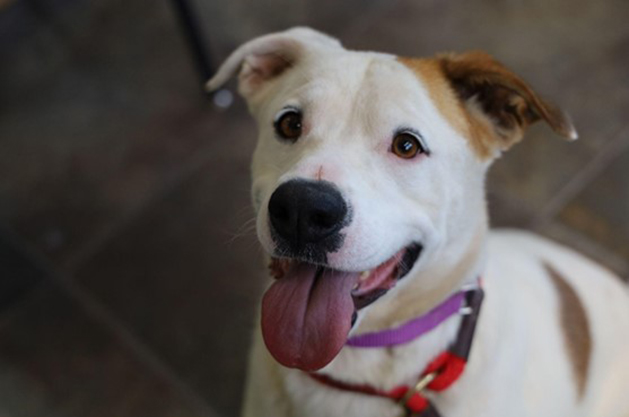 Jinx, a 3-year-old mixed-breed spayed female. Courtesy/LAC
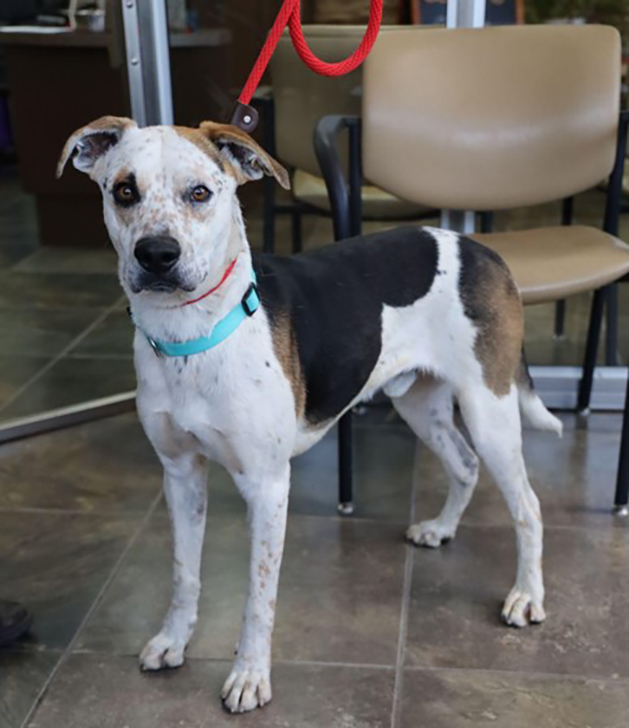 Tato, a 1-year-old mixed-breed neutered male. Courtesy/LAC
A Conversation, Not Commands
One of Torrano’s favorite ways to build rapport is by acknowledging dogs when they “check in”.
“If your dog looks at you, just say ‘yes’ or ‘good dog,’” she said. “It’s like saying, ‘Thanks for being here with me.’ That simple act builds communication.”
She also encourages mirroring — relaxing your own body, breathing slowly, even angling your body sideways when meeting a nervous dog.
“Dogs read us better than we read ourselves,” she said. “If we stiffen up, they stiffen up. If we soften, they soften.”
Not every signal means the same thing in every situation. A yawn might mean fatigue one moment, or nervousness the next. A bark might be excitement or fear. Even lunging, Torrano said, can stem from different motivations.
“Barking and lunging on leash might look like aggression, but often it’s frustration,” she said. “The dog wants to greet another dog but doesn’t know how. The job of their guardian is to help them feel safe. When dogs feel safe, their behavior starts to change.”
It is a shift in mindset. Instead of seeing training as giving commands, Torrano encourages owners to see it as a dialogue.
“Predict and prevent,” she said. “If you can notice the small cues early, you can prevent bigger problems down the road. And in the process, you build confidence.”
Not Alone
For Torrano, the work is as much about supporting people as training dogs.
“These dogs aren’t broken,” she said. “And you’re not alone. I got into this because I had a very reactive dog myself, and I cried every day. I know how hard it feels. But things can get better — often a lot better than you think.”
Torrano posts her monthly training schedule, including group walks and classes, on her Facebook page and on the “Los Alamos Dog Owners” community page. She offers private sessions, rescue dog support packages and classes for puppies through advanced levels.
“At the end of the day,” she said, “dogs are family animals. They want to work with us, not against us. We just have to learn to listen.”
Sena added, “Habits are easy to build. Once a dog finds a home where they’re truly understood, they can quickly settle into a positive routine. Shelter dogs often turn out to be the best dogs because after all that stress, they know what it means to be loved.”
For more information, contact Española Humane, 108 N. Riverside Drive in Española, at 505.753.8662 or espanolahumane.org.
The Los Alamos County Animal Shelter, 226 East Road, can be reached at 505.662.8176 or losalamosnm.us/animalshelter.