
 Scene from visit to Utah’s Cataract Canyon. Photo by Debbie Stone
 Scene from visit to Utah’s Cataract Canyon. Photo by Debbie Stone
By DEBBIE STONE
Santa Fe
For the Los Alamos Daily Post
The sign on the left of the river warned of the rapids to come. We were as prepared as we could be, having heard about the intense Class 4+ whitewater that we would encounter after reaching the confluence of the Colorado and Green Rivers in Utah’s Cataract Canyon. The water level was high, which meant the rapids would be fast and turbulent … and exciting!
The wave train started with some fun rapids, then it was time to “buckle up” for the mile-long siege, where the rapids come in quick succession, with frothing rocks, eddies, holes and other boat-chomping features to avoid. It was a wild rollercoaster that became even wilder once we encountered the infamous trio of Big Drop rapids. Here the river drops over thirty feet in less than three-quarters of a mile.
After successfully accomplishing Big Drop 1, all the boats pulled over so the guides could scout the next two behemoths. We gaped at the massive rock in the center of Big Drop 2, which is known as Little Niagara, and then our eyes got really big as we saw Big Drop 3, also known as Satan’s Gut.
This rapid looked monstrous with a ginormous hole sitting on the bottom. It quickly became apparent how it got its name. Back in the boat, we could tell our guide Tony was amped up, but also nervous, as he (and we) understood that one false move would most likely cause the boat to flip, dumping us into this monstrosity. We watched as the other boats took their turns, all making it through without issue.
Then we got into position. I was white knuckling it while trying to remember the instructions to follow if we fell out of the raft. Sitting at the front, I had an up-close and personal view of the churning waves and tremendous wall of water barreling at us. It proceeded to wallop and drench us, as if this beast wanted to swallow us whole. Tony navigated textbook style, threading the raft through this insane mass and following the exact path needed to get us through safely. The sighs of relief were audible, but the gleeful shouts that followed were riotous, as everyone was stoked!
Cataract Canyon is a section of the Colorado River between Moab, above Lake Powell, and the Grand Canyon. The river flows through the heart of Canyonlands National Park, the largest national park in the state.
Established in 1964, the park spans a whopping 227,598 acres, boasting a wilderness of countless canyons, mesas, sandstone pillars, arches and buttes. It’s divided into four districts: Island in the Sky, The Needles, the Maze and the rivers themselves.
Rafting Cataract Canyon is often on the must-run list for many boaters, primarily because of its fifteen mile-long section of thrilling rapids that can rival the big ones found within the Grand Canyon. Adrenaline hungry river runners are attracted to this passage, which is viewed as one of the most challenging sections of whitewater in the country, even for veterans who have done it dozens of times. They say that each run is different, due to the extreme water fluctuations and the obstacles that can appear or disappear depending on water levels.
In addition to superb whitewater, those who run “Cat” are rewarded with a sublime landscape and fascinating geology. The canyon was carved by the Colorado River with the processes of deposition and erosion taking place over eons of years. It contains an assortment of strange and out-of-this-world formations that appear as the work of a giant chisel. And its lofty, sheer cliffs stretch upwards two thousand feet, rising to pierce the sky. From the vantage point of being down in the river, these towering, craggy walls look formidable and have a humbling effect on humans.
The Powell Expedition was the first organized exploration to travel the entire length of the canyon back in 1869. It was helmed by John Wesley Powell, a one-armed Civil War vet. Powell and his crew launched their wooden boats near Green River, Wyoming and made the trip down the waterway to its confluence with the Colorado River at the top of the canyon.
Reportedly, the mighty rapids of Cat terrified the group and they subsequently portaged their boats around each one. Powell is said to have looked back at the canyon and named it Cataract, meaning “A type of waterfall with a large, single vertical drop.”
Excited to explore this legendary place, I opted to do a four-day Cataract Canyon trip with OARS. Founded in 1969, the company has a lengthy history of operating raft and multisport trips throughout the American West and Southwest, as well as internationally. OARS’ stellar reputation is well-known in the industry and it takes pride in its highly experienced and customer-focused guides and staff. The company also puts safety first and invests in top-of-the-line equipment.
Our group of 21 represented varying ages from young adults to seniors, and we came from diverse walks of life, while hailing from all around the country. Despite these differences, we shared a genuine appreciation and respect for nature, and an enthusiasm for outdoor adventure.
For most, it took a day to relax into what’s fondly known as “river time.” The realization that you’re disconnected from technology and can simply put your busy life aside, is such a rare sensation and one to treasure.
There were six OARS guides accompanying us: Adam – trip leader, Pete, Tony, Nate, Stevie and Cheyenne. It was obvious by the way this group worked as a cohesive team, that they knew one another and enjoyed each other’s company. They anticipated needs, stepped in to assist and always made themselves available to everyone.
We had five boats to accommodate our group: two large Snouts – pontoon style and motor operated – two oared, wooden dories and one inflatable oared raft. Throughout the trip, people could choose the boat they wanted to ride in and have the opportunity to try the different crafts to experience the various types of rides.
The Snouts, being big and motorized, offered a smoother ride, especially through the rapids. And as you’re sitting up high, you can get a good perspective of the water. The dories, which are flat bottom boats with high sides and curved bows, are classic crafts, known for their speed and elegance. They ride the waves and have a rollicking and rolling sensation with some airborne movement. The raft, on the other hand, plows through the waves and you get smacked by them.
You’re closely connected to the water and see and feel its full force – my kind of ride!
OARS four-day trip spans roughly a hundred miles. It involves using motorized crafts for the first two days until you reach the confluence, as the water up till this point is flat. With just four days, motoring is an efficient and quicker way to get to the confluence versus using an oared craft. The dories and raft attach themselves to the Snouts so as to move together. Then, at the confluence, they separate to take on the whitewater individually. Being on the flat water allows suspense and anticipation to build, which makes the rapids climax all the sweeter!
While on the Snouts, you can marvel at your surroundings in a leisurely fashion and appreciate the peace and tranquility of this cherished place. It’s an astonishingly scenic journey. The rocks are in every shade of red that contrast with the dazzling blue sky and you’ll see plenty of interesting formations, as well as the cliff where the famous ending scene of the movie, “Thelma & Louise” was filmed. The location is affectionately known as “Thelma & Louise Point.”
Though you’re on the river from morning to late afternoon, there are opportunities to explore on land, too. One day, the guides took us on a trail that led up to a site with Native American ruins, pictographs and a granary. Another time, we did the Loop hike up and over a steep canyon wall.
Our efforts were rewarded at the top with a dramatic view of a horseshoe formation that the river created through convoluted twists and turns.
With all the activity and fresh air, you’ll need sustenance. Just know you won’t go hungry! Each meal is delicious and plentiful, and you’ll wonder how the guides manage to concoct the array of tasty dishes in their small outdoor kitchen.
The guides wore many hats on the trip. In addition to being skilled boatmen and women, who have had to memorize every bend in the rock walls and every twist and kink in the river, along with knowing their way around a kitchen, they also served as knowledgeable resources regarding the geology, history and conservation of the area. Some were even amateur astronomers and read the night sky for us. Plus, several were musically inclined, providing some much-appreciated entertainment in the evening.
On the final day of the trip, we got back on the boats to wind through the last of the miles of the canyon before motoring the “impounded” waters of Lake Powell, held back by Glen Canyon Dam. After one last lunch, we eventually reached the take-out spot at Hite Crossing. We were then shuttled to an airstrip for our scenic flight back to Moab. This was the icing on the cake, as from our perches high above, we got a birds-eye perspective of the mesmerizing landscape of Canyonlands. A great way to end four glorious and memorable days!
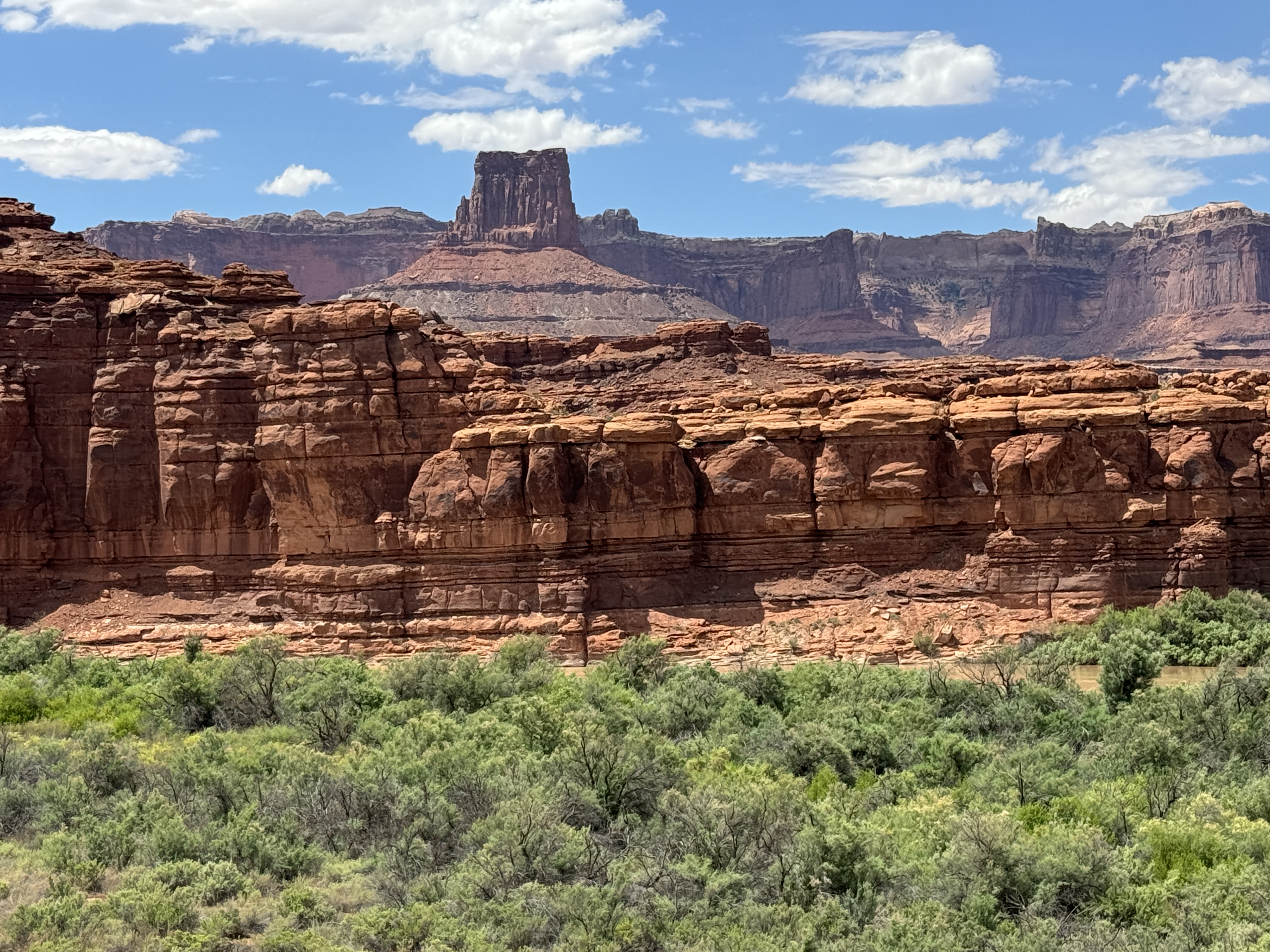 Scene from visit to Utah’s Cataract Canyon. Photo by Debbie Stone
 Scene from visit to Utah’s Cataract Canyon. Photo by Debbie Stone
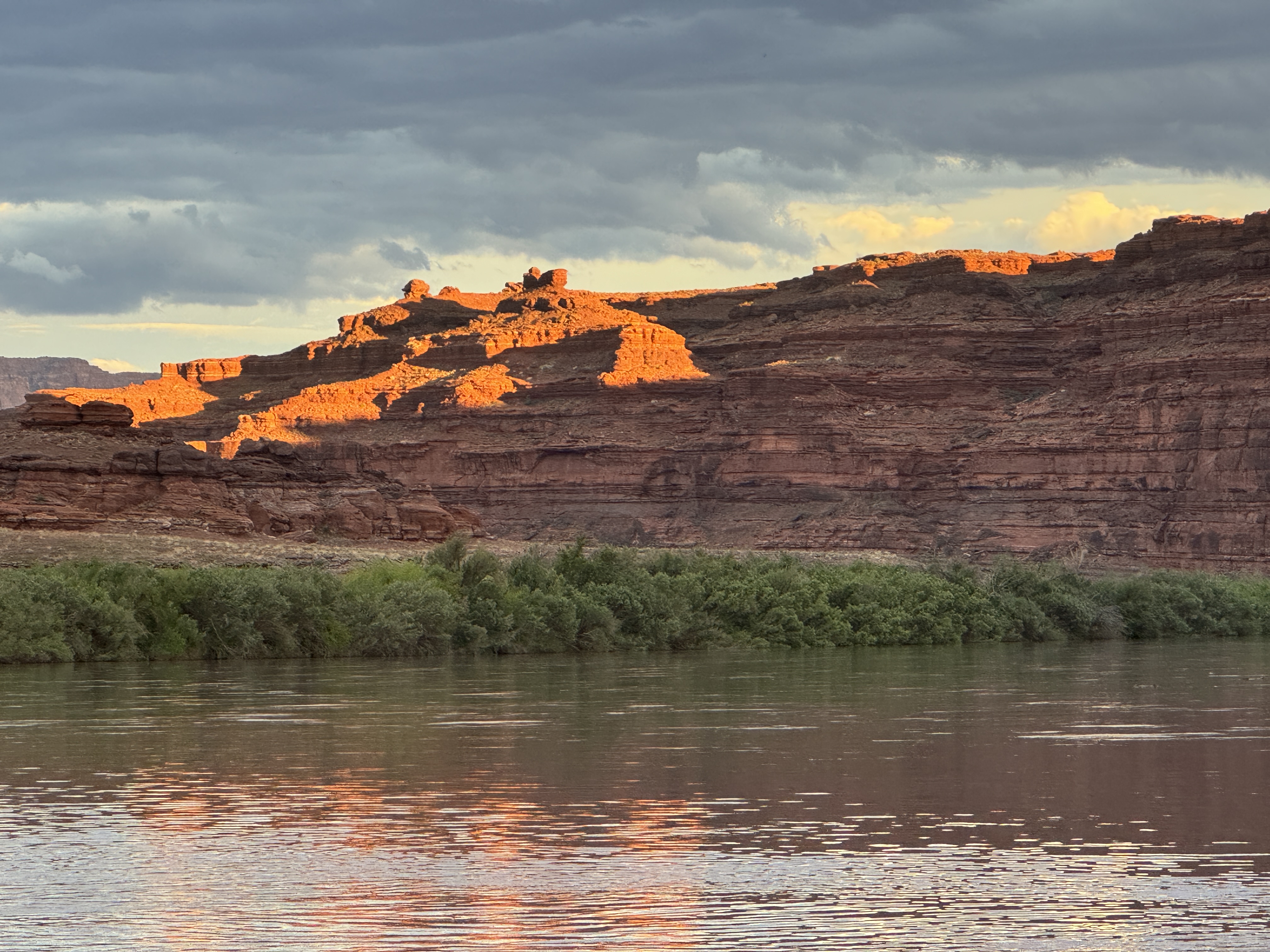 Scene from visit to Utah’s Cataract Canyon. Photo by Debbie Stone