
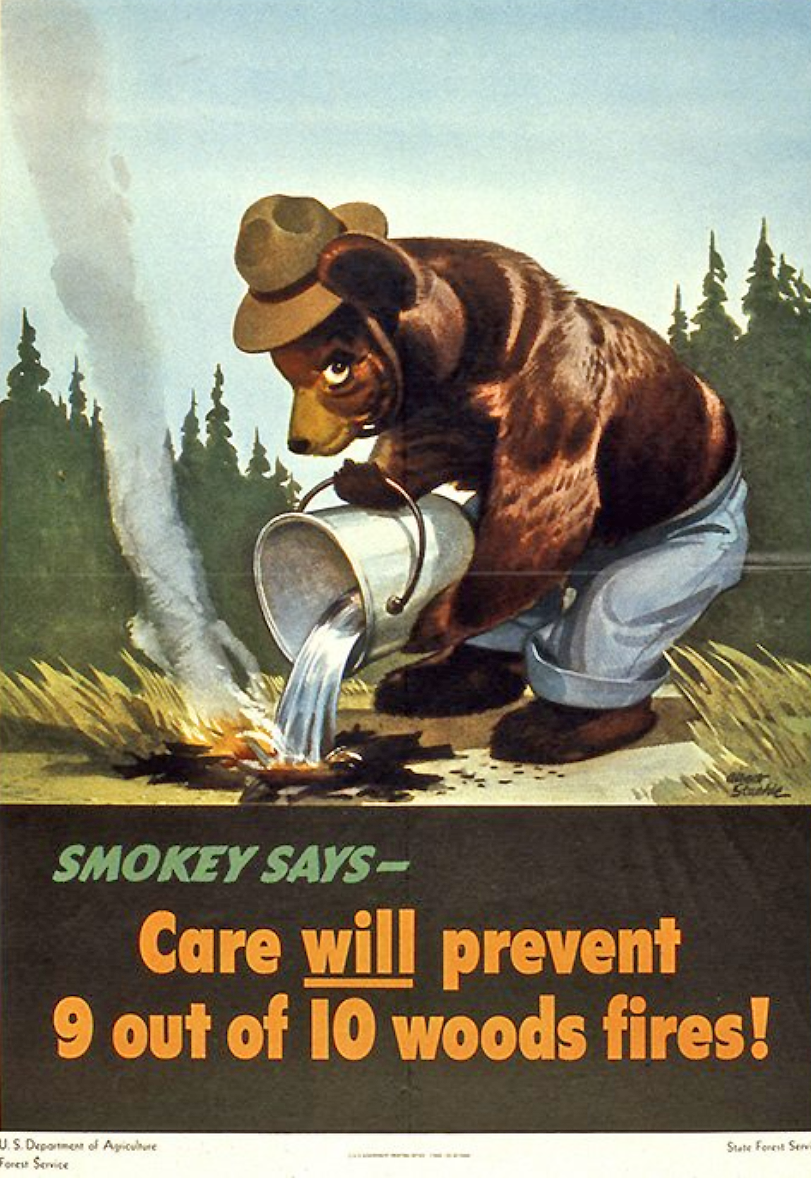
 The original Smokey Bear poster. Fire safety has been the goal all along. Courtesy/USDA Forest Service
USDA News:
At the U.S. Department of Agriculture’s Forest Service, wildfire prevention is a big priority. There’s no better ambassador of that essential message than everyone’s favorite wildfire prevention bear, Smokey.
Aug. 9 was Smokey’s 81st birthday, and as he enters his 9th decade of wildfire prevention activism, take a look back at where it all started.
80 plus years of wildfire messaging
First appearing on a wildfire prevention poster in August of 1944, Smokey Bear quickly became an iconic image to help the public understand the importance of preventing wildfire. That image would soon get a living counterpart in the form of a black bear with a compelling story.
In 1950, a wildfire in New Mexico orphaned a black bear cub. A New Mexico game warden, taking pity on the cub, took him home and helped get him medical attention. Later, he offered the cub to the Forest Service with the condition that the bear be dedicated to wildfire prevention and conservation.
The Forest Service accepted both the cub and the condition, and the newest member of the Forest Service would live out the rest of his days at the Smithsonian’s National Zoo. While there, the Forest Service decided there was no better name to give him than that of Smokey, making the bear a living embodiment of the importance of wildfire prevention.
Even after the bear passed away, the personal connection many people felt with the icon of Smokey helped the original goal of educating Americans about the dangers and risks of wildfire, as well as their personal responsibility to help prevent unplanned human-caused wildfires.
Only You Can Prevent Wildfires
You’ve probably heard Smokey’s famous slogan: “Only you can prevent wildfires.” But what does that actually mean?
Let’s start with what a wildfire is. Wildfires are any uncontrolled fires that burn in forests and other wildlands such as shrubs or grass communities. They can be natural or human-caused.
Nearly nine out of ten wildfires nationwide are human-caused. These wildfires can then burn out of control, putting people’s homes, businesses and even their lives in danger. Wildland firefighters respond to these fires, placing themselves in harm’s way to protect others.
So how can you help? Be fire aware. Here are some quick ways you can do your part:
Campfires:
There’s nothing quite like enjoying the great outdoors with a roaring fire, gooey s’mores and a night sky full of stars. But that wonderful campfire is also a big responsibility. Smokey needs your help preventing wildfires so more families like yours can enjoy this experience in beautiful forests, other wildlands, and even your backyard, for years to come. That’s why it’s important to learn how to be safe with your campfire:
- Pick out a safe spot.
- Prepare your pit.
- Properly build the campfire.
- Maintain the fire and extinguish before you leave.
- Never leave a campfire without using the “Drown-Stir-Drown-Feel” technique. Your fire should be cold to the touch before you leave.
Before doing activities that might risk a wildfire, make sure to check the current fire danger risk level in your area. If it’s too high, reschedule!
Vehicle safety & lawncare:
It’s important for the safety of your home and nearby wildlands to learn how to use and maintain outdoor equipment and vehicles in ways that prevent sparking a wildfire. Remember to always keep a cell phone nearby and call 911 immediately in case of fire. Some tips on avoiding wildfire when driving or operating machinery:
- Be sure chains and other metal parts aren’t dragging from your vehicle-they throw sparks.
- Check your tire pressure. Driving on an exposed wheel rim can cause sparks.
- Be careful driving through or parking on dry grass or brush. Hot exhaust pipes can start the grass on fire. You may not even notice the fire until it’s too late.
- Never let your brake pads wear too thin; metal on metal makes sparks.
- Sparks from lawnmowers and power equipment DO start wildfires. Be careful on hot, dry days, and be sure to get your equipment checked regularly.
- Mow before 10 a.m., but never when it’s windy or excessively dry. Remember that lawn mowers are designed to mow lawns, not weeds or dry grass. Metal lawnmower blades striking rocks can create sparks and start fires.
- When doing any yardwork or work outdoors with mechanical equipment, keep a shovel and water nearby.
Backyard debris burning:
- We know sometimes it’s appealing to burn debris like leftover wood in your backyard. As impressive as that bonfire might be, it can also be very dangerous. Be sure to learn before you burn!
- Check the conditions: Don’t burn when it’s windy or when vegetation is very dry.
- Check local regulations: In your area, a permit may be required.
- Choose a safe spot: Burn areas should be away from power lines and surrounded by at least 10 feet of gravel or dirt.
These are all things YOU can and should do to avoid causing a wildfire. That might just be the best birthday present for Smokey. 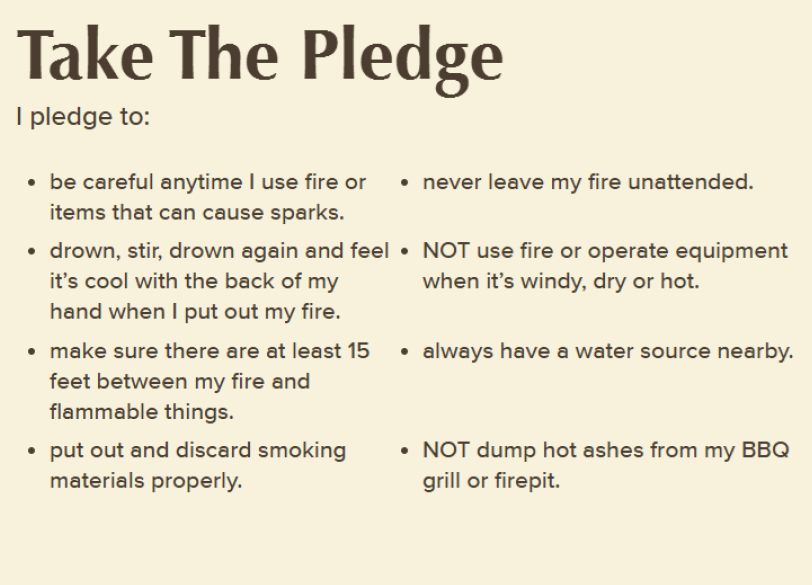
Celebrate with a pledge
Speaking of birthday presents, how can we celebrate our favorite Campaign hat-wearing bear? Material gifts may lose their importance over time, so instead, why not consider taking the pledge to prevent wildfires?
So, as we reflect on Smokey’s 80th year and welcome his 81st, the Forest Service would like to say one last big Happy 81st Birthday to Smokey Bear! Here’s to many more!