
 By SHERRY ROBINSON
All She Wrote
© 2024 New Mexico News Services
In July 1975, I was stringing for the Gallup Independent from the Navajo Reservation, when they asked me to work temporarily in Grants. The Independent had acquired a small newspaper there, but their hire for that job didn’t want to live in a uranium boom town and fled. They were desperate. It was a Friday, and deadline was Monday.
“Go to Grants and get anything you can,” the assistant editor said.
I’d never heard of the place but figured the best way to fill space was to take pictures. I wound up at Acoma Pueblo on a feast day. As I stood on the edge of the mesa taking pictures, a big plane buzzed the ancient village, which seemed pretty rude. I got off four shots. In the darkroom, the plane’s numbers were discernible in one of my prints.
The story ran on July 31. It turned into a federal investigation, the pilot of the Navy Jet Crusader got in trouble, and I got a job offer. And that, kids, is how it all started.
I’m celebrating 50 years of journalism in New Mexico. Come along with me for some memories.
Grants in 1975 was overrun with miners and drillers. Housing was almost nonexistent, and so was day care. My three-year-old son and I lived in the newspaper office, a trailer, and I took him with me on most stories. He was a great kid, but when his good behavior ran thin the promise of an ice cream cone bought me time.
For a young reporter, Grants was one busy, happening place. The mines put money in people’s pockets, and those dollars circulated through town. That was my first lesson in economics.
But the mines wouldn’t let me in to do a story. Miners still believed women underground were bad luck. As a baby feminist, I pestered them until I got a tour. I tried not to be a pansy as we dropped deep into the earth, tramped long tunnels and climbed a 50-foot raise (ladder) to the next level.
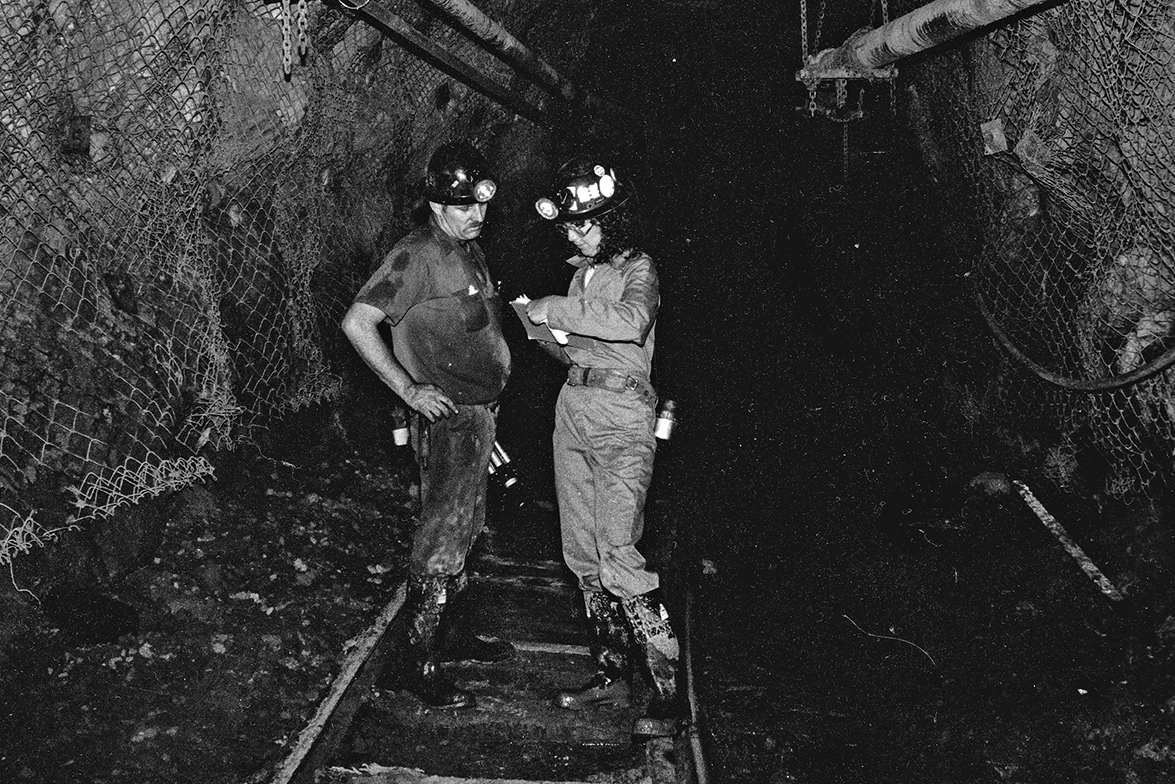 Sherry Robinson in the Gulf mine near Grants in the 1980s. Courtesy photo
It was the first of many mine stories – uranium, coal and potash, underground and open pit. Potash miners, I learned, didn’t fear lung disease because they basically work in a salt mine. They joked that the biggest hazard was dry skin.
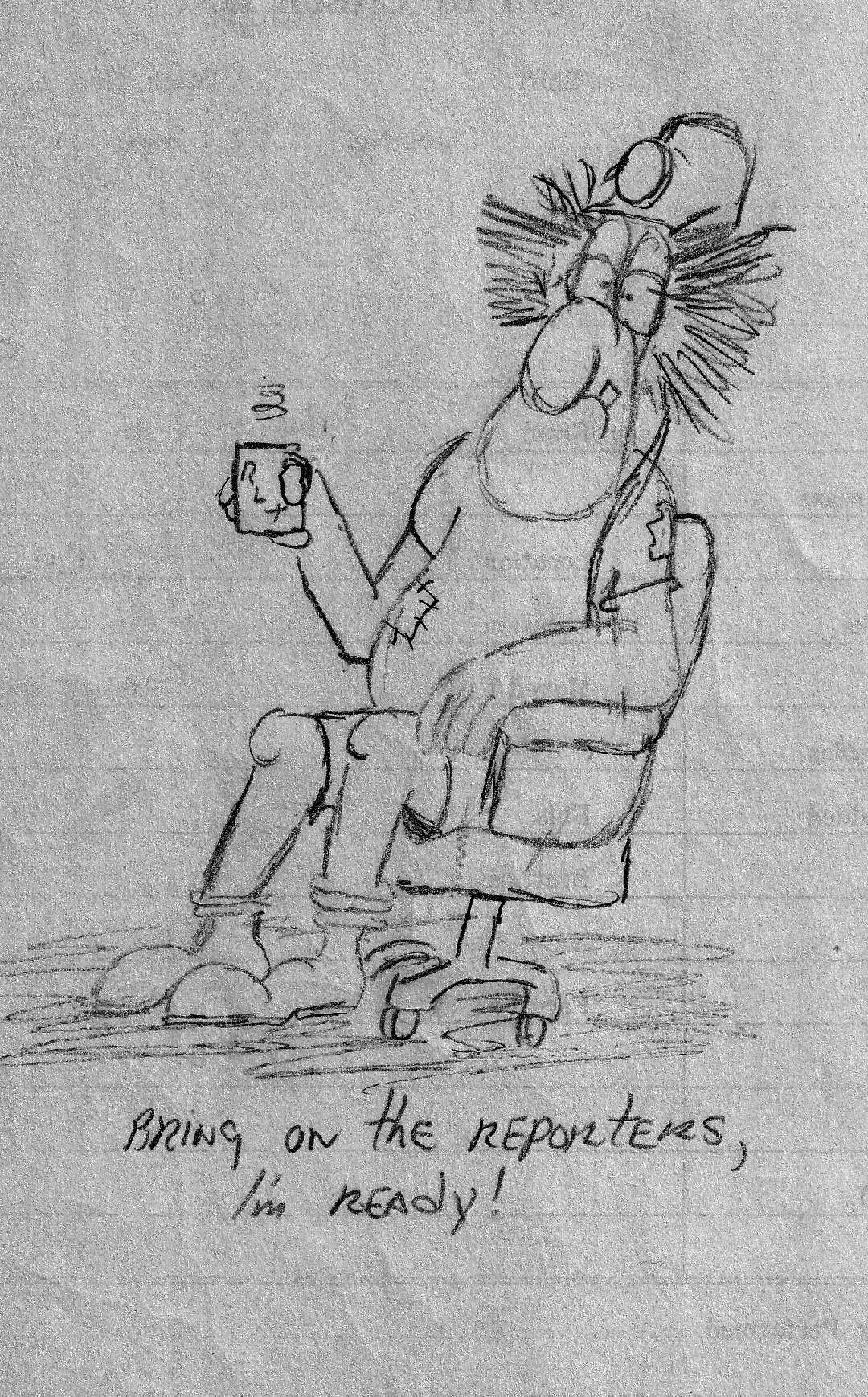 A cartoon drawn by a Carlsbad potash miner during Sherry Robinson’s visit. Courtesy image
Over the years, I worked for large and small newspapers, specializing in business. I preferred heavy industry.
One editor steered me toward banking, probably because nobody else wanted to cover it. I was schooled by the best. Bank presidents Norm Corzine and George Clark patiently explained their business. Banking, they said, should be boring. When banking became exciting, it was never a good thing.
This was just before a handful of bank failures in the state. In Hobbs, I was hiding outside a bank with a reporter from the News Sun in 1985 when feds raided and closed it down.
I embraced another beat nobody wanted – insurance. Wearing that hat I covered the aftermath of the Cerro Grande wildfire in Los Alamos in 2000. In that town people had insurance, and FEMA was responsive and efficient – a far cry from what we see now in Mora and Lincoln counties. I learned that boring, eyeball-glazing insurance can get people back on their feet after a disaster.
More recently I covered hospitals – specifically hospital mismanagement. I will never forget a Gallup protest by doctors and healthcare professionals against management just as COVID-19 struck hard on the reservations. Because protective gear was scarce, I showed up in a hand-made mask to talk to participants. The story hogged my time and interrupted my sleep for several years.
On the lighter side, one Roswell story was a real treat. At Mr. Treat Donut Shop in 1985 you could drink coffee (48 cents a cup), eat donuts, and enjoy excellent, toe-tapping music all night long from the house band and guest musicians. Owner Mike O’Leary proved that good times don’t require liquor.
And there was the breathtaking raft trip I took in 1995 with Los Rios River Runners of Taos. Cisco Guevara, a local legend unmatched in his river guiding experience, told me, “The customer is not always right. In a sense, their life is in my hands.”
Another labor of love was writing about ranchers. I cherish my visit to the storied Bell Ranch, a piece of Marlboro country in northeastern New Mexico. Eating lunch with the Bell cowboys was, for this city girl, like meeting Elvis. The late Linda Davis, of the CS Ranch near Cimarron, is still my hero. And I was lucky to meet Giles Lee, still working his Swamp Angel Ranch near Lovington in his 90s.
I’m not out of memories, but I am out of space. I’m grateful to my employers, column subscribers, and the many people I’ve interviewed. Like Giles Lee, I hope to be in the saddle many more years.