
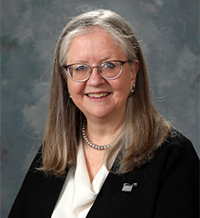
 Sen. Natalie Figueroa
By CORMAC DODD
The Santa Fe New Mexican
Sen. George Muñoz said he opted to seek election to the Legislature years ago because he wanted to “serve”.
“Now we are going to have people running for a paycheck, and that’s going to be a completely different scenario,” Muñoz, who chairs the influential Senate Finance Committee, said at a meeting of the committee Tuesday afternoon.
The committee deadlocked in a 5-5 vote on an amendment to the New Mexico constitution that would provide salaries for legislators, a plan its supporters maintain would make it easier for a more diverse group of people to run for office.
Two Democrats — Muñoz, D-Gallup, and Sen. Pete Campos, D-Las Vegas — joined Republicans in voting against Senate Joint Resolution 1, meaning the proposal did not pass the committee and could be dead. As it stands, lawmakers are not paid an annual salary — the only state in the country where that is the case — but do receive retirement benefits and a per diem for expenses.
“Let me ask this: If there is a downturn in the economy and this is enacted and salaries are whatever they are, where do you think [is] the first place we’re going to look to cut numbers?” Muñoz asked.
Senate Majority Leader Peter Wirth, D-Santa Fe, a sponsor of the resolution, noted his wife, Santa Fe City Councilor Carol Romero-Wirth, receives a salary to serve in that capacity.
“Doing something parallel, I think, would open up this process to a whole range of different voices and different representation, which is something that would really help the legislative process,” Wirth said.
The resolution, introduced by Sen. Natalie Figueroa, D-Albuquerque, would ask voters to approve an amendment to the state constitution creating an independent citizen commission responsible for establishing legislative salaries. The proposed amendment would, if it passed, go before voters statewide in the 2028 general election, meaning the next three legislative sessions would be used to allow lawmakers time to craft “enabling legislation” to iron out the specifics of the commission.
Policies approved last year allow each of New Mexico’s 112 lawmakers to hire a legislative aide. This session, some legislators are focused on what they see as the next step in modernizing the Legislature — a salary. Several lawmakers have stepped down over the years due to financial constraints, including Sen. Linda Trujillo, D-Santa Fe, who resigned from her House post in July of 2021. She was elected to the Senate in November.
“Most of you know my lived experience is that I had to leave five minutes early from my second term of serving in the House. The reason was financial in nature,” said Trujillo, a member of the Senate Finance Committee.
Most Democrats on the committee spoke in support of the amendment.
“It opens the door for really anybody to serve in the Legislature,” said Sen. Michael Padilla, D-Albuquerque. “Today I just firmly believe that 80-85%, 90-95% of the people that we all interact with could probably never serve in these roles. So as a result, the Legislature isn’t always as representative of New Mexico.”
The Republicans expressed concerns that the specifics of the enabling legislation, which would establish the boundaries related to membership of the salary-setting commission, has not been worked out yet. Sen. Pat Woods, R-Grady, proposed an amendment that stated the “aggregate amount” of legislator salaries could not exceed four-tenths of 1% of oil and gas severance tax revenues. That would mean, roughly, a maximum salary of $82,800 per member, according to Woods.
“Oil and gas is bringing in a ton of money. What happens when that’s gone?” asked Sen. Steve Lanier, R-Aztec.
Woods’ amendment was tabled on a 6-3 vote.
“I actually think that’s way too high for salaries for a part-time legislature,” said Katy Duhigg, D-Albuquerque, a co-sponsor of the resolution. “Even more so, one of the key tenets of SJR 1 is that we are removing self-dealing from the equation. We are establishing this independent citizen commission.”