
 Gov. Michelle Lujan Grisham, left center, sits with Lt. Gov. Howie Morales, left, Benjamin Baker, public safety adviser, right center, and House Speaker Javier Martínez, far right, along with other state lawmakers, Cabinet secretaries, law enforcement officials and community members, to sign public safety and behavioral health bills into law Thursday, Feb. 27, 2025. Photo by Michael G. Seamans/The New Mexican
By Margaret O’Hara
The Santa Fe New Mexican
It’s rare for New Mexico Supreme Court Chief Justice David Thomson to make an appearance at the Roundhouse.
“I am not normally part of this process,” Thomson said. “As a matter of fact, I try to avoid it on an active basis.”
But he made an exception on Thursday to join Gov. Michelle Lujan Grisham as she signed three pieces legislation — a package of public safety proposals plus two bills aimed at expanding access to behavioral health care through a regionalized process — into law.
Thursday’s bill signing marked the first pieces of legislation to secure the governor’s signature this session, consistent with lawmakers’ pledge to expedite proposals on crime and behavioral health.
“My message today is very simple, New Mexico: Promises made, promises kept,” House Speaker Javier Martínez, D-Albuquerque, said during the bill-signing ceremony.
However, both Lujan Grisham and legislative leaders framed the signing of bills as an initial step — not a final step — toward a safer, healthier New Mexico.
“Gov. Lujan Grisham, you asked us for action,” said Senate Majority Leader Peter Wirth, D-Santa Fe. “I’d say this is step one, and it’s a big step forward for New Mexico.”
Senate Bill 1 establishes a trust fund to spin off money annually to spend on behavioral health initiatives, while Senate Bill 3 sets up a system to draft region-specific plans to address local behavioral health needs with coordination by the Administrative Office of the Courts.
Thomson said both the state Supreme Court and the Administrative Office of the Courts are “100%” committed to assisting in this process.
“We’re going to play our role in the judiciary to carry that forward,” the chief justice said.
The intervening bill — Senate Bill 2 — would have provided $140 million in one-time appropriations on behavioral health, but those dollars have already been incorporated into the state’s budget proposal, Wirth said.
SB 1 and 3 secured broad bipartisan support, with Senate Minority Floor Leader Bill Sharer, R-Farmington, and Senate Minority Whip Pat Woods, R-Broadview, each co-sponsoring one of the bills.
“They put the politics aside. There’s pressures to make everything political, but they were willing and they realized the importance of what we were doing,” Wirth said.
Lujan Grisham also signed the latest version of House Bill 8, an omnibus public safety bill that reforms criminal competency laws; prohibits devices to transform semiautomatic to fully automatic weapon; and cracks down on shooting threats, fentanyl trafficking and drunken driving.
The “quarterback” behind HB 8, the governor said, was Rep. Christine Chandler, D-Los Alamos, the chair of the House Judiciary Committee. Chandler noted the bill was the result of hundreds of hours of vetting plus conversations with experts, advocates and law enforcement.
Chandler said HB 8 is closely related to the state’s plan to expand behavioral health care services and spending.
“The two must work together,” she said.
Though SB 1, SB 3 and HB 8 now have the governor’s signature, lawmakers and Lujan Grisham agreed they have more work to do.
Democratic lawmakers on Saturday outlined plans to closely focus on reforming the Children, Youth and Families Department in the back half of this year’s legislative session.
Several CYFD-related bills are already working their way through the process, including proposals to vest oversight of the department in an independent commission, improve the agency’s data collection, increase oversight and strengthen plans of care for newborns exposed to drugs.
The governor said she has “no doubt” CYFD reforms will make it to her desk for approval this session.
Lujan Grisham cited a few more pieces of legislation she’d like to see make it across the finish line.
In particular, she backed House Bill 134, a proposal to update New Mexico’s Delinquency Act, which dictates the treatment of children under 18 accused of crimes. House Bill 8’s lack of action on juvenile crime was a sticking point for many Republican lawmakers, who argued the “public safety package” didn’t go far enough.
“Juvenile justice needs a lot of work, and I really hope this gets its fair set of hearings and debates,” Lujan Grisham said.
She added she wants increased penalties for felons in possession of a firearm, among other proposals to curb gun violence. And she’d like to see reforms to the state’s system for pretrial detention.
With a little less than a month left in the session, Lujan Grisham said she’s confident in the Legislature’s ability to get the jobs done.
“I’ve seen these bodies in an hour figure out very complicated issues. There’s a lot more to be done,” she said.
The governor added, “My money’s on this legislative body, every single time.”
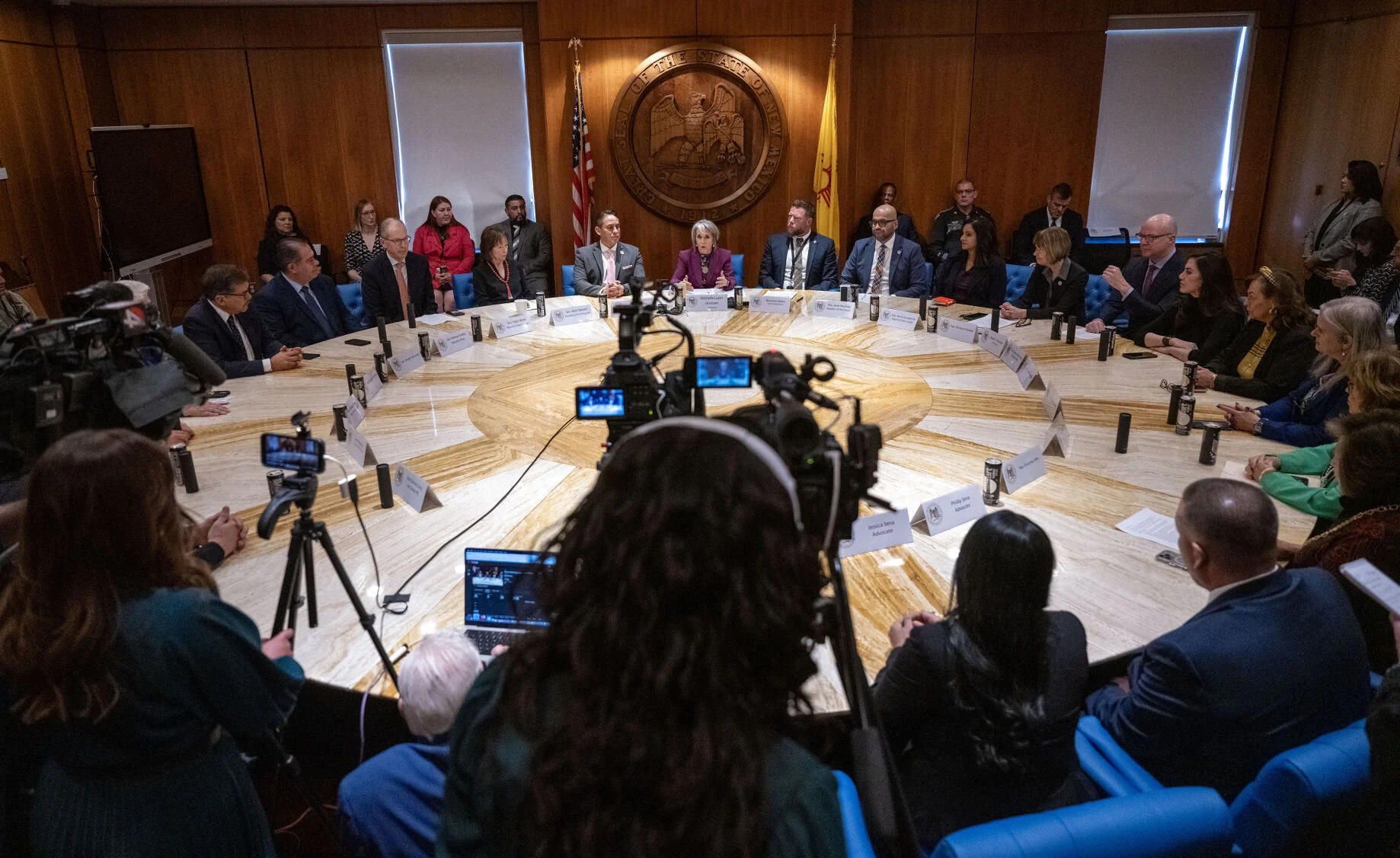 Gov. Michelle Lujan Grisham, top center, joined by state lawmakers, Cabinet secretaries, law enforcement officials and community members, addresses the room before signing public safety and behavioral health bills into law Thursday, Feb. 27, 2025. Photo by Michael G. Seamans/The New Mexican
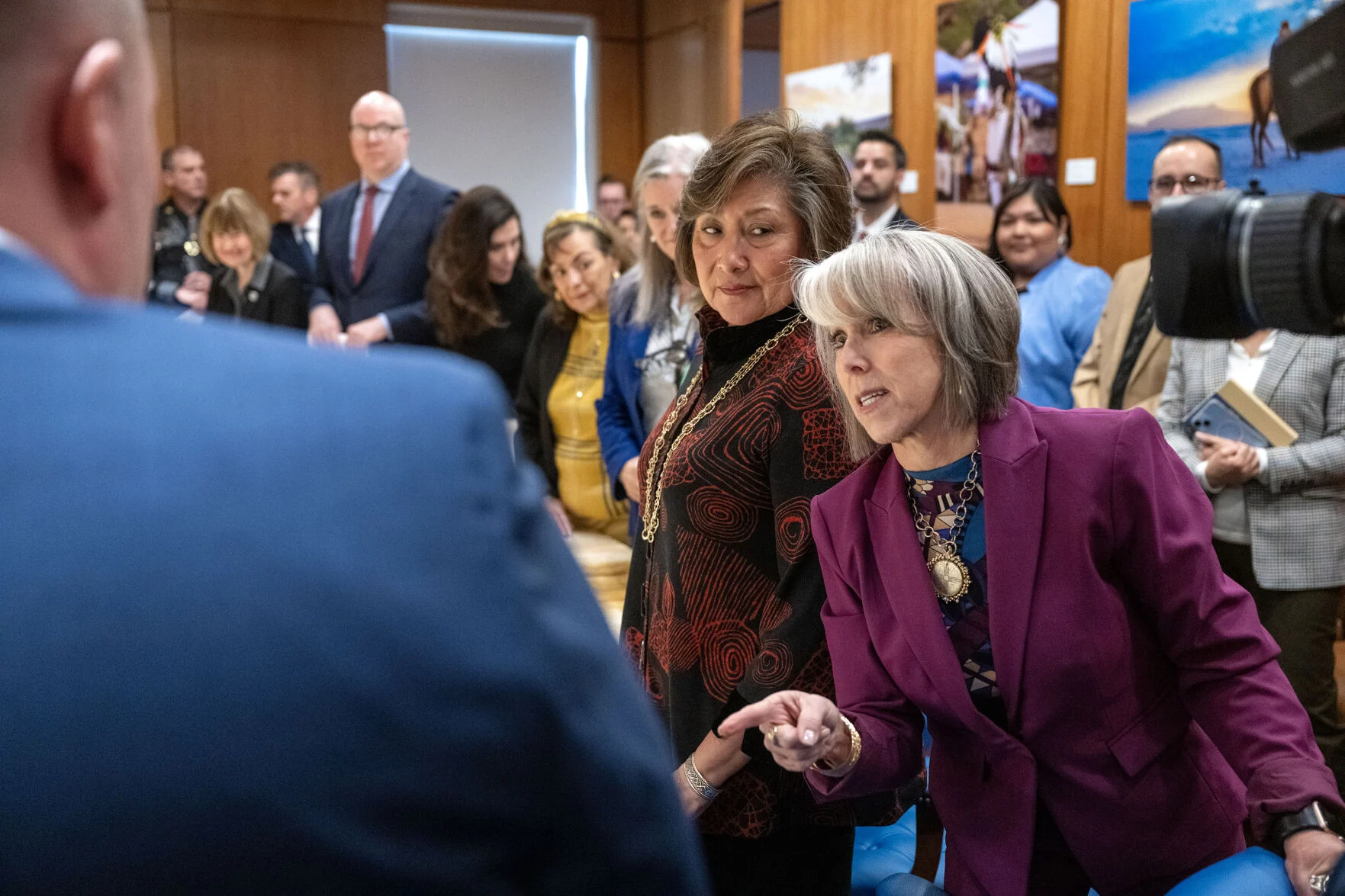 Gov. Michelle Lujan Grisham greets Phillip and Jessica Sena as she joins state lawmakers, Cabinet secretaries, law enforcement officials and community members, to sign public safety and behavioral health bills into law Thursday, Feb. 27, 2025. Photo by Michael G. Seamans/The New Mexican