
 Prison Cells: Rows of prison cells within the cell block at Yuma Territorial Prison reveal crossed steel bands on every cell door and the entrance to the cell block. Photo by Gary Warren/ladailypost.com
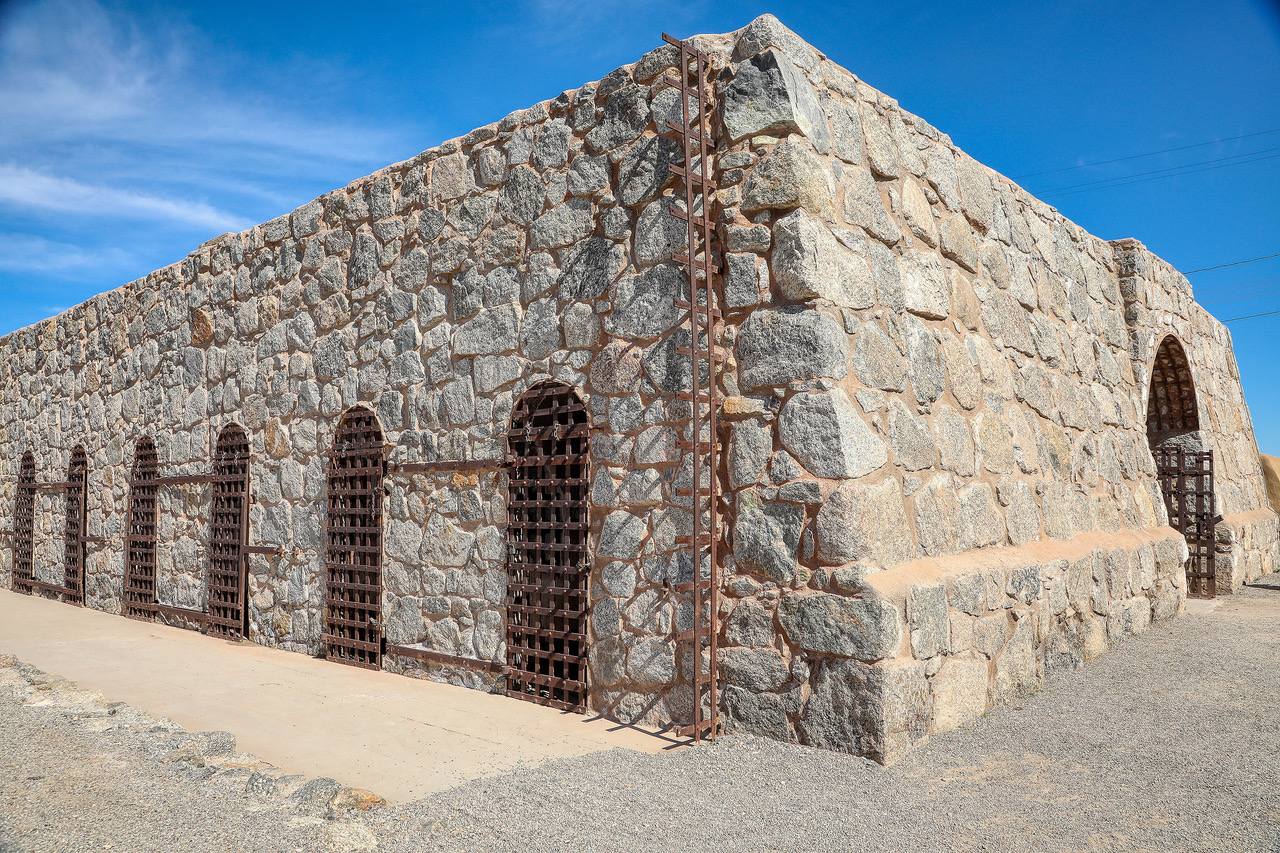 Cell Block: An exterior view of prison cells within the cell block reveal the massive walls of the cells at the Yuma Territorial Prison. Over 3,000 criminals were locked up during the 33 years that the prison was in operation. The prison was closed in 1909 because of overcrowding and lack of space to expand on the bluff where the facility was located. Photo by Gary Warren/ladailypost.com
By GARY WARREN
Photographer
Formerly of Los Alamos
Standing on the granite bluff overlooking the Colorado River one can peer into prison cells occupied by law breakers of the wild west over 100 years ago. The 19th century the western area of the U.S. was referred to as the “wild west” for a reason.
Yuma, Ariz. became an incorporated in 1871 as Arizona City. The name was changed to Yuma in 1873. The need for a prison led to the construction of the Yuma Territorial Prison in 1875-1876. Prisoners held in a Yuma city jail were transported about three miles to the site of the new prison where they worked as laborers to help build the new prison.
On July 1,1876 the first seven prisoners moved into the Yuma Territorial Prison which they had helped build. The area was not yet a state but was a territory of the U.S. at the time of the prison construction and opening. The area would remain a territory until the state of Arizona was admitted to the U.S. in 1912.
The Yuma Territorial Prison housed prisoners who had committed crimes ranging from theft to murders. One of the noted prisoners was Pearl Hart, a legendary stagecoach robber. During the prison’s history over 3,000 criminals served time at the prison.
One separate cell within the cell block was known as the “Dark Cell”. Prisoners spent time in the dark cell for fighting, gambling, or other illegal acts while at the prison. The dark cell was carved into a hillside and never saw the light of day. It was total darkness. Time in the dark cell was dependent on the crime and could be days or weeks.
The Yuma Territorial Prison was active for 33 years before being closed because of overcrowding and lack of room for expansion on the bluff where it was located. In 1909 all prisoners were moved to a new larger prison in Florence, Ariz. and the Yuma Territorial Prison was closed.
In 1910, a fire destroyed the Yuma High School and the school was relocated to the former prison site from 1910-1914. The high school adopted the name “Criminals” and is still known as “Yuma High School, Proud Home of the Criminals” today. The county hospital used the facilities from 1914-1923. In 1924, Southern Pacific Railroad added new lines and over one third of the prison was destroyed when making way for the railroad.
In the 1930s, the residents and City of Yuma constructed a museum building on the site of the old prison mess hall. The museum contains numerous photos and artifacts from the Yuma Territorial Prison era. The city operated the museum until 1960 when ownership was transferred to the state of Arizona and the property became Yuma Territorial Prison State Historic Park.
The west has become much tamer today but to gaze into the cell blocks of the Yuma Territorial Prison transports visitors back in history to a more turbulent and unsettled era of the wild west. A visit to this historic prison enlightens visitors to life in the wild west and life as a prisoner during that era of history.
Editor’s note: Longtime Los Alamos photographer Gary Warren and his wife Marilyn are traveling around the country, and he shares his photographs, which appear in the “Posts from the Road” series published in the Sunday edition of the Los Alamos Daily Post.
 Museum: A museum building was constructed on the site of the former mess hall at Yuma Territorial Prison by the City of Yuma in the 1930s. Numerous photos and artifacts from the prison era are on display in the museum. There is also a theater which shows a video of the prison’s history. The city operated the museum until the property became a state historic park in 1960. Photo by Gary Warren/ladailypost.com
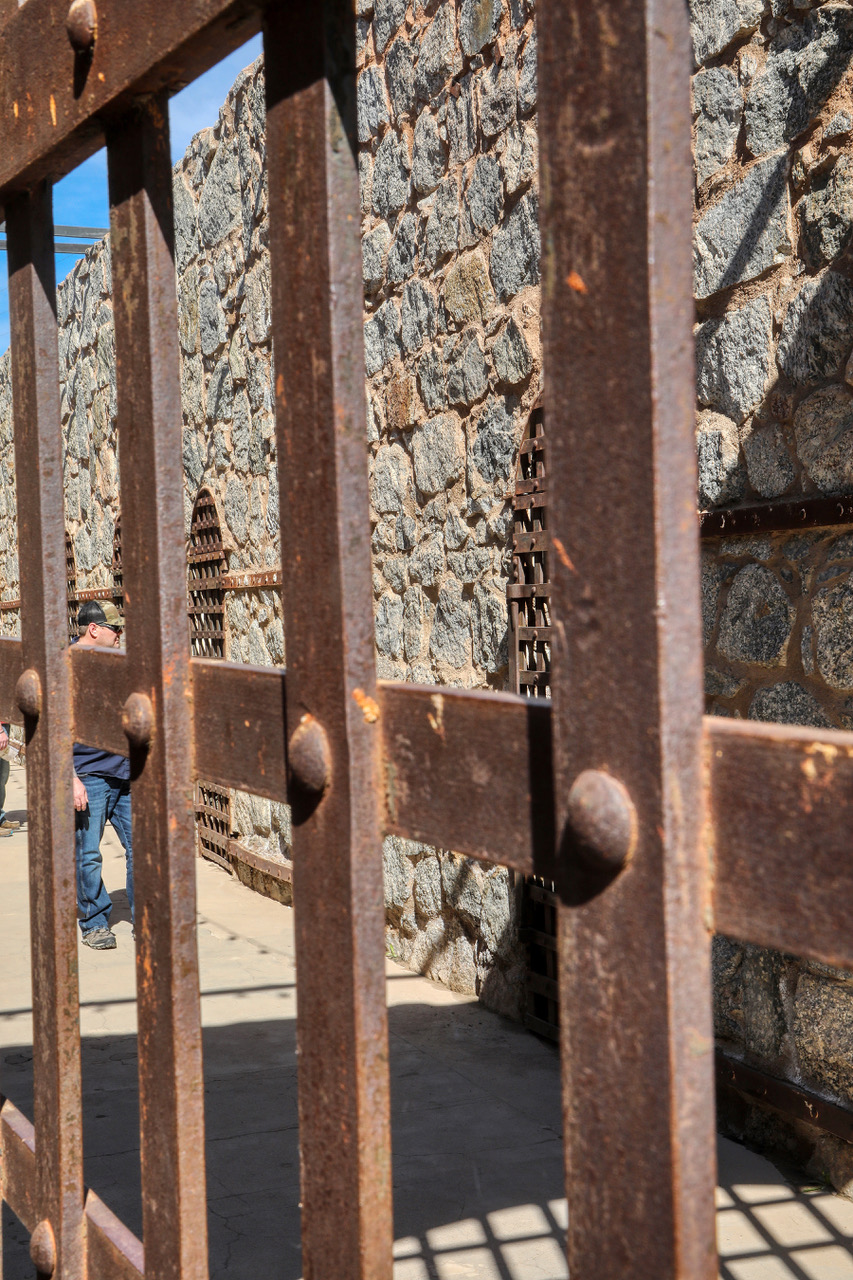 Viewing History: A visitor at the Yuma Territorial Prison views history as he peers into a cell at the prison. Massive steel doors throughout the cell block made any escape attempt very difficult. Photo by Gary Warren/ladailypost.com
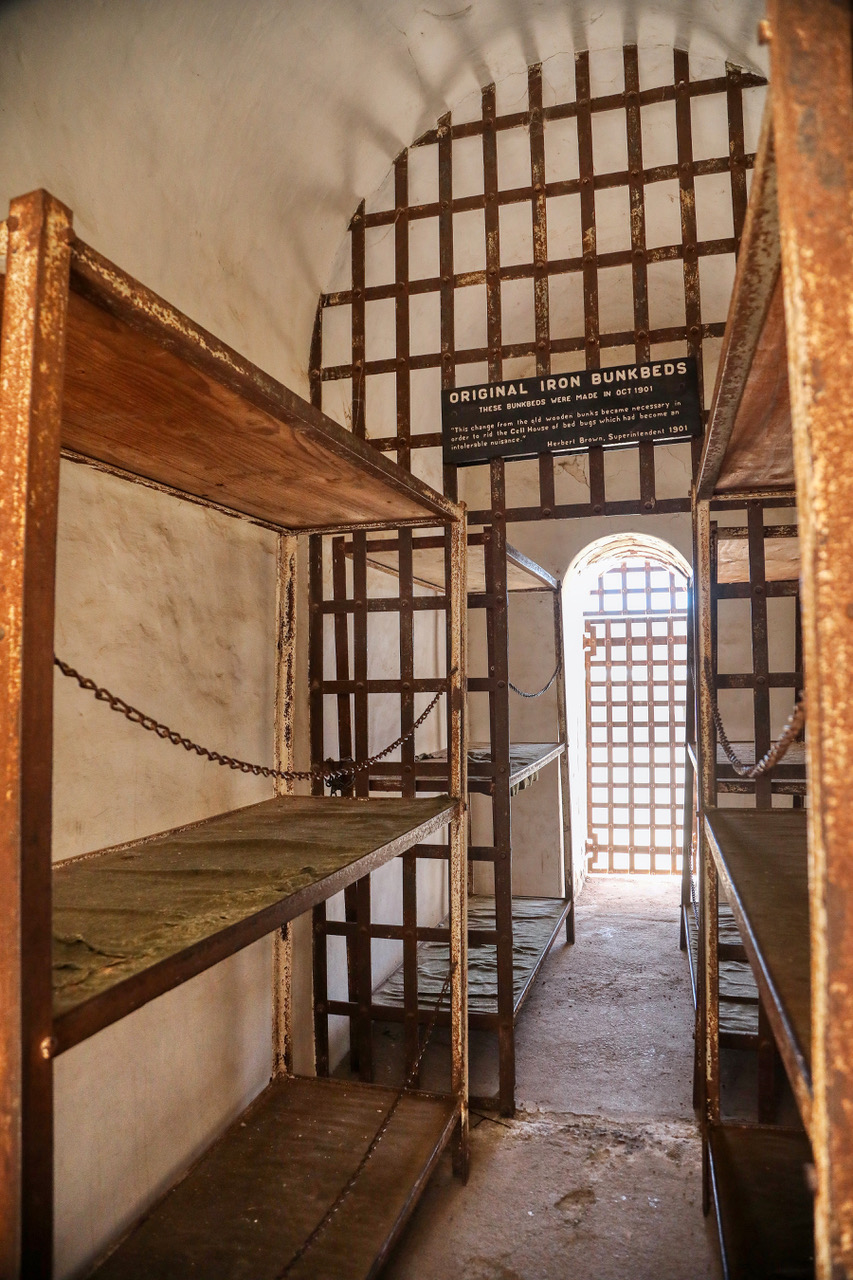 Sleeping Quarters: Prisoners slept in cells with three bunk beds on each wall or six prisoners per cell. The steel beds were obviously not constructed for comfort! Photo by Gary Warren/ladailypost.com
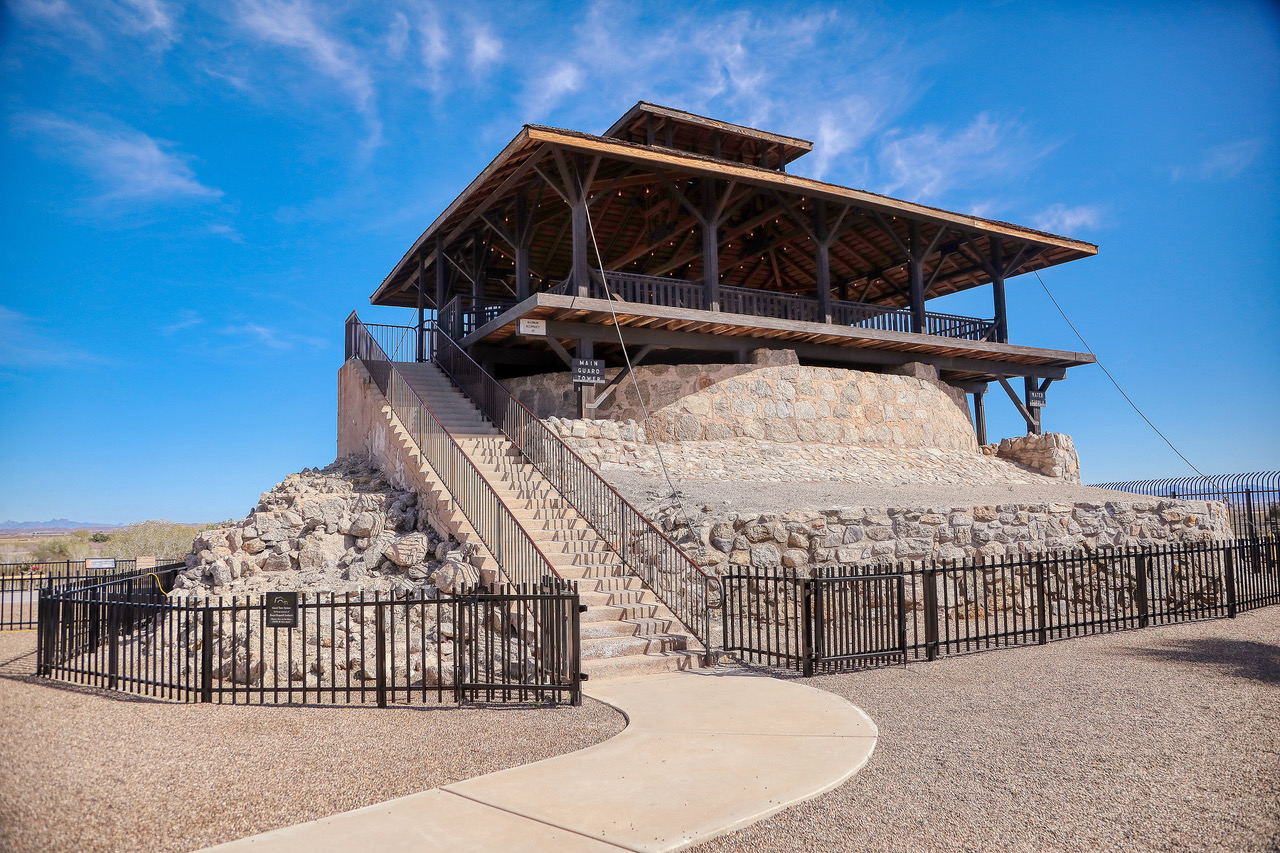 Guard Tower: The guard tower at the prison overlooked the Colorado River and land beyond from a vantage point on the bluff where the prison was located. The tower also gave a view of the prison which was contained by tall adobe walls. Photo by Gary Warren/ladailypost.com