
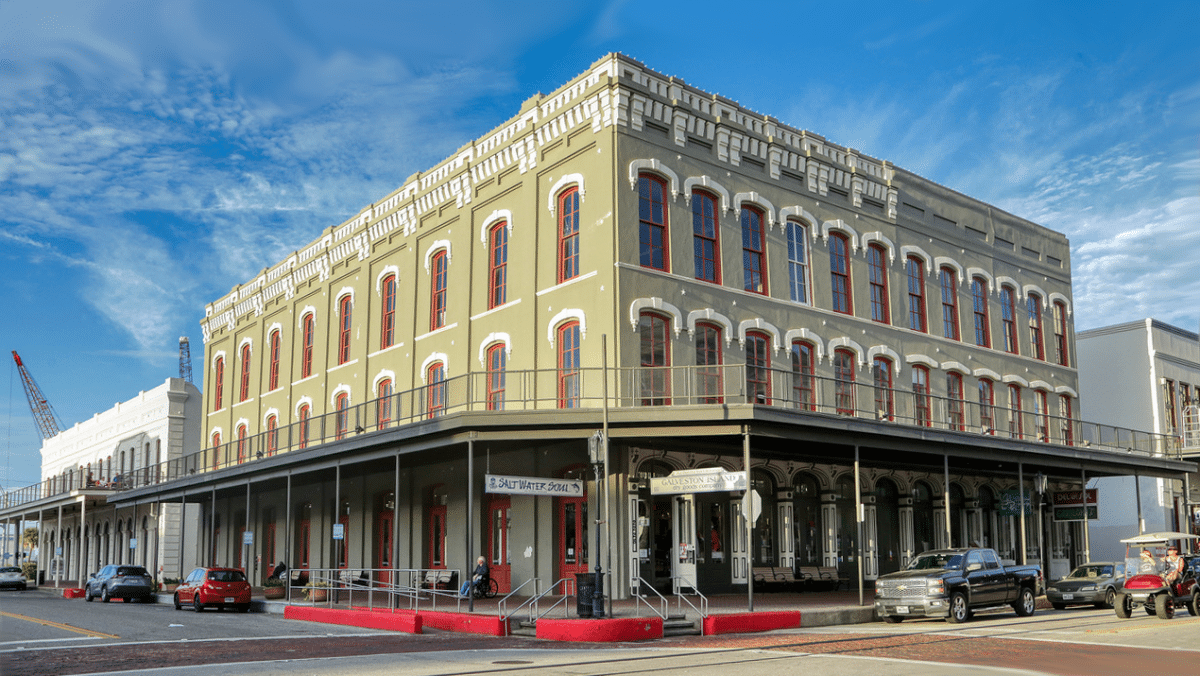
 Strand Architecture: The Victorian era architecture can be seen throughout the Strand district in Galveston, Texas. The district has evolved into a popular dining and entertainment area of Galveston. On the left of this photo, cranes operating at the Galveston Harbor are only a block away. Photo by Gary Warren/ladailypost.com
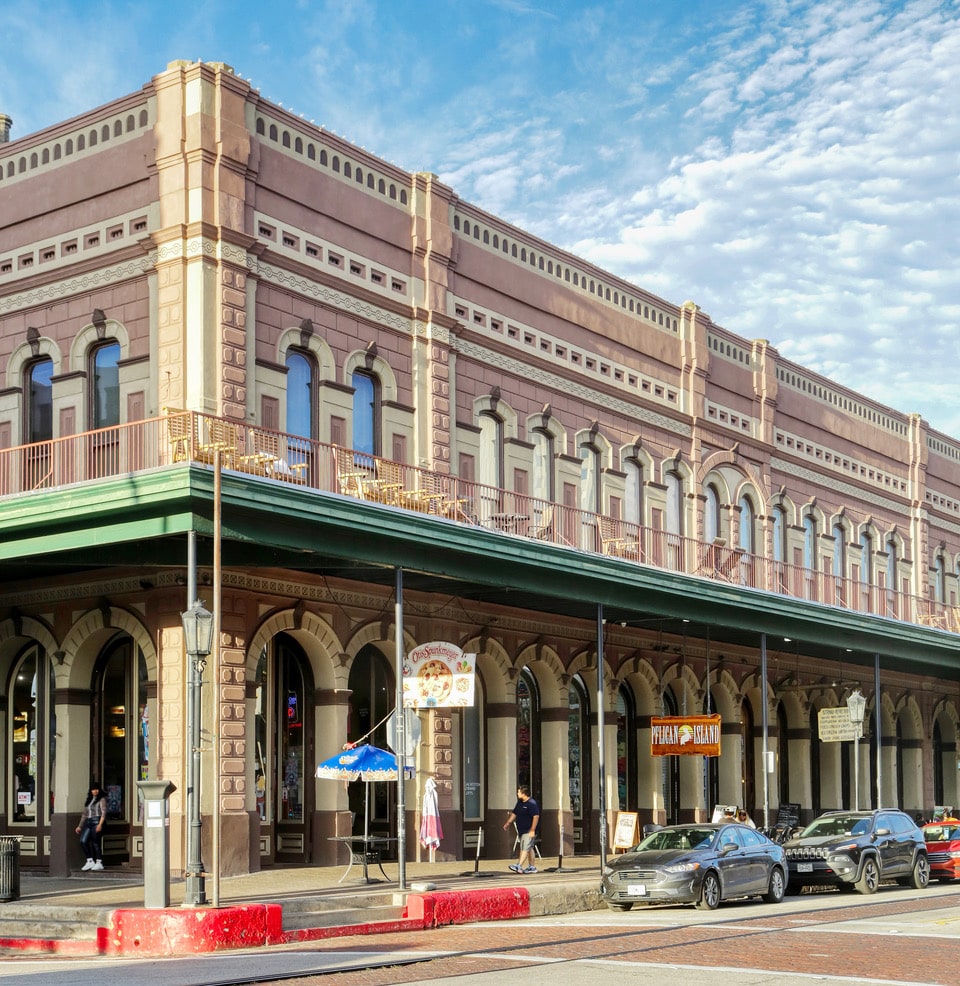 Shops & Restaurants: The lower floors of most buildings within the Strand are now shops and restaurants. The area also boast entertainment venues and several hotels. The Strand has become known as the ‘heart of Galveston’. Photo by Gary Warren/ladailypost.com
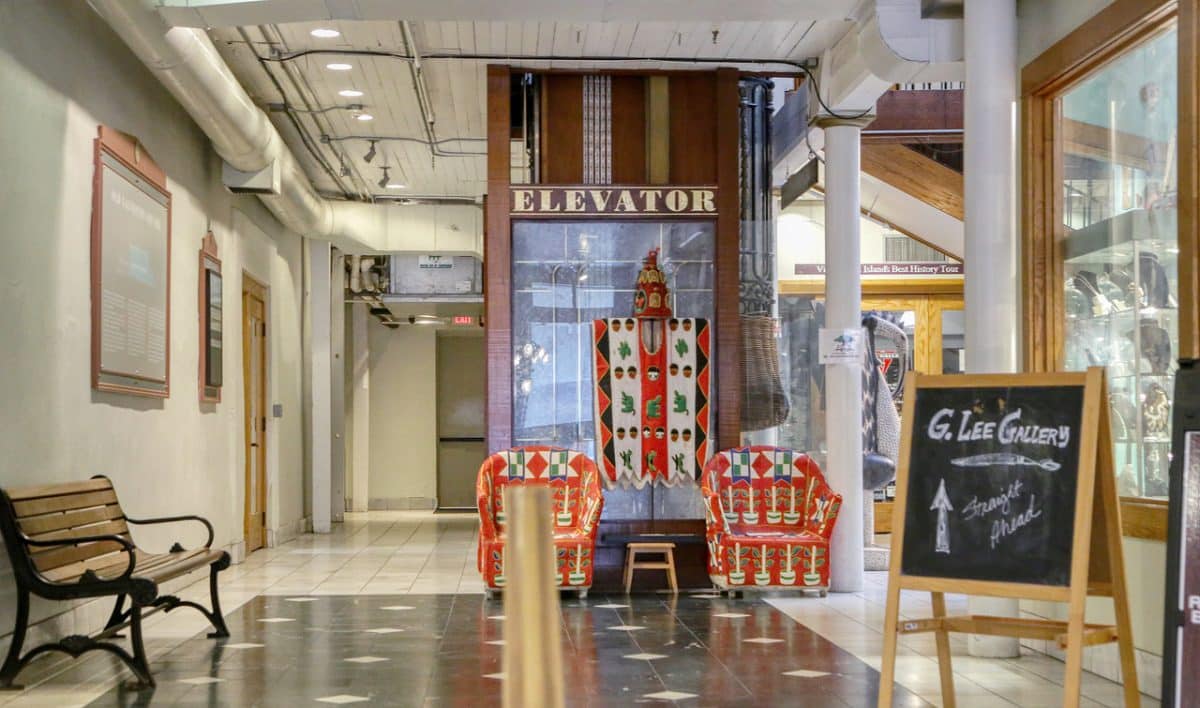 Interior Shops & Decor: The Victorian buildings in the Strand district are all more than 100 years old. Smaller shops located in the interior of the structures are often 100 years old as well although some have been updated and remodeled. Seen in the entrance area of a building is the older decor and flooring as well as an elevator from yesteryear which add charm to the spaces of the older buildings. Photo by Gary Warren/ladailypost.com
By GARY WARREN
Photographer
Formerly of Los Alamos
Our recent visit to Galveston, Texas was short and sweet but we were able to pack a lot of sightseeing and activities into our brief stay. Galveston is located on an island just off of the mainland of Texas about 50 miles south of Houston, Tex. While the two cities were once separated today it has grown into a single metropolis.
One area of the island that attracted our attention was the Strand district. This is a small area located in the downtown area and is also adjacent to the Galveston harbor.
In the 19th century, Galveston was a booming town with the most active seaport in Texas. The Strand district began as a business and financial district near the shipping industry. The district faced Galveston Bay near downtown and the historic east end Victorian era neighborhood was just blocks away.
Millions of dollars of goods were transported through the district annually and the Strand became a center of commerce. The Strand became known as the “Wall Street of the South” during the later 19th century. Beautiful Victorian era architecture lined the streets of the Strand and the port of Galveston continued to thrive.
In 1900, a horrific hurricane set its site on Galveston Island and much of the city was destroyed or heavily damaged. Thousands of lives were lost in the storm and the city was devastated.
Galveston began to restore rebuild but many businesses relocated to Houston and the Houston Ship Channel was dredged out and the port of Houston created. Houston became the boom town during the 20th century.
Galveston did recover from the 1900 hurricane but never regained its business and commerce status of the late 1800s. The city evolved, the harbor and port remained busy but the Strand district suffered. Many of the structures were restored and used for warehouses for the shipping industry and others sat vacant.
During the mid-20th century historians began to see the value of the historic Strand district and began to revive the area. The warehouses became a new shopping district and tourism in the area began to increase. Restaurants, entertainment, and commerce continued to increase and the Strand district is the ‘heart of Galveston’ today.
The collection of Victorian era structures have been restored and the area is a thriving part of downtown Galveston as well as one of the most popular tourist areas of the city along with the beaches that line the Gulf of Mexico side of the Island.
In addition to restaurants, entertainment, and festivals, the Strand and Harbor area are home to the Texas Seaport Museum, the Ocean Star Offshore Drilling Rig Museum and the Galveston Railroad Museum. The harbor is busy and is also home to waterside restaurants and hotels and other points of interest.
The Strand district was listed on the National Register of Historic Places in 1970 and the district was designated a National Historic Landmark District in 1976.
The Strand district and the Galveston Harbor definitely caught our attention during our recent visit. There is history everywhere in Galveston and the Strand is a prime example of what can be seen around the city. We are already making plans to return for a longer stay on Galveston Island.
Editor’s note: Longtime Los Alamos photographer Gary Warren and his wife Marilyn are traveling around the country, and he shares his photographs, which appear in the “Posts from the Road” series published in the Sunday edition of the Los Alamos Daily Post.
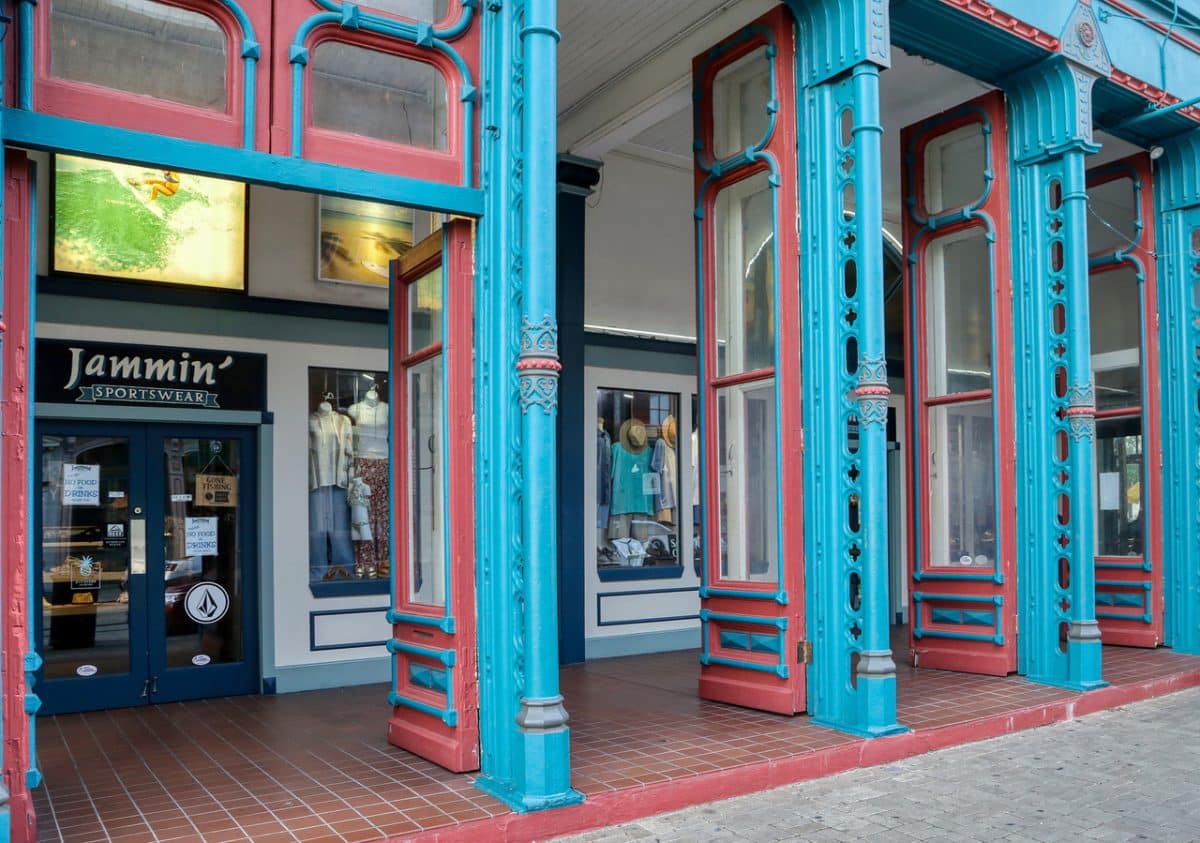 Jamin’: Colorful exteriors are seen on many of the Victorian era structures seen along streets of the Strand district in Galveston. Colorful fairs and festivals are held in parks and along the streets of the popular area as well making the Strand a popular gathering destination for locals as well as tourists. Photo by Gary Warren/ladailypost.com
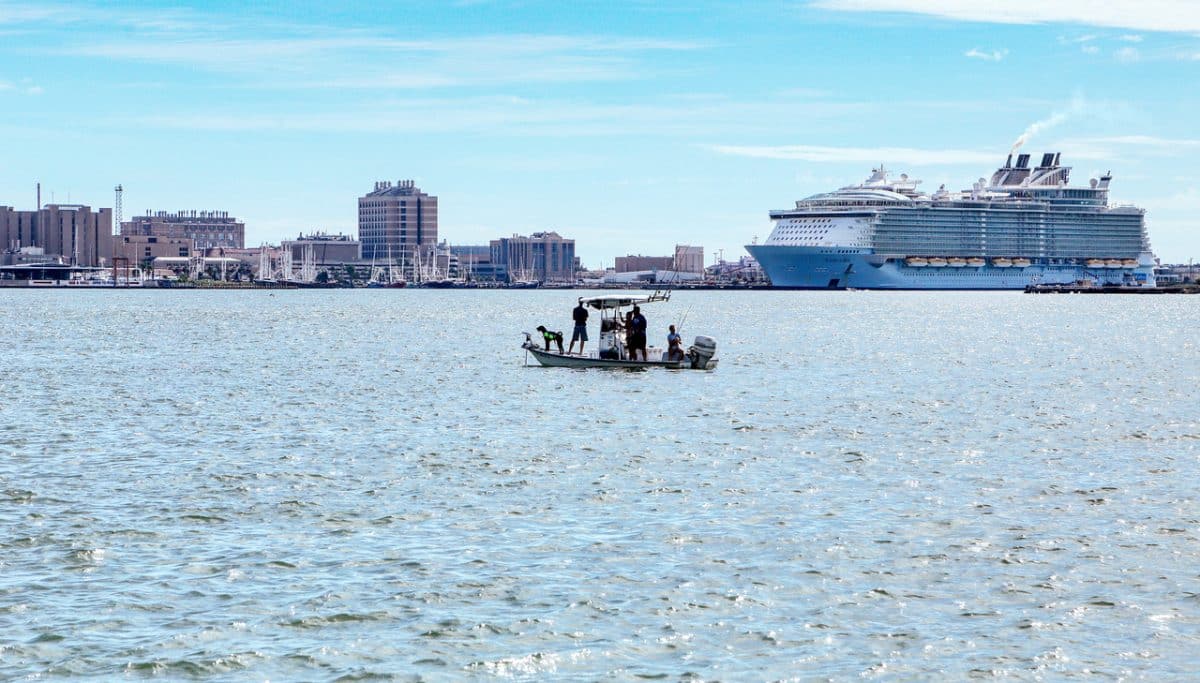 View From Pelican Island: Pelican Island is a small island in Galveston Bay reached by bridge from the harbor area of Galveston. It is a short distance from the Strand and Harbor areas of Galveston. Seen are fishermen floating in a small fishing boat just across the waters from a giant cruise ship preparing to leave the port. Photo by Gary Warren/ladailypost.com
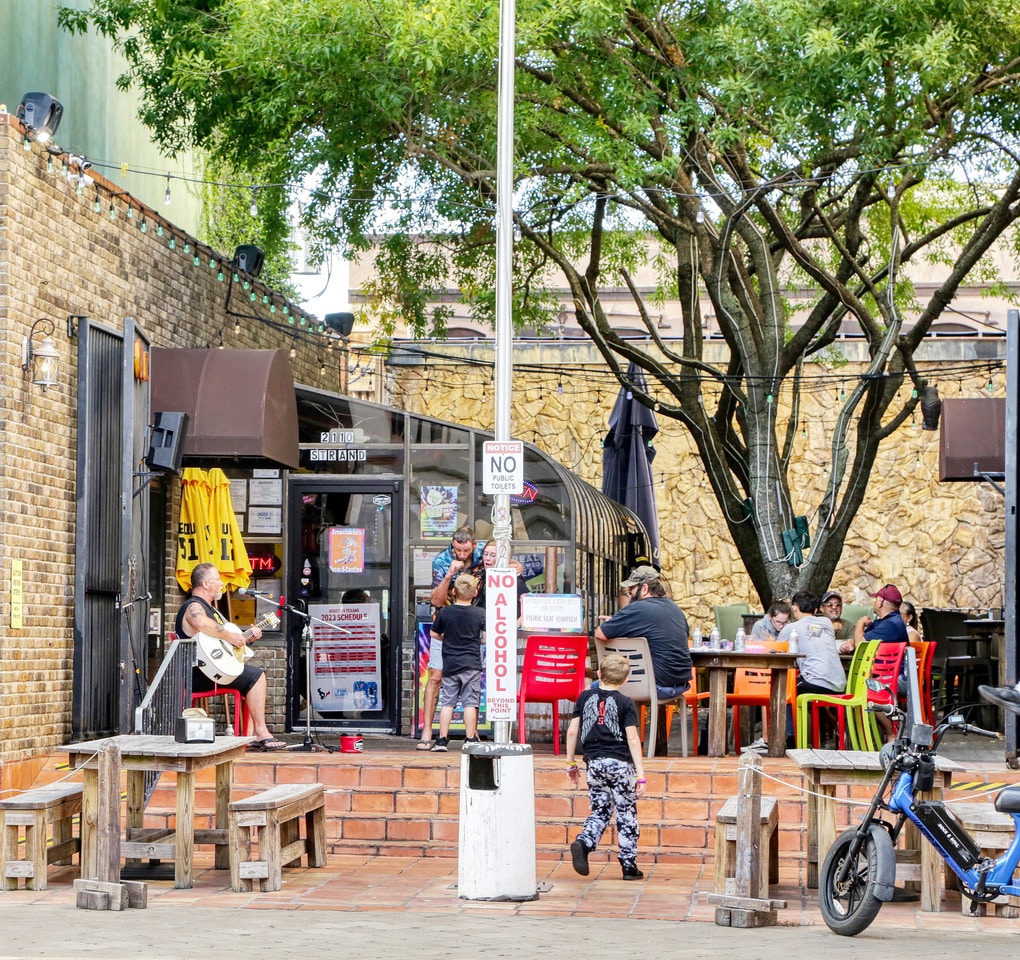 Dining & Entertainment: Many businesses offer dining and entertainment within the Strand district. Shown is an outdoor patio for drinks, dining, and listening to live music. Photo by Gary Warren/ladailypost.com
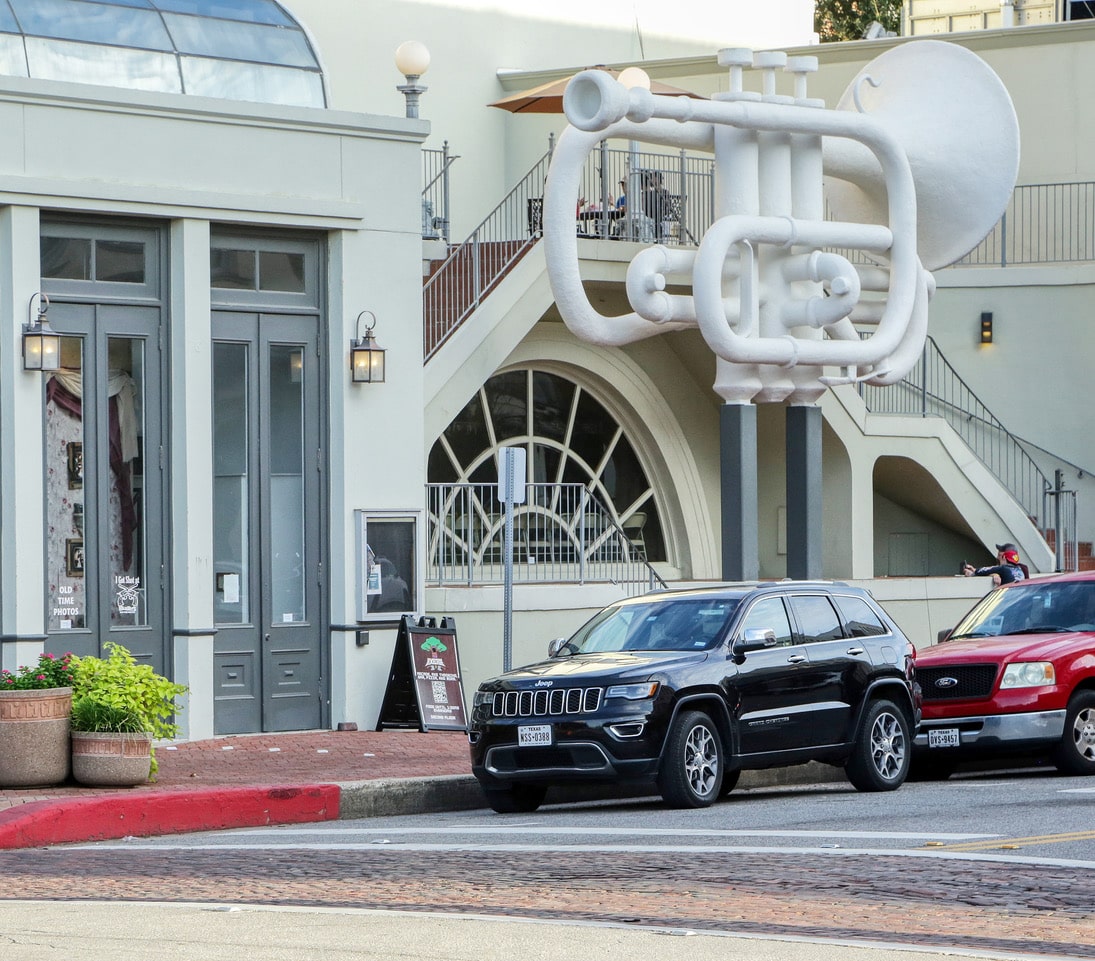 Trumpet Sculpture: The Trumpet Sculpture titled ‘The Stone Trumpet’ was created by David Adickes for the New Orleans World’s Fair. The sculpture is 14 feet tall and 26 feet long and is constructed of steel and concrete. Musicians have noted that the instrument is actually a cornet. The sculpture can be found next to the Old Galveston Square building in the Strand. Photo by Gary Warren/ladailypost.com