
 Railroad Depot: An elaborate California-Mission style railroad depot was constructed in Rhyolite, Nev. The depot closed along with the town of Rhyolite but reopened as a casino, bar, and gift shop in the 1930s. The casino lasted until the 1970s before closing. Photo by Gary Warren/ladailypost.com
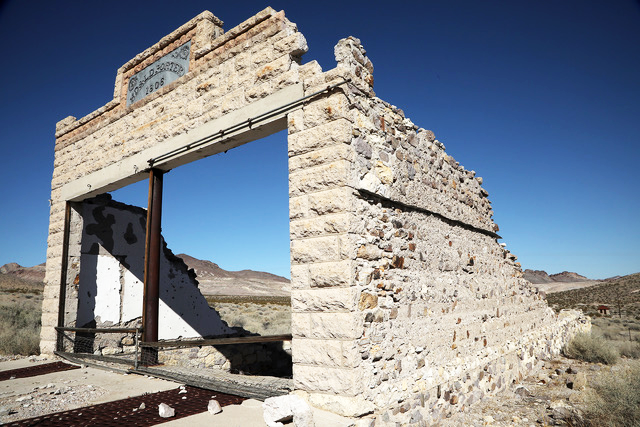 Porter Building: The Porter Brothers Store was the most popular retail establishment in Rhyolite. They offered a wide variety of items like many general stores did during the era. The building was built right in the middle of Rhyolite and was a go-to destination for almost any goods. However, the store closed in 1910 after the town’s demise. One of the brothers remained in Rhyolite for nine more years and served as the town’s postmaster. Photo by Gary Warren/ladailypost.com
By GARY WARREN
Photographer
Formerly of Los Alamos
There are numerous stories in the history of many western states that describe the boom and bust of one mining town after another during the gold mining era beginning in 1849 and extending into the early 20th century.
The gold rush in Nevada was a little later as gold was not discovered until the early 1900s. One of the most notable mining towns in Nevada is Rhyolite, Nev. Prospectors discovered gold tin the Bullfrog Hills near the Nevada and California border in 1904. The discovery was grand and miners began flocking to the area.
By 1905 the town of Rhyolite sprung up quickly as gold was plentiful and money was flowing. There were several mining camps in the area which became known as the Bullfrog Mining District.
Unlike many mining towns, Rhyolite was a more elite town. The town’s infrastructure was built and within a year the town had electrical lines, railroad transportation and other amenities that were only dreams of most mining towns.
By 1907-1908 the gold mining was at its peak and Rhyolite was a booming town. In fact, Rhyolite was the largest town in Nevada at the time with a population of more than 5,000 residents. Because of its location in the Mojave Desert many of the commercial buildings were constructed with stones and concrete as opposed to wooden structures in most mining towns.
During this peak season Rhyolite had a hospital, multiple banks, an opera house, churches, and a state of the art railroad depot.
However, gold began to become more difficult to mine and the costs were increasing. Only a couple of years beyond the boom years the town began to shrink in size and miners were moving on to the “next big boom town”. Within five years of the establishment of Rhyolite the community was facing a dire situation with the decrease in mining.
By 1910 the mines were operating at a loss and in 1911 the most prominent mine closed its operation. Few residents and miners held on but by 1916 the electricity was shut off and the town was officially a ghost town.
In just over a decade the town of Rhyolite was nothing to becoming one of the busiest mining areas in the state to losing everything and becoming a ghost town. Much of the rise and fall happened between 1905 and 1910, just five short years.
Today, Rhyolite is one of the most visited ghost towns in the west. Visitors can walk the main street of town and walk among the ruins of what was once a thriving town. The atmosphere can be eerie as you wonder how did it happen so quickly, rags (nothing) to riches to nothing again.
Following the bust and the closure of Rhyolite, many building supplies and fixtures were salvaged and moved to other nearby towns. What was left was left to decay.
Hollywood did add a spark of life in the mid-1920s when Paramount Pictures restored the Tom Kellly Bottle House for the movie “The Air Mail”.
Rhyolite ghost town was becoming a tourist destination in the 1920s and 1930s and the Railroad Depot became a Casino, bar and shop from the 1930s until the 1970s.
Learning about the ghost town of Rhyolite was an unplanned stop for us during our recent trip west. We learned about the ghost town while in Death Valley National Park and decided to include the stop on a day trip. The ghost town is easily accessible by car as it is only six miles west of Beatty, Nev. near the California border. The stop was an unexpected treat before moving on to Las Vegas for a short visit.
Editor’s note: Longtime Los Alamos photographer Gary Warren and his wife Marilyn are traveling around the country, and he shares his photographs, which appear in the “Posts from the Road” series published in the Sunday edition of the Los Alamos Daily Post.
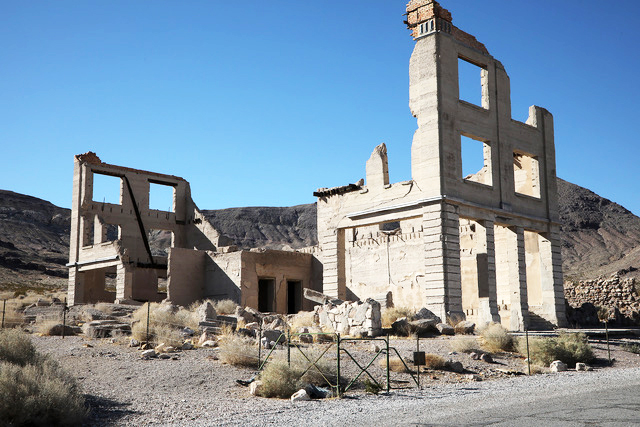 Cook Bank: The Cook Bank Building was one of the banks in Rhyolite and was it one of the finest buildings in town. The building was three stories tall and had all of the modern conveniences and decor. The interior was finished with marble stairs and mahogany accents. The bank was short lived and closed by 1910. Photo by Gary Warren/ladailypost.com
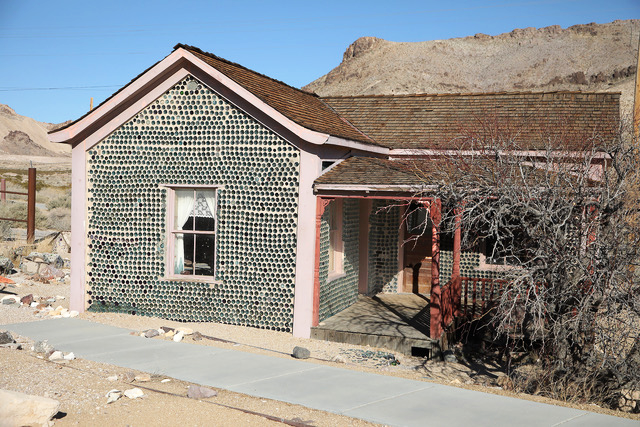 Bottle House: Tom Kelly’s Bottle House was a notable house in Rhyolite. It was constructed with wood, mortar, and more than 50,000 whiskey and beer bottles. The house was part of a rebirth of Rhyolite when it was used as a filming location for the movie “The Air Mail” in the mid-1920s. Photo by Gary Warren/ladailypost.com
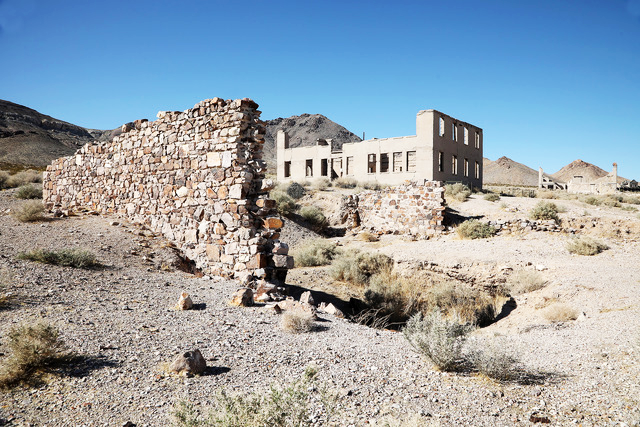 Rhyolite, Nev.: Golden Street was the main street in the business district of Rhyolite during the boom years. Today visitors can walk the street which is a few blocks long and view the rubble, which is the remains of a once prominent town. Photo by Gary Warren/ladailypost.com
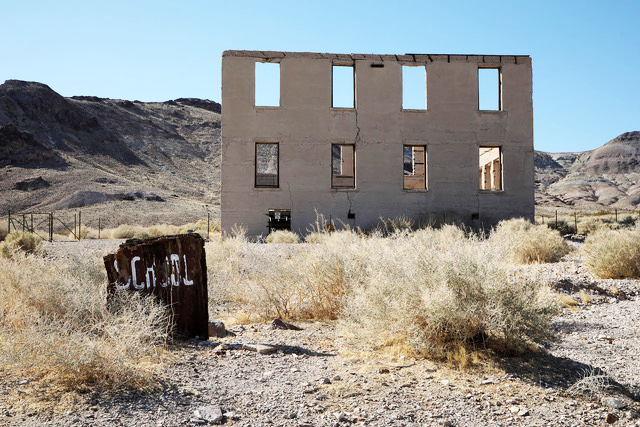 School: A school was built in Rhyolite and remains as a shell of its former structure. The school was short lived as the town began to crumble financially before some of the buildings were completed. The school stands on Golden Street with several other remnants of the Rhyolite boom years. Photo by Gary Warren/ladailypost.com