
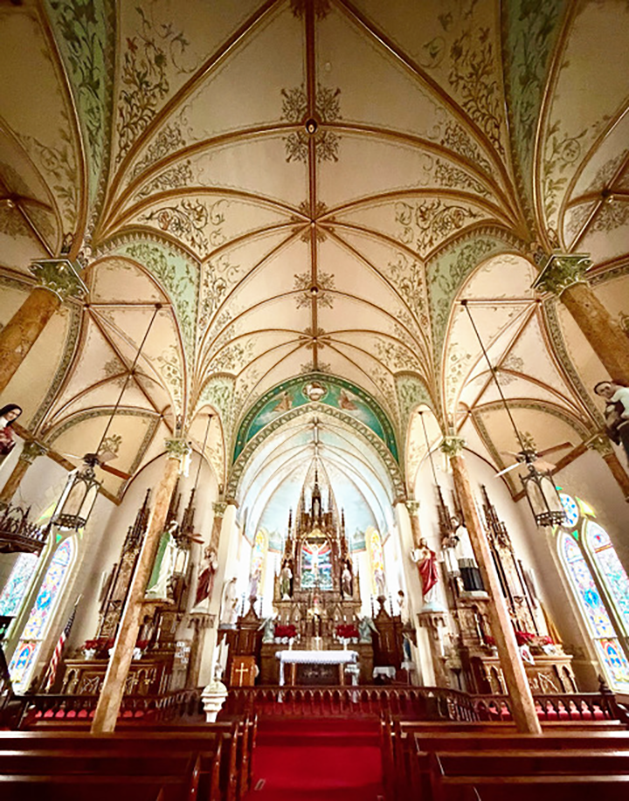
 High Hill Interior: A wide-angle view of the interior of St. Mary’s Catholic Church at High Hill reveals the incredible and detailed painting in the church. This church is listed in the National Registry of Historic Places and is the largest of the four churches that we visited near Schulenburg, Texas. Photo by Gary Warren/ladailypost.com
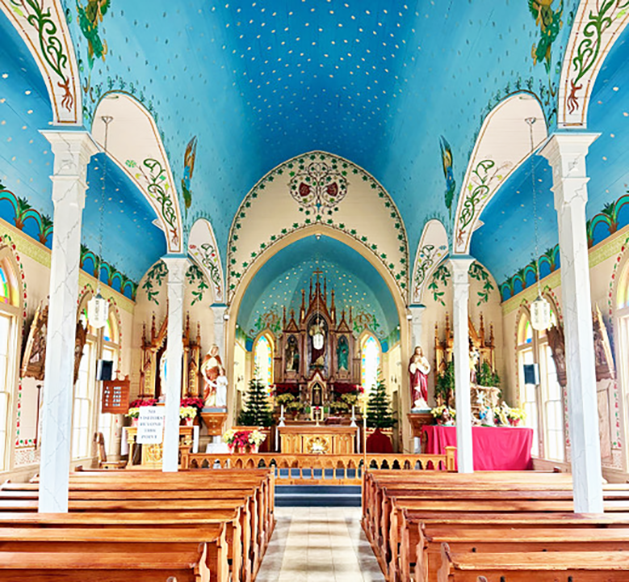 Dubina Interior: The Dubina Parish Church in the community of Dubina is painted with beautiful hues of blue. The church was founded by several Czech families in the 1850s. This church building was built in 1912 after the previous building was destroyed in a storm. Photo by Gary Warren/ladailypost.com
 Ammannsville Interior: St. John the Baptist Church is located in the community of Ammannsville. Known as the ‘pink church’ because of the pink color scheme of the interior paint. This church also has an abundance of detail painted into the walls and ceiling of the church interior. Photo by Gary Warren/ladailypost.com
By GARY WARREN
Photographer
Formerly of Los Alamos
Traveling through Texas while visiting relatives can be trite and mundane at times. However, we enjoy mixing things up by taking different routes to add interest to the journey. On a recent trip between the Houston and Austin areas of the state, we made an overnight stop in Schulenburg.
While the town is labout halfway between the two cities, Schulenburg favors the demographics of the central Texas area. When you travel through the small towns in central Texas, it doesn’t take long to notice a strong influence of “the old country” ways of life.
This part of Texas was settled in the 1800s by German-Czech immigrants. Today there is a large population of German-Czech people and this region of the state has retained many traits of the European settlers.
Many aspects of German-Czech lifestyle and heritage can be seen in central Texas, especially in the smaller towns scattered through the region. Churches have been an important part of life and the church buildings often reflect this love.
There are six Catholic Churches in and around the countryside around Schulenburg and Fayette County. These churches have notable interiors that have been beautifully painted. In 2005, the State Legislature designated Schulenburg as the Official Home of the Painted Churches of Texas.
All six churches are active and hold mass every week. In addition to mass, prayer time, weddings, and funerals are regular occurrences.
Four of the six churches are open every day and welcome visitors. Two of the churches are in more remote areas and are locked and not available for tourists to visit except on guided tours. The two churches in these remote areas that we did not visit are The Ascension of Our Lord Catholic Church in Moravia, several miles south of Schulenburg, and the Catholic Church of St. John the Baptist in the tiny community of St. John.
If touring this part of Texas, the Painted Churches are well worth the time to stop, view, and appreciate these special places of worship. This was our first time visiting the churches and it made for a very enjoyable day.
Editor’s note: Longtime Los Alamos photographer Gary Warren and his wife Marilyn are traveling around the country, and he shares his photographs, which appear in the “Posts from the Road” series published in the Sunday edition of the Los Alamos Daily Post.
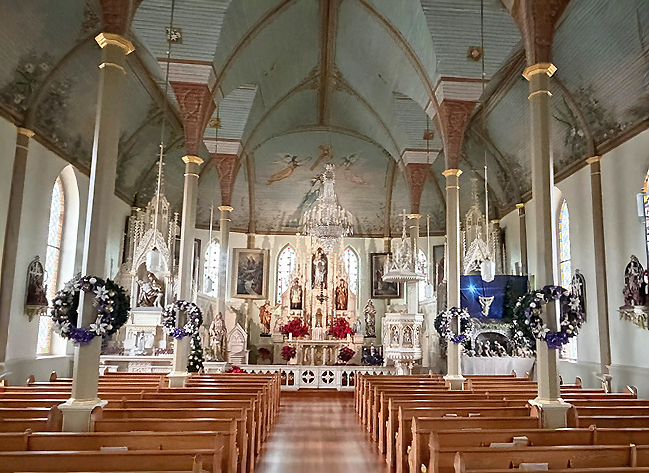 Praha Interior: The interior of St. Mary’s Parish Church in the community of Praha is a bit different than the other churches that we visited. The paintings in this church were a little less detailed, but still beautiful and fitting for the church. St. Mary’s Parish was established in 1855, but this church building was built in 1895 and dedicated under the name, Assumption of the Blessed Virgin Mary. Photo by Gary Warren/ladailypost.com
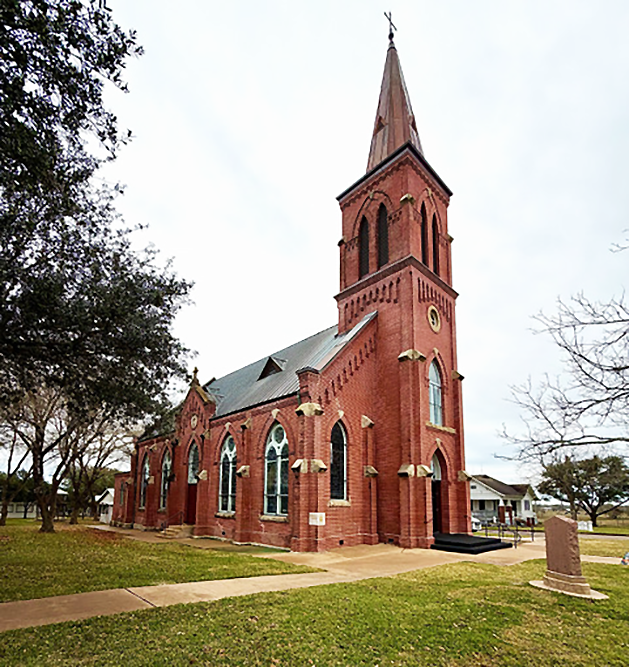 High Hill: The exterior of the church at High Hill stands tall in the community. The church features Victorian features as well as the European influence of the German and Czech settlers who founded the church. Many events are held at this church every year. Photo by Gary Warren/ladailypost.com
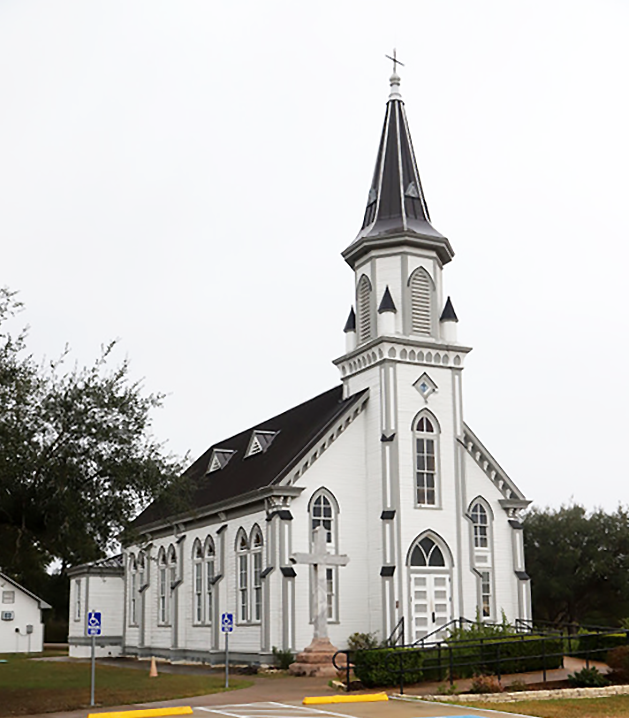 Dubina: The exterior of the church at Dubina has many details seen in many church buildings. The area was named Dubina because of the abundance of oak trees in the area. The Czech word for oak tree is “dub”. Dubina once had a population of about 3,000, but it is a fraction of that size today. Photo by Gary Warren/ladailypost.com
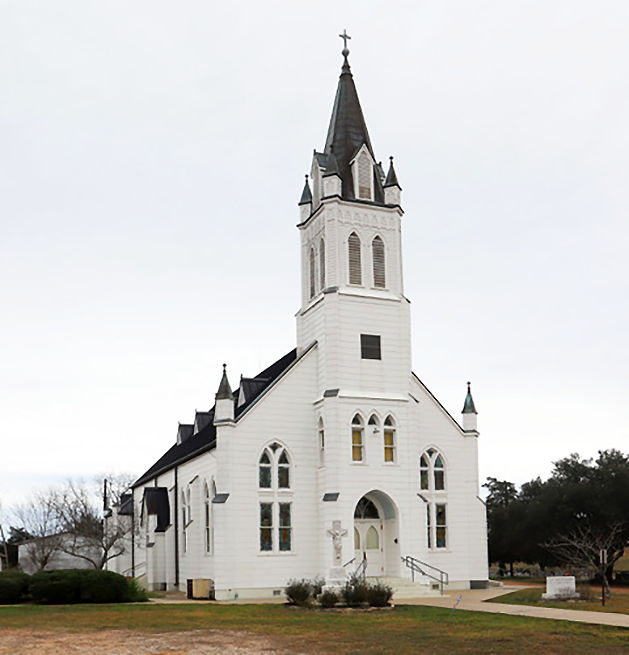 Ammannsville: St. John the Baptist Church in Ammannsville stands tall in the community like many others. Ammannsville was settled in 1870, but residents attended church service in neighboring communities until the original structure was opened in 1890. The current church building was constructed in 1917. Photo by Gary Warren/ladailypost.com
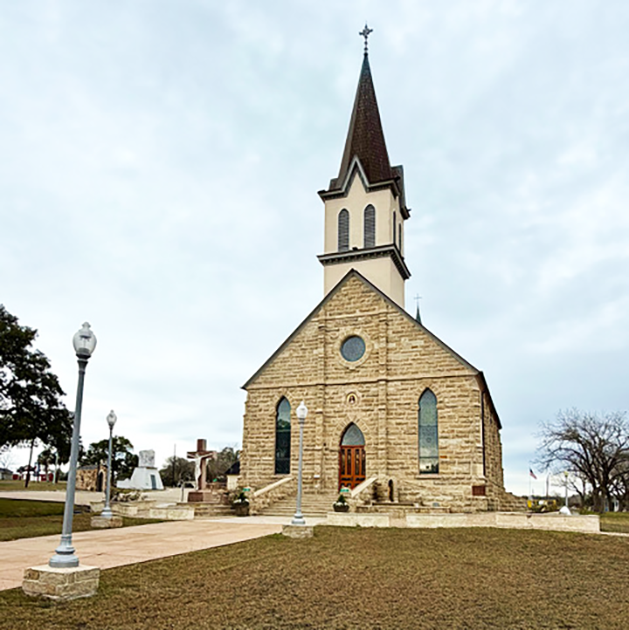 Praha: Praha is a small community about eight miles west of Schulenburg. The first building of St. Mary’s Parish was a small frame building. The current stone exterior building was built in 1895 and has been active since that time. Photo by Gary Warren/ladailypost.com