
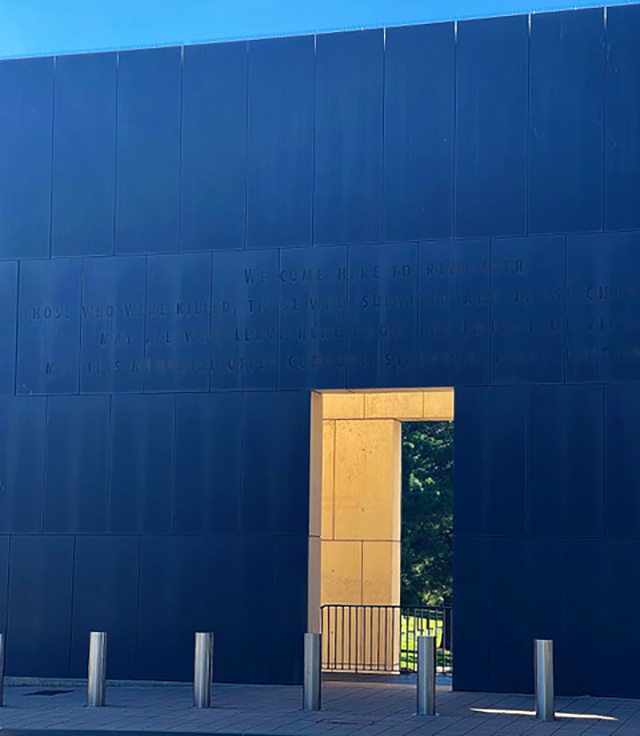
 Gates of Time: The two ‘Gates of Time’ are massive walls that sit on the east and west boundaries of the Oklahoma City National Memorial. The structures each provide an entrance into the memorial and lower the outside daily noise of downtown from the memorial. On the interior side of the gates is the time 9:01 on the east gate and 9:03 on the west gate. These are the minutes before and after the massive explosion. Photo by Gary Warren/ladailypost.com
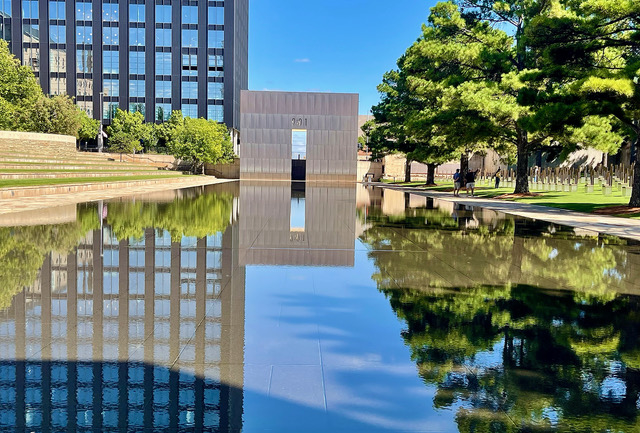 Reflection Pool: A 319-foot-long reflection pool sits in the center of the memorial grounds. One can see reflections of many features of the memorial in the pool, depending on the viewpoint. Visible on the interior of the east Gate of Time in the distance, one can see the time 9:01 inscribed on the wall. Photo by Gary Warren/ladailypost.com
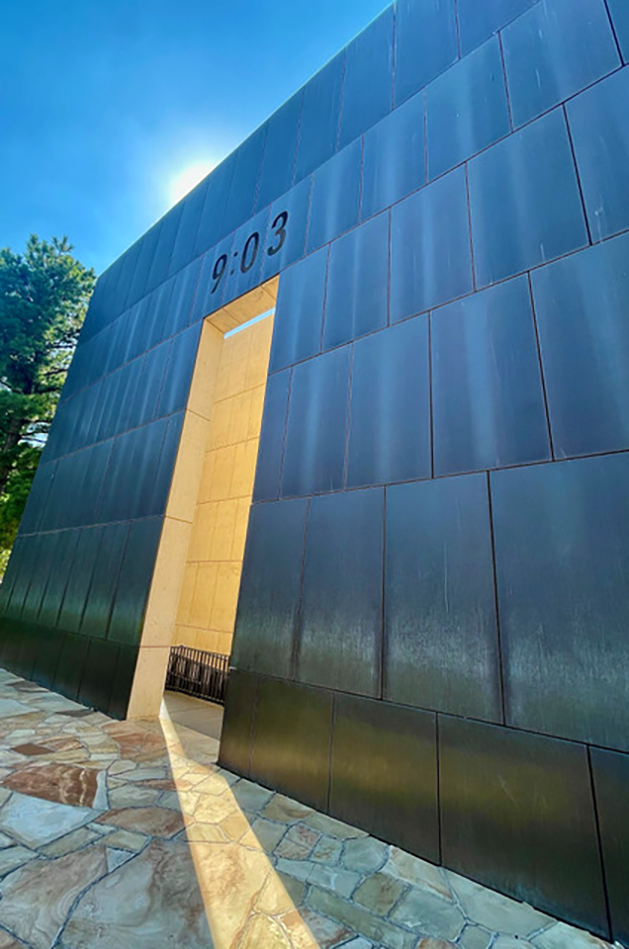 9:03: A closer view of the Gate of Time on the west end of the memorial, one sees the time of 9:03. This is the minute after the explosion and the beginning of the healing process in Oklahoma City. The two entrances are profound and set the tone of the memorial. Photo by Gary Warren/ladailypost.com
By GARY WARREN
Photographer
Formerly of Los Alamos
In our 10 years of RV travel, we have stopped at hundreds of sites, attractions, museums and other places of interest. Most of our stops are fun and light-hearted events or places. But occasionally we visit more somber and serious sites that always have an impact on us.
During our current trip we visited a site that was not only somber, I felt like I had been punched in the gut. That site was the Oklahoma City National Memorial.
We both remembered the day well. April 19, 1995. Thirty years ago. I was still working at the laboratory in the photography department. This is an event that struck us hard at the time it happened, and visiting the memorial in Oklahoma City brought back floods of memories and questions. It also generated many new questions that we can only ask as we will never have a definitive answer.
It was mid-week Wednesday, April 19, 1995. Timothy McVeigh drove a rented truck filled with fertilizer to the front of the Alfred P. Murrah Federal Building in downtown Oklahoma City. At 9:01 a.m. McVeigh parked the truck, got out and ran to a waiting getaway car. At 9:02 an enormous bomb exploded in the rental truck. The bomb ripped the nine story tall Murrah Building to shreds and damaged or destroyed 324 other buildings nearby. By 9:03 the damage was done and the city was left in chaos.
The blast killed 168, including 19 children and injured 685 others.
This was an act of domestic terrorism. A mass murder.
Timothy McVeigh and accomplice Terry Nichols had orchestrated the event, bought the fertilizer and related bombing equipment and equipped the rental truck to become a huge bomb.
McVeigh was sentenced to the death penalty and was later killed by lethal injection. The jury could not come to an agreement on the punishment for Nichols and he was sentenced to168 life sentences and remains behind bars today.
The Memorial. In October 1998, thousands of people gathered in downtown Oklahoma City for the official groundbreaking of the memorial.
On April 19, 2000, the fifth anniversary of the bombing, the Oklahoma City National Memorial was dedicated. The first visitors were families of the victims, who were all escorted by rescue workers to the “Field of Empty Chairs” at the outdoor memorial.
The Oklahoma City National Memorial honors victims of the tragedy, survivors of the bombing, rescuers, and all affected by the Oklahoma City bombing on April 19, 1995.
A Reflection Pool fills the center of the memorial grounds. The pool is 319 feet long and fills the center of the memorial beautifully, reflecting the sky and memorial features surrounding the pool.
The memorial is beautiful. The “Gates of Time” frame the grounds on the east and west end where the walls of the Alfred P Murrah Building’s walls stood. The Gate on the east end of the reflection pool has the time 9:01 inscribed on it, representing the calm before the bombing. The west Gate has the time of 9:03 inscribed on it, representing the time that healing started. In between the two ends are the destruction and chaos of the bomb exploding at 9:02.
The heart of the memorial is the “Field of Empty Chairs” on the south side of the reflection pool. 168 bronze and granite chairs rest on a glass base, which is dimly lit every night. The chairs represent each of those who lost their lives in the bombing. Included in the “Field of Empty Chairs” are 19 shorter, smaller chairs that represent the 19 children who perished that morning. On the front of each chair base is the name of the person that the chair represents. There are five chairs with no names, which represent the five people outside of the building who died from the explosion.
The chairs are arranged in nine rows, with each row representing the nine stories of the Murrah Building. Chairs are positioned where each individual was located when the bomb exploded.
On the southeast corner of the memorial is the “Survivors Wall”. This wall is the only portion of the Murrah Building that did not crumble during the explosion.
On the north side of the reflection pool is terraced landscaping leading to the survivor tree, an old American Elm tree. The tree survived the explosion but was almost cut down to retrieve various shrapnel and material from the explosion. The tree was not cut down and has recovered from the explosion to offer shade to memorial visitors.
The remainder of the north lawn features an orchard honoring the rescue workers and an area in front of the museum in honor of the children.
The northern corner of the memorial is the Oklahoma City National Memorial and Museum. Visitors can visit the museum and discover how the bombing was orchestrated and carried out, the bombing, chaos afterwards, the years of healing, and how the Outdoor Memorial came to be.
The grounds of the Oklahoma City National Memorial are pristine and manicured better than a golf course. Large pine trees now grow among the “Field of Chairs” and the grass is almost like a golf putting green.
When we entered the grounds, you could feel a sense of reverence and remembrance in the air. Walking around the area was almost sacred. The entire memorial is simple, yet it is a profound and emotional place.
Like I said upon entering the site that it was like getting punched in the gut. After spending time on the grounds, the hurts are still there, the questions are still there, and it felt like reliving the day again. However, I am very grateful for the time we spent trying to absorb all that is when you visit the site of such a tragic event. A very somber day.
Editor’s note: Longtime Los Alamos photographer Gary Warren and his wife Marilyn are traveling around the country, and he shares his photographs, which appear in the “Posts from the Road” series published in the Sunday edition of the Los Alamos Daily Post.
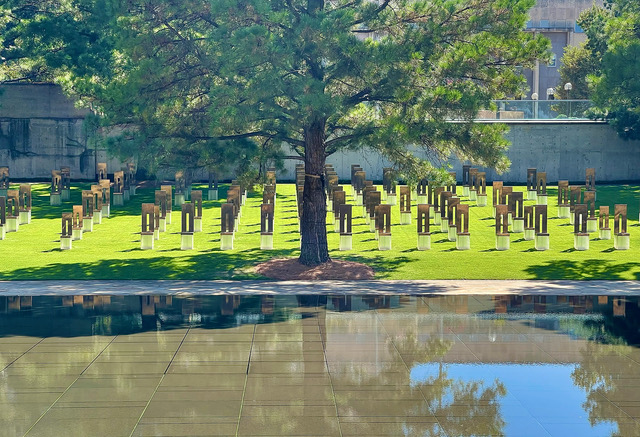 Chairs: The heart of the Oklahoma City National Memorial is the display of 168 bronze and granite chairs that rest on a glass base. Inscribed on the front glass panel of each chair is the name of the individual who perished on April 19, 1995. The chairs are displayed in nine rows, which indicate the nine floors of the Murrah Building. Shown are the chairs and reflection pool as seen from the terraced landscape on the north side of the pool. Photo by Gary Warren/ladailypost.com
 Survivors Wall: The Survivors Wall, on the southeast corner of the memorial, is the only remaining wall that did not collapse during the bombing. The granite panels, which were reclaimed from the building following the explosion, are inscribed with hundreds of names of individuals who survived the bombing at the Murrah Building. Photo by Gary Warren/ladailypost.com
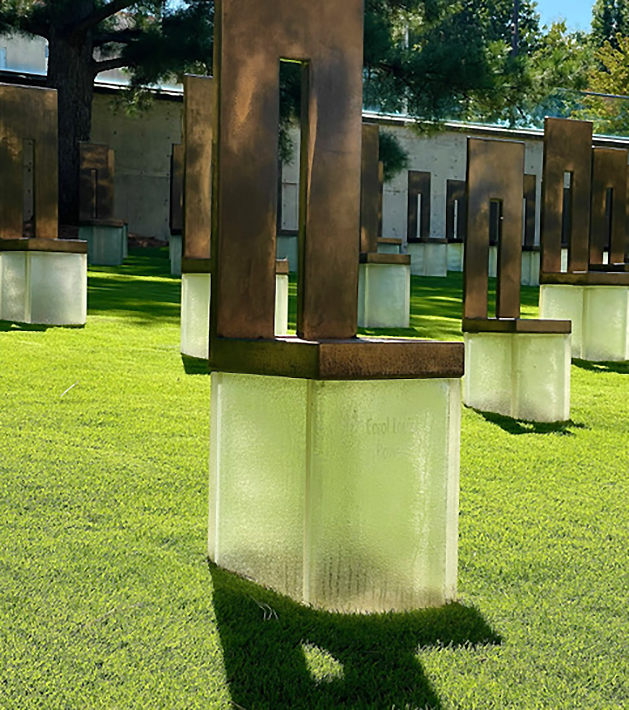 Chair Details: A closer view of the chairs in the ‘Field of Chairs’. The design of the chairs is simple but beautiful and powerful. The number of chairs representing each person who died that morning creates a more profound impact. Photo by Gary Warren/ladailypost.com
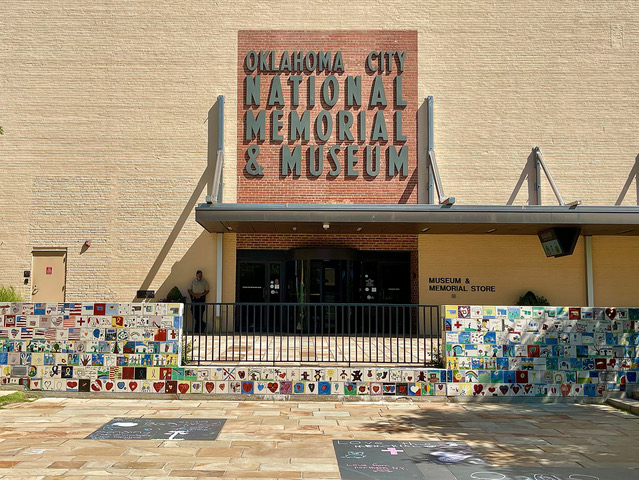 Museum: The museum sits next to the Oklahoma City National Memorial. Visitors can explore and learn more about the events of that tragic day and the healing process and memorial that have followed the bombing. Photo by Gary Warren/ladailypost.com