
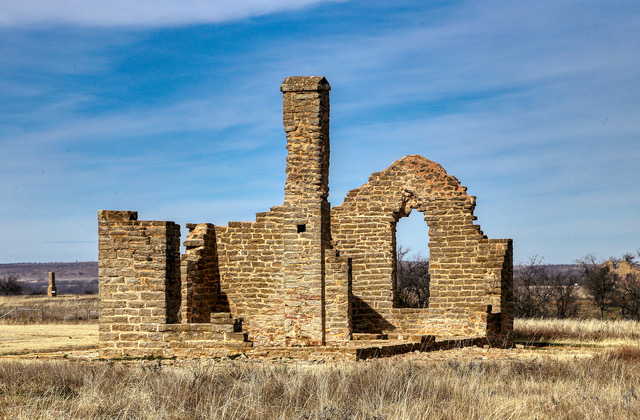
 Administration Building: Ruins of the stone administration building stand in the center of the hill where Fort Griffin was constructed. The administration building housed offices including the office of the commanding officer of the fort. Photo by Gary Warren/ladailypost.com
 Sutler’s Store: Windblown grassy fields in Fort Griffin with the remains of Sutler’s Store, a civilian owned business that furnished canned food and other general supplies to soldiers. Photo by Gary Warren/ladailypost.com
By GARY WARREN
Photographer
Formerly of Los Alamos
In post-Civil War years the U.S. Army created forts throughout the west for the purpose of providing protection for settlers moving westward. We visited one of these forts awhile back during our return trip home from Houston.
We visited Fort Griffin State Historic Site near Albany, Texas. which is in the high plains of Texas located south of the Texas panhandle region. The park packed a load of history but it also has a nice RV Campground. We decided to stay for the night and visit the historic features the next morning.
Fort Griffin is located on a pioneer travel route where cattle was moved during the year. It was also a hub for trading and ranching and settlers needed protection from Native Americans and western outlaws who populated the area. The Clear Fork of the Brazos River made the location of the fort an easy decision when it was built.
Fort Griffin was established in 1867 and was manned by the U.S. Army. Some of the soldiers at Fort Griffin were Buffalo Soldiers. In 1866 six regiments of all black soldiers were created in the U.S. Army. The Buffalo Soldiers as they became known served in the Army for 90 years until the regiments were ended during the Korean War.
In the 19th century the Buffalo Soldiers fought in conflicts with Native Americans, Mexicans, and fought in the Spanish-American War. The soldiers also served as caretakers in National Parks in the west. The regiments were popular and many blacks served over the time of the Buffalo Soldiers.
The Buffalo Soldiers served at Fort Griffin during its short lived era. The fort was established in 1867 and was vacated in 1881. The fort was built very quickly. The post consisted of 60 buildings. Six of the buildings were constructed with stone and adobe and the remainder of the buildings were wood construction. The lumber used was green and not treated. Many of the boards warped and cracked and did not stand up to the weather elements. Needless to say they were hot in the summer and freezing cold in the winter.
Army officials considered Fort Griffin “unfit for human habitation” in 1873 but the fort remained until 1881.
Today Fort Griffin is operated by the Texas Historical Commission. This special site is preserving the past with this park. The stone and adobe structures still remain in various states of decay but the wood constructed buildings fell victim to the elements years ago. A few buildings have been reconstructed to appear as they did in the 19th century.
With the leadership of the Texas Historical Commission and the Friends of Fort Griffin organization the site should be preserved for decades to come. The site is also home to the state’s Texas Longhorn herd. Fort Griffin is on the U.S. Register of Historic Places and a State Archeological Landmark.
With February being Black History Month I thought this would be a good time to share this stop in our travels. The park is very nice as is the RV Campground on the site. The amount of history at these small frontier forts is incredible and I hope to visit another site when time allows.
Editor’s note: Longtime Los Alamos photographer Gary Warren and his wife Marilyn are traveling around the country, and he shares his photographs, which appear in the “Posts from the Road” series published in the Sunday edition of the Los Alamos Daily Post.
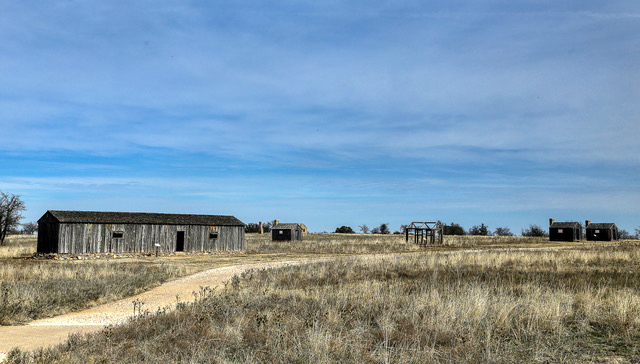 Mess Hall: Shown in this view of Fort Griffin is the Mess Hall to the left and a few of the barracks (also known as barrack huts) in the distance and to the right of the photo. The Mess Hall and barracks are reconstructed to appear as they did in the 1800s. These wooden buildings were quickly constructed with untreated green lumber which did not fare well is the harsh weather of this region of Texas. The small barrack huts housed up to six soldiers. Photo by Gary Warren/ladailypost.com
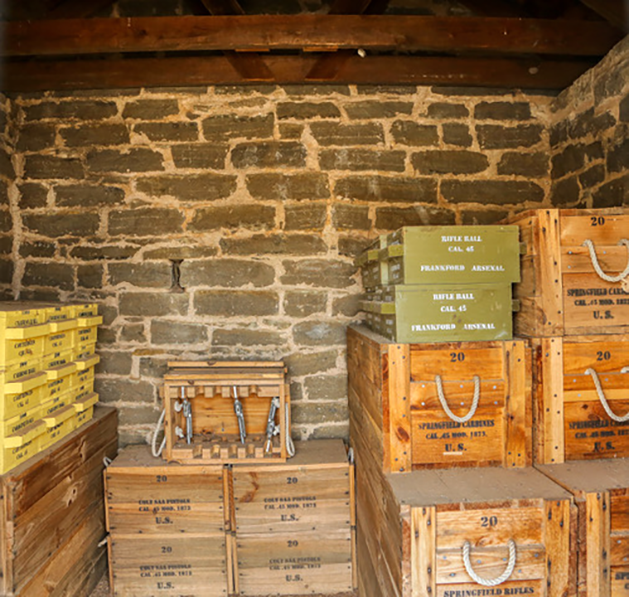 Powder Magazine: The Powder Magazine stone structure is where weapons, gunpowder and ammunition were stored. The structure has iron bars at the door to protect the contents from thieves. Small openings allowed for air circulation for the explosive material. Photo by Gary Warren/ladailypost.com
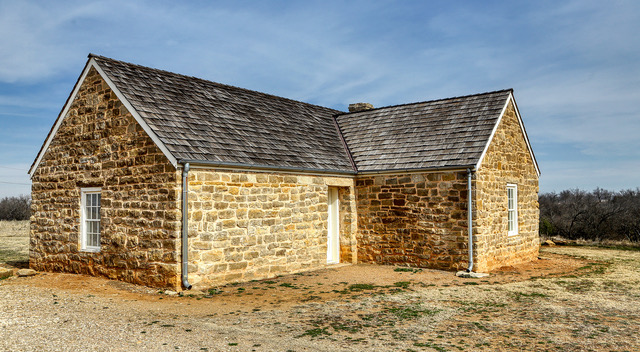 Bakery: The stone structure with cypress wood shingles on the roof was one of the best preserved structures in the fort. The simple and basic menu at the mess hall required a lot of bread. The two brick ovens in the bakery could produce 800 loaves of bread per day. Photo by Gary Warren/ladailypost.com