
 Giant Totem Pole: The giant totem pole is the centerpiece of the Ed Galloway Totem Pole Park. The 90-foot-tall structure is a piece of art from the ground to the top. Two hundred works of art adorn the exterior walls and many are bas-relief or raised from the surface of the structure creating a three dimensional effect. The turtle at the base is a natural outcropping of sandstone rock, which Galloway carved into the shape of a turtle. The bold paint colors accentuate the artwork and make each image stand out. Photo by Gary Warren/ladailypost.com
By GARY WARREN
Photographer
Formerly Of Los Alamos
Unique and unexpected sites always enhance a day of travel. Some of the sites are familiar while others are unplanned surprises that we spot while traveling the backroads of America.
Ed Galloway’s Totem Pole Park is a destination that we were aware of but had never seen before this trip. This unusual park is located near Foyil, Okla. a couple of miles from Route 66. The park has become a popular Route 66 stop and was even added to the National Register of Historic Places in 1999.
The centerpiece of the Totem Pole Park is the world’s largest concrete totem pole, which took Galloway 11 years to build. The giant sculpture is made of sand and rock, cement, and steel and a small amount of lumber. The giant totem pole stands 90 feet tall and weighs in at 134 tons. A huge outcropping slab of sandstone located on the property, which Galloway carved into a turtle is the base for the giant structure.
The giant totem pole is hollow on the inside and was built with spiral stairs but they are now closed but the ground floor remains open for visitors to enter and look around. One will also notice many figures and symbols on the exterior of the giant totem pole. Many of these features are designed to project outwards a bit to create a three dimensional look on the surface. There are 200 of these features from top to the bottom of the pole.
Galloway used bright and contrasting colors on all of the totem poles that he constructed. The artwork also has a Native American motif as a tribute to all Native Americans in our country. Many of the totem poles feature art and design similar to indigenous art seen in the Pacific Northwest and Alaska.
In addition to the giant totem pole there are several other colorful totem poles scattered about on the grounds. All off the poles feature Native American arts as well as many animals and birds. The detail and attention to each of the totem poles is very impressive.
Totem poles make up most of the outdoor artwork but there is still another surprise for visitors who visit the park. The “Fiddle House” is an 11 sided structure that Galloway built himself and is a work of art in itself. The shape of the building resembles a Navajo hogan.. Galloway included a totem pole like feature at each of the angles on the exterior of the building and, again, many colorful indigenous designs and figures around the exterior walls of the building.
The purpose of the “Fiddle House” was to serve as a workshop for Galloway’s amazing woodworks. Galloway handcrafted hundreds of fiddles of exotic woods from around the world. Intricate inlaid wood patterns are seen on many of the pieces displayed in the Fiddle House. A selection of furniture created by Galloway is also on display in the space. Today a portion of the space also serves as a gift shop for visitors.
Who was Ed Galloway? Galloway was born in Springfield, Mo. in 1879. He was interested in and very proficient in woodworking and blacksmith work. Following a stint in the U.S. Army where he served in the Spanish-American War, Galloway found work at the Sand Springs Home, an orphanage in Tulsa, Okla. where he taught woodworking. He also handcrafted furniture and other works for the institution where he worked until retirement in 1937.
Following retirement Galloway and his wife moved to a few acres outside of Foyil, Okla. where he continued to work in wood as well as concrete. The first project was building a house for he and his wife. Galloway then began building the giant totem pole in 1937 until completion in 1948. He built a total of 11 totem poles of various sizes but none came close to the size of the largest totem pole.
At the same time he worked on the giant totem pole he also built the Fiddle House where he established his wood shop. Ed Galloway was a very talented individual as almost all of the work at the Ed Galloway Totem Pole Park was completed with his two hands alone.
Galloway was a self-taught artist and considered a “visionary” because much of his artwork was outside of mainstream art. His works are some of the most prominent folk art in the state of Oklahoma. Galloway worked on various art projects up until his death in November 1962. On an information plaque at the totem pole park is this quote:
“All my life I did the best I knew … I built these things by the side of the road to be a friend to you.” –Ed Galloway
Editor’s note: Longtime Los Alamos photographer Gary Warren and his wife Marilyn are traveling around the country, and he shares his photographs, which appear in the “Posts from the Road” series published in the Sunday edition of the Los Alamos Daily Post.
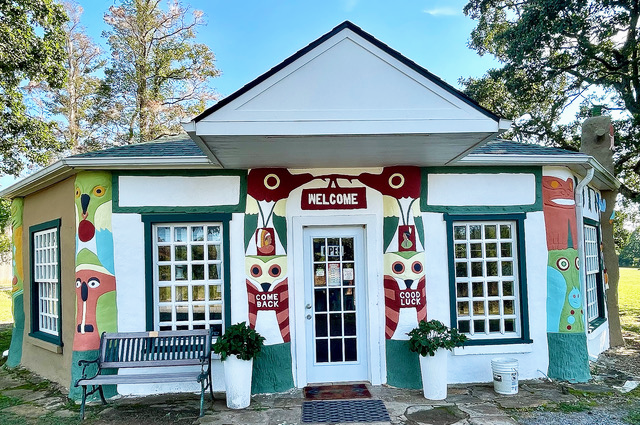 Fiddle House: Ed Galloway constructed the Fiddle House during the same time period that he built the giant totem pole. The purpose of the 11-sided structure was to house his woodworking shop. Later, it became known as the Fiddle House as it was used to display the huge assortment of fiddles that Galloway created. Galloway incorporated smaller totem poles at every angle on the exterior of the building. Photo by Gary Warren/ladailypost.com
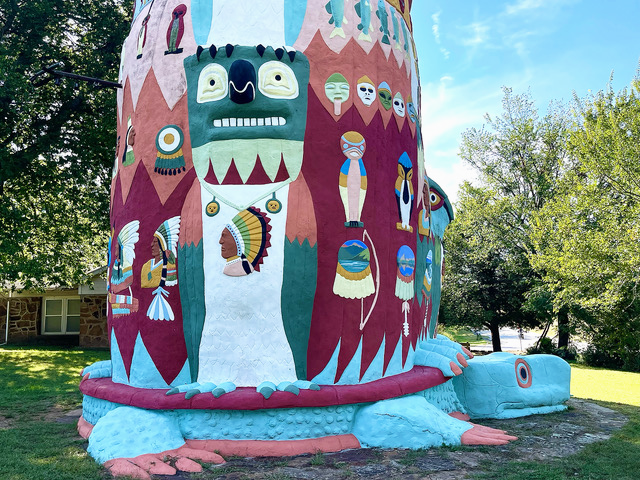 Turtle & Base: The base of the giant totem pole sits on the back of a turtle and measures about 30 feet in circumference. The turtle is a natural sandstone outcropping on the property, which Galloway carved into the shape of a turtle. The base of the totem pole allows for a closer view of the many artwork features that fill its exterior. It is also easier to see the bas-relief work, which creates the three-dimensional effect of the artwork. Photo by Gary Warren/ladailypost.com
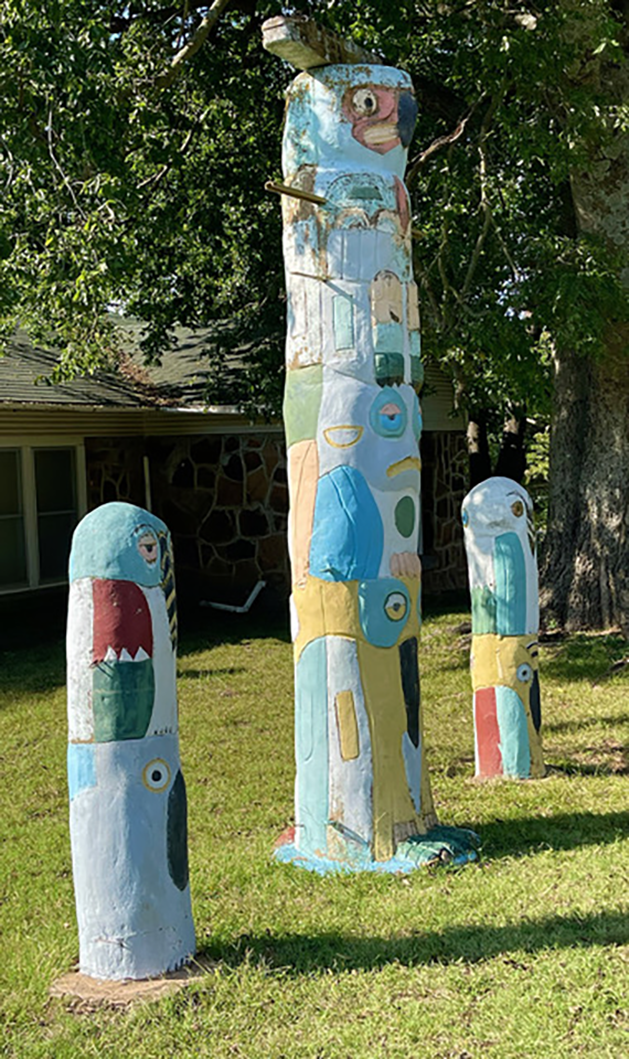 Trio: A trio of totem poles sits along the side of the grounds at the Ed Galloway Totem Pole Park in Foyil, Okla. Almost all of the works reflect Galloway’s love for the Native American people and their art. Photo by Gary Warren/ladailypost.com
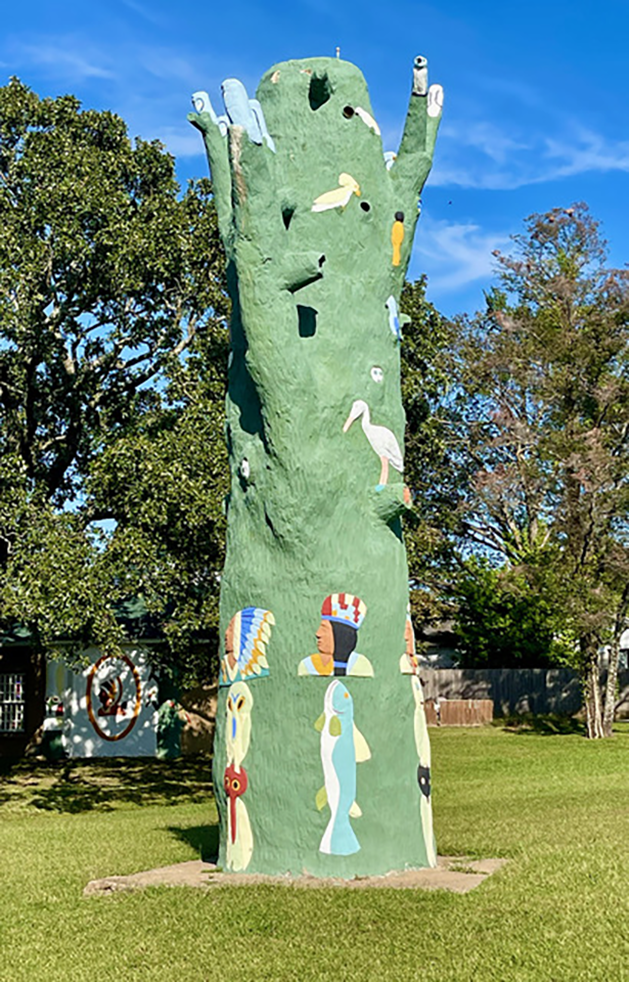 Tree Totem Pole: This totem pole began as a tree but was repurposed as a work of art. Ed Galloway is a premier folk artist whose work is a tribute to Native Americans. There are 11 totem poles in the park and a few other sculptures, including a concrete picnic table and chairs created by Galloway. Photo by Gary Warren/ladailypost.com
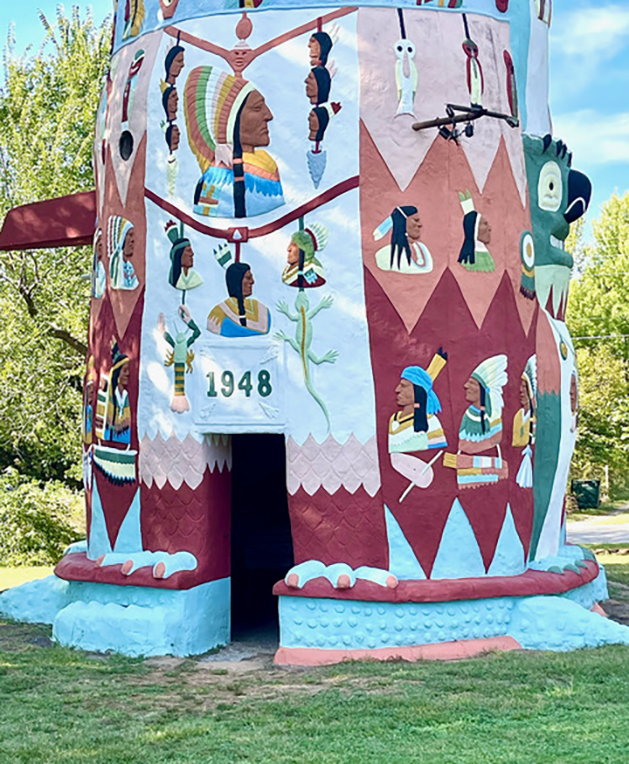 Entrance: The entrance to the ground floor of the giant totem pole reveals how small the door opening appears on the huge totem pole. Also evident is more of Galloway’s amazing Native American folk art and the bold colors on the exterior of the totem pole. Photo by Gary Warren/ladailypost.com
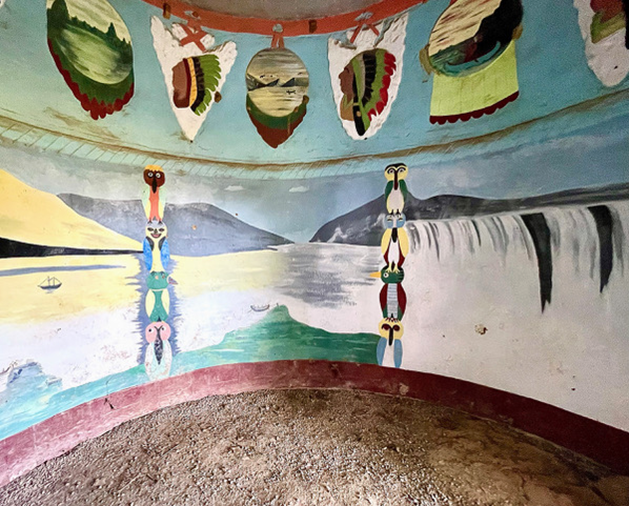 Interior: After stepping through the doorway of the giant totem pole, one will see more artwork painted by artist Ed Galloway covering the entire interior walls. Photo by Gary Warren/ladailypost.com
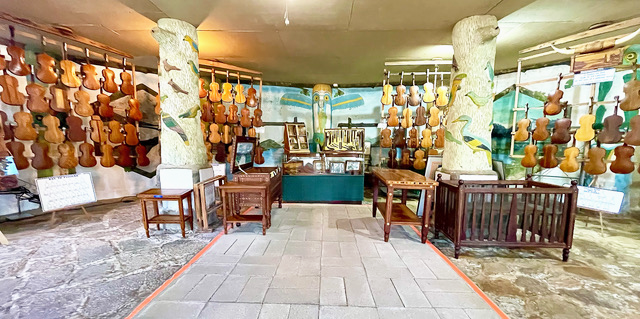 Fiddles & Furniture: The interior of the Fiddle House answers any questions regarding the building’s unique name. More than 100 fiddles and several pieces of handmade furniture by Ed Galloway fill most of the space. The two support columns are created as totem poles. One of the totem poles at the center of the back wall shows how Galloway incorporated the totem poles into the angles created by the building’s unique shape. The 11-sided structure resembles a Navajo hogan (the traditional, sacred dwelling and ceremonial structure of the Diné/Navajo people), inside and out. Photo by Gary Warren/ladailypost.com