
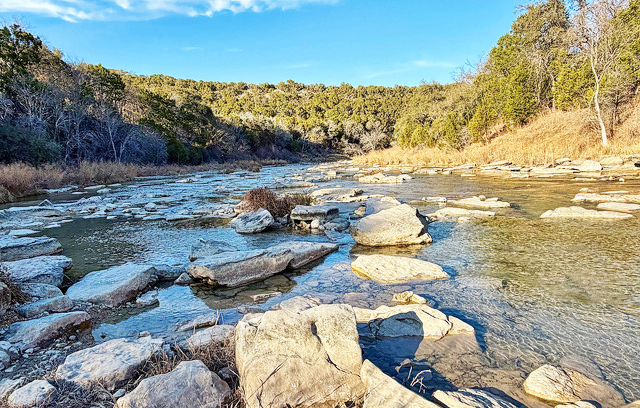
 Paluxy River: While the Paluxy is not a long river within the state of Texas, it is an important one. The dinosaur footsteps from millions of years ago can be seen in the riverbed within Dinosaur Valley State Park. Photo by Gary Warren/ladailypost.com
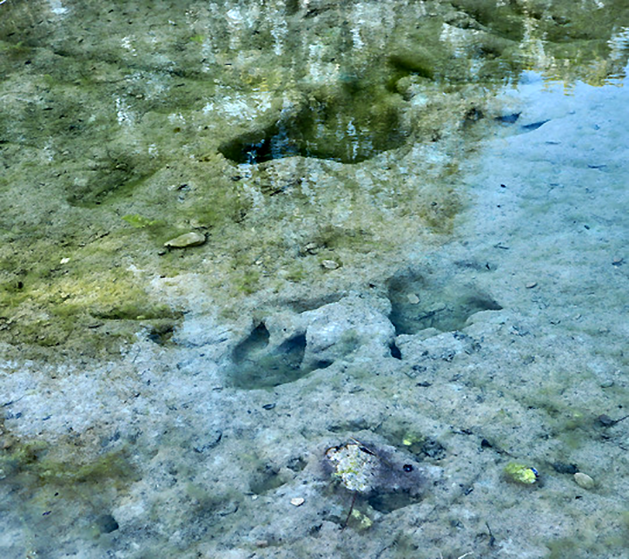 Footprints: There are two types of footprints found at Dinosaur Valley State Park. The larger oval-shaped prints are similar to an elephant print, and the smaller three-toed prints are similar to a bird. The shape of the smaller print makes it easier to spot through river water. Photo by Gary Warren/ladailypost.com
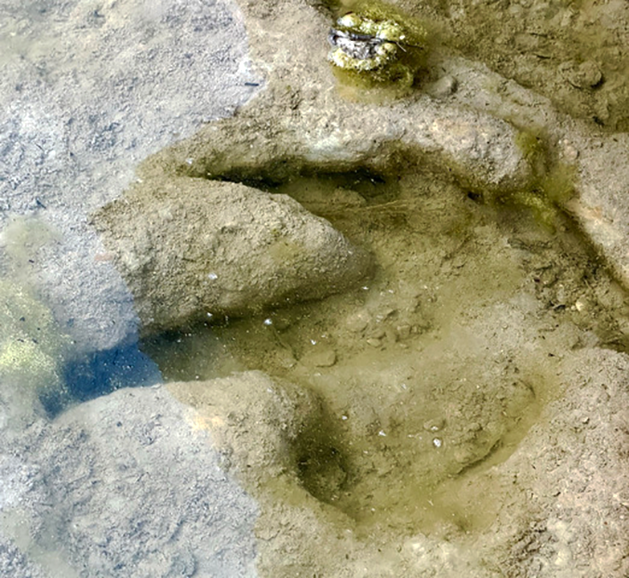 Three-Toed Print: The three-toed dinosaur footprints at Dinosaur Valley are made by a two-legged animal called Acrocanthosaurus, a type of Carnosaur related to Tyrannosaurus. The animal had sharp, clawed toes and could travel about five miles per hour.
By GARY WARREN
Photographer
Formerly of Los Alamos
Millions of years ago, the oceans and lands of this world were arranged much differently than today. Dinosaurs occupied the landscape and roamed areas that are familiar to us in much different ways.
In an area of Texas about an hour southwest of Fort Worth is one of these unique landscapes. Once an area where dinosaurs roamed the shores of an ancient ocean is now Dinosaur Valley State Park. This was an area active with dinosaurs just a mere 113 million years ago.
The ancient reptiles left footprints on the ocean shores, and over time, deposits of limestone, sandstone, and mudstone filled the footprints where they fossilized over millions of years. In recent history, the Paluxy River has carved through many layers of earth and time and has revealed these ancient footprints, which are some of the best preserved dinosaur footprints in the world.
The footprints seen today are largely located in the riverbed of the Paluxy River. The footprints were first found in the early 1900s after water and erosion made the footprints visible again. Dinosaur Valley State Park was established in 1969 and opened in 1972 to preserve the fossilized footprints for future generations.
The state park is about four miles west of Glenrose, Texas, southwest of Fort Worth. The park covers 1,524 acres, including a winding stretch of the Paluxy River where the dinosaur footprints exist. To visit this treasured state park is like stepping back in time and getting a small glimpse of prehistoric times while enjoying the scenery of the area today.
The featured attraction of the park is the various sites where the footprints are visible. In addition, the park offers camping, more than 20 miles of trails for hiking, biking, and enjoying nature. Fishing and swimming are also popular activities in the park. Horse owners can bring their animals in and see the area on horseback if they desire.
We visited Dinosaur Valley State Park in January and found it to be a good time to visit in that the crowds were not bad at all, but viewing the footprints was less than stellar. We learned that the best time to visit the park is in late summer when the river is lower because of the hot Texas summer and less rain. When it is really dry, many of the footprints can be seen on dry limestone or in just splashes of water. The warm temperatures are also ideal for walking in the river to get closer to the ancient footprints. In January there was no one in the water even on a sunny winter day!
When visiting the park, there are two models of dinosaurs on display, Bronto and Rex, which were created at the 1964 New York World’s Fair. Ironically, neither of these dinosaurs was found around Dinosaur Valley State Park and they didn’t even exist during the same time period as each other, but they create a nice display and a chance to get up-close to a fiberglass model dinosaur!
The Dinosaur Valley State Park near Glenrose is truly a treasure and a site that should be visited when spending time in the area. An hour from Fort Worth – a step into prehistoric time.
Editor’s note: Longtime Los Alamos photographer Gary Warren and his wife Marilyn are traveling around the country, and he shares his photographs, which appear in the “Posts from the Road” series published in the Sunday edition of the Los Alamos Daily Post.
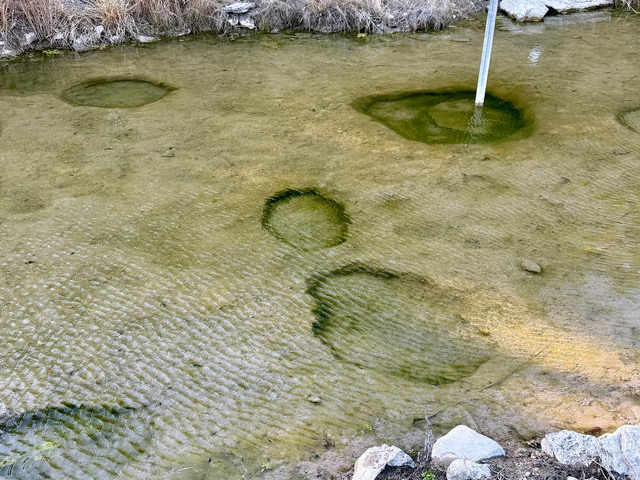 Oval Prints: Oval footprints at Dinosaur Valley are made by a four-legged animal called Pleurocoelus, a type of sauropod related to brontosaurs. It had big flat hind feet (similar to an elephant) and hoof-like forefeet. This animal could move about 2.7 miles per hour. Photo by Gary Warren/ladailypost.com
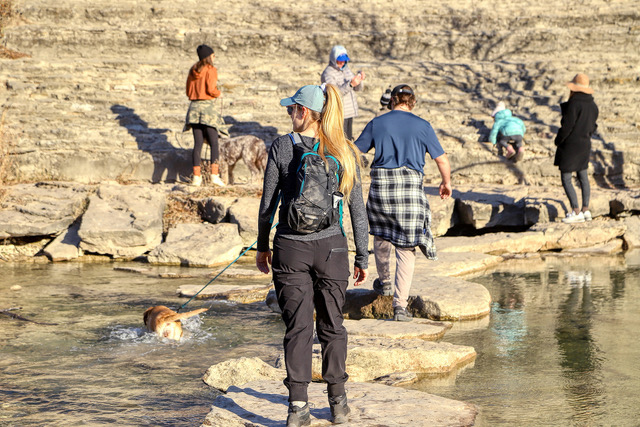 Bridge Pathway: Large, flat stones provide a bridge path for visitors to cross the river water to view the dinosaur footprints at Dinosaur Valley State Park. A nice, sunny January afternoon created comfortable conditions to view the footprints as long as you stayed out of the water, unless you were a dog and the water was the route of choice! In warmer climates, visitors may walk in the water among the dinosaur tracks. Photo by Gary Warren/ladailypost.com
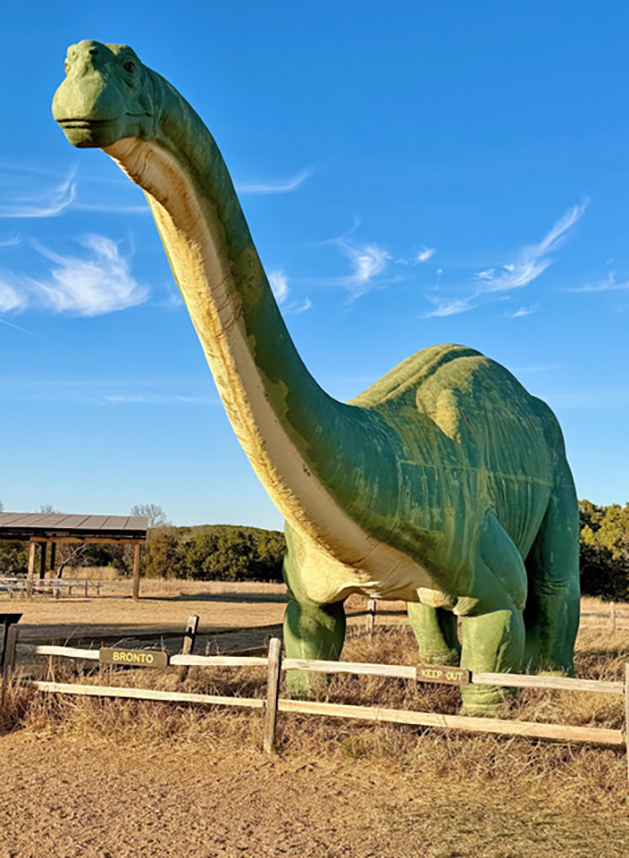 Bronto: Bronto is a 70-foot-tall fiberglass dinosaur at Dinosaur Valley State Park. This animal was not ever present at the park, but kids and families enjoy it as a photo op. Photo by Gary Warren/ladailypost.com
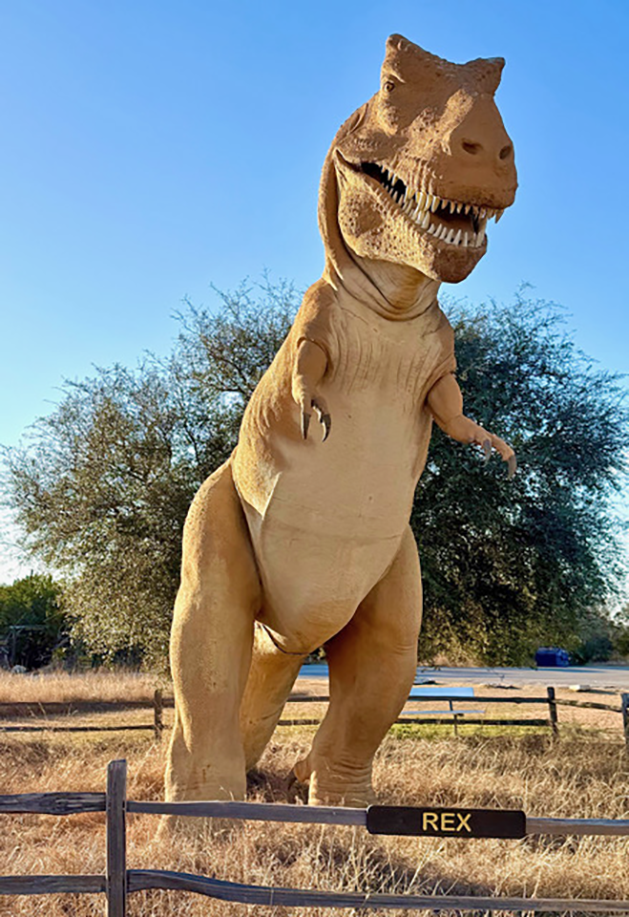 Rex: Rex is a two-legged dinosaur at the state park. Rex, like Bronto, never existed in the area of Dinosaur Valley State Park, but creates a nice photo op. Photo by Gary Warren/ladailypost.com