
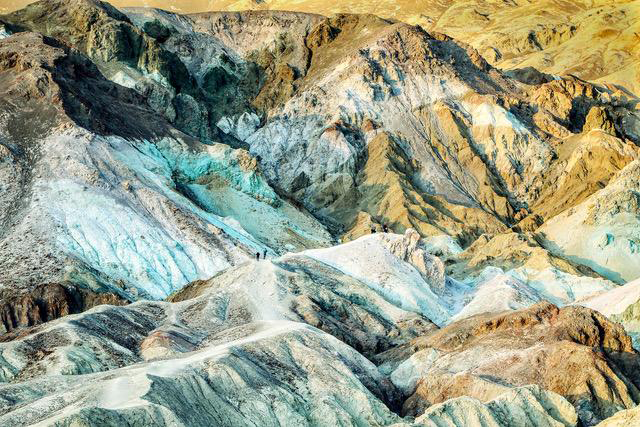
 Artists Palette: Artists Palette is the star viewpoint on the nine mile Artists Drive area of Death Valley National Park. This view features some of the most colorful rock formations within the national park. The formations are a result of volcanic activity millions of years ago and the array of colors are caused by oxidation of the various minerals found in the rocks. A scale of the scene is seen by two groups of visitors who are located near the center of the photo who were getting a closer view of the rock formations and colors in the area from a ridge line of white rock. Photo by Gary Warren/ladailypost.com
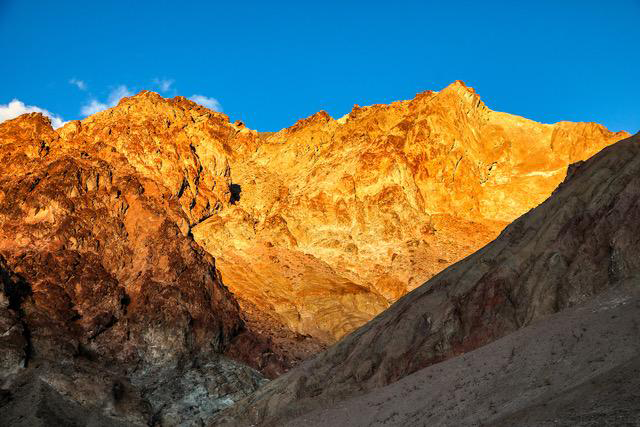 Last Light: The last light of the day illuminates this canyon and mountainside creating a glowing scene of yellows, oranges, and reds as shadows begin to creep into the scene at sunset. The light show happens quickly as the hillside appeared more washed out just a short time earlier. Photo by Gary Warren/ladailypost.com
By GARY WARREN
Photographer
Formerly of Los Alamos
Dantes View and Artists Drive are two of the most popular stops when visiting Death Valley National Park. However the two are contrasting in that Dantes View offers visitors great a wide open, overview of the park from a higher elevation while Artists Drive offers visitors a more intimate, close up view of the canyons and hillsides along the drive.
Dantes View requires visitors to drive about 10 miles east of Furnace Creek before turning onto the Dantes View Road just before exiting the park on Highway 190 which is the most direct route from Las Vegas, Nev. Once on the Dantes View Road it is about 18 additional miles to the viewpoint which is at the end of the road.
Dantes View Road offers visitors nice views of the east area of the park as they make their way to the viewpoint. The drive features a steady rise in elevation and the last half mile climbs at a rate greater than 10 percent. Because of restrictions on the last portion of the drive, vehicles over 25 feet are not allowed.
Upon reaching the parking lot there is a large viewing deck offering great views. There are also trails that lead both north and south from the deck, which leads to higher elevations and more spectacular views. Dantes View sits at 5,475 feet in elevation high on a ridge of the Black Mountains which is a part of the Amargosa Mountain Range.
Ironically, Dantes View sits almost directly above Badwater Basin, which is the lowest elevation in North America a 282 feet below sea level. From Dantes View, the road to Badwater Basin can be seen as one gazes at the valley floor of Death Valley and the large mass of salt flats which cover the basin floor. Looking directly across the valley visitors can easily see Telescope Peak at 11,049 feet in elevation, the highest point in Death Valley National Park. Telescope Peak is in the Panamint Mountain Range on the western side of the national park. When we visited in March Telescope Peak was still snowcapped from the winter snowfall.
Contrasting the wide views from a high elevation of Dantes View, Artists Drive is about 10 miles from Furnace Creek and can be reached by driving out the Badwater Basin Road. The well-marked Artists Drive is a one-way paved loop road that twists and turns through hills and canyons for nine miles just above the valley floor.
The drive has a few designed viewpoints but visitors can park by the road in other locations to get a closer view to sites along the road. This drive offers visitors an up close, more intimate view of the mountains and canyons. Many of the hillside views feature the familiar shades of golden and brown colors mixed with some white and black tones.
However the star viewpoint of Artists Drive is the stop for Artists Palette. This is a relatively small area in the grand size of Death Valley National Park. This stop offers formations, which were formed by volcanic activity millions of years ago. The array of beautiful colors seen are created by the oxidation of the various minerals found in the rocks. The palette of blues, greens, aqua, lavender, pinks, reds, and oranges can be spotted within the Artists Palette area.
Late afternoon is a prime time to visit Artists Drive as the setting sun illuminates this area. At Artists Palette the pastel colors of that area are best just after sunset or on an overcast day. The softer diffused light offers a chance to see the colors of this area where sunlight can wash out the colors.
Dantes View and Artists Drive offer contrasting views of Death Valley National Park but both are spectacular and should not be missed when visiting the national park. The vast open views from Dantes View and the more intimate and close up views of Artists Drive are two of the most popular areas to visit while in Death Valley.
Editor’s note: Longtime Los Alamos photographer Gary Warren and his wife Marilyn are traveling around the country, and he shares his photographs, which appear in the “Posts from the Road” series published in the Sunday edition of the Los Alamos Daily Post.
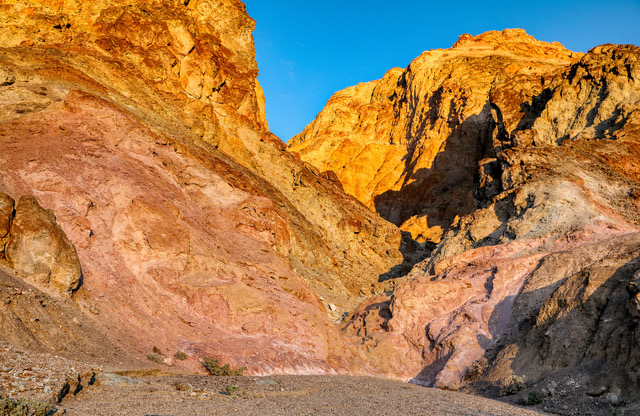 Colorful Rocks: This view of a hillside and canyon a few minutes before sunset reveal the yellow, oranges and reds, which are prominent in this area of the park along with combinations of pinks and other color shades near the base of the hillside. Photo by Gary Warren/ladailypost.com
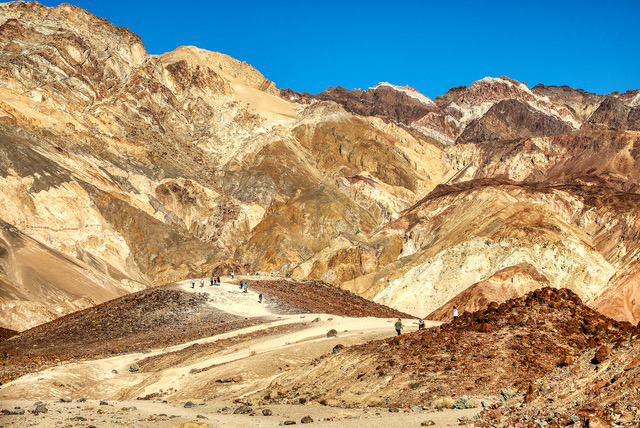 A Closer View: About a mile into Artists Drive is the first viewpoint in the area. Seen are several hikers as they make their way to a nearby ridge to get a closer view of the canyon and mountainside in the scene. This image was taken earlier as the colors began to glow. Just a few minutes later the colors in the scene were more similar to those seen in the Last Light photo above. Photo by Gary Warren/ladailypost.com
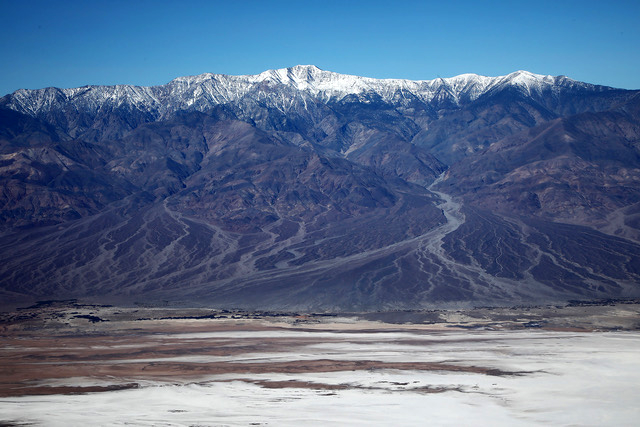 Death Valley & Telescope Peak: A view from Dantes View reveal the vast overall view of the southern end of Death Valley National Park. Telescope Peak, elevation 11,049′, is in the Panamint Mountain Range in the western part of the park and is the highest point in Death Valley. Dantes View, elevation 5,475′, is in the Amargosa Mountain Range. The massive Death Valley separates the two ranges. The basin of the valley is covered with hundreds of square miles of salt flats especially in this end of the valley. Photo by Gary Warren/ladailypost.com
 Death Valley Basin: A view toward the north from Dantes View gives visitors an overall view of the massive Death Valley. It is evident in this photo how the salt flats in the valley floor fade in and out. The basin covers 3,000 square miles of this enormous national park. Photo by Gary Warren/ladailypost.com
 Telescope Peak: Another view of snowcapped Telescope Peak is framed by a rock formation near Dantes View. Dantes View offers a viewing deck but trails also allow visitors to take in the views from a little higher perspective. The trails begin at the viewing deck and go north and south from that point. Photo by Gary Warren/ladailypost.com
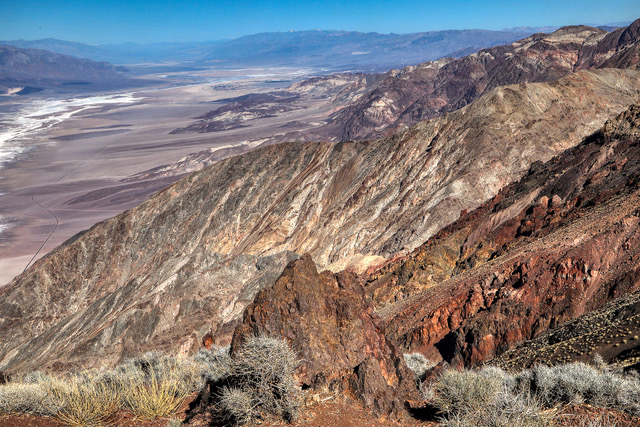 Amargosa Range: A view across the west facing hillsides of the Amargosa Range give one an idea of the ruggedness and uniqueness of these mountains. Visitors can also see the salt flats and how they fade in and out across the valley floor. We visited Dantes View during the late morning hours. How I would have loved to see this view as the light at sunset shines on these mountains. The various colors of the mountains would glow during the last light of the day. Photo by Gary Warren/ladailypost.com
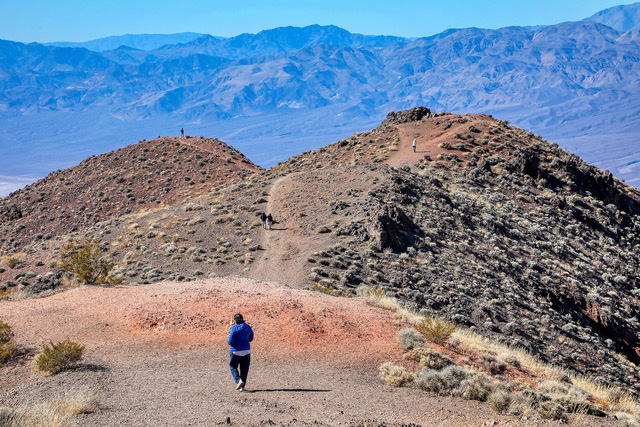 More Views: As I returned to the parking lot and viewing deck, I glanced back to the south at the trail and views and viewpoints where I stood just a short time before. As you can see we did not have to worry about heat in Death Valley in early March this year. The temperatures at Dantes View were maybe 50 degrees and the wind was howling. Photo by Gary Warren/ladailypost.com