
 A’a Lava: A’a lava is identified by the jagged, rough surface as seen in this photo. A’a lava experienced a more violent eruption, moved farther and faster following eruption, and may be seen in large blocks such as the lava seen in the photo. Photo by Gary Warren/ladailypost.com
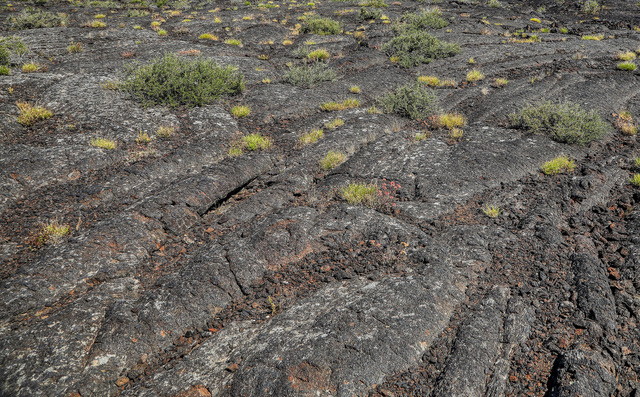 Pahoehoe Lava: Pahoehoe lava is characterized by a smoother surface that may appear in strands like a rope. The eruption of Pahoehoe lava was slower and flowed across the Earth’s surface in a more liquid state. Photo by Gary Warren/ladailypost.com
By GARY WARREN
Photographer
Formerly of Los Alamos
Craters of the Moon National Monument and Preserve is the most unique and different park in the National Park System that we have visited. The park is known for its “weird and scenic” landscape and that is 100 per cent true. The park is located in south-central Idaho. The closest city is Idaho Falls which is about 90 miles away.
Just before arriving at Craters of the Moon we were driving through the beautiful Sawtooth Mountain Range and less than two hours later we are standing on this bizarre landscape which resembles the surface of the moon! What a contrast!
The 43,000 acre Craters of the Moon National Monument was dedicated by President Calvin Coolidge in 1924. The park size was increased over the years to 53,545 acres, but a major addition came in 2000 when Congress approved increasing the park from 53,545 acres to 750,000 acres. This huge addition included the land that makes up the Great Rift and all lava fields.
The Great Rift is a 52 mile-long section of the Earth’s surface in South Central Idaho where the crust of the Earth is weak. The area cracked allowing molten lava to escape and flow across the surface of the Earth in a series of eight fissure eruptions over several thousand years. In simple terms, this is how the Craters of the Moon was created.
The National Park Service (NPS) manages the lava fields across the park while the Bureau of Land Management (BLM) manages the non-lava grasslands acreage of the park. This is a unique management system but both entities are under the U.S. Depart of Interior.
The first eruption occurred about 15,000 years ago and the most recent eruption occurred 2,100 years ago. There were eight eruptions over the time period which resulted in the ocean of lava fields that visitors to that park experience today. The lava fields within the Craters of the Moon park are the largest basaltic lava field is the lower 48 states of the U.S.
The Craters of the Moon National Monument and Preserve is well designed to offer visitors a way to see and explore the varied lava fields.
A seven mile loop allows visitors to drive into the park and view the various types of lava that make up this “weird and scenic” landscape. There are several viewpoints where visitors can stop, view, and walk out into the fields to get a close up view of these amazing volcanic rocks. Most walks at the viewpoints are around .5 mile or less but a few walks are longer hikes.
The volcanic activity of the series of eruptions has left volcanic cones, craters, volcanic caves, flows from various types of lava and other volcanic characteristics of the lava fields. We were able to see many of the formations and characteristics of the lava field but we were unable to view the lava caves. That will have to wait for a future visit.
The lava seen at Craters of the Moon are A’a lava and Pahoehoe lava. The two types of lava have the same makeup but the A’a lava has a rough, jagged surface while Pahoehoe lava is a smoother or a ropy texture. The difference in the two occurs during the eruption rate, the speed of the lava movement and the distance from the location of the eruption site. A’a lava is a thicker and more dense while Pahoehoe lava is a thinner and smoother lava.
When visiting the Craters of the Moon National Monument and Preserve one should stop at the Visitors Center located near the entrance to the park. A museum area and video will acquaint them with the park. In addition, the park personnel were very knowledgeable and helpful answering questions and giving visitors advice on their visit.
An additional bonus that is occurring this year at the park is the Craters of the Moon Centennial Celebration featuring a variety of special events throughout the year. The park officially turned 100 years in May 2024.
Whatever image one has before visiting the Craters of the Moon National Monument and Preserve, once you arrive and see this “weird and scenic” place for yourself, you will probably walk away with a different image than when you arrived. The Craters of the Moon National Monument and Preserve is a park that should be visited to accurately comprehend. We will definitely be returning to “the moon” on a future trip!
Editor’s note: Longtime Los Alamos photographer Gary Warren and his wife Marilyn are traveling around the country, and he shares his photographs, which appear in the “Posts from the Road” series published in the Sunday edition of the Los Alamos Daily Post.
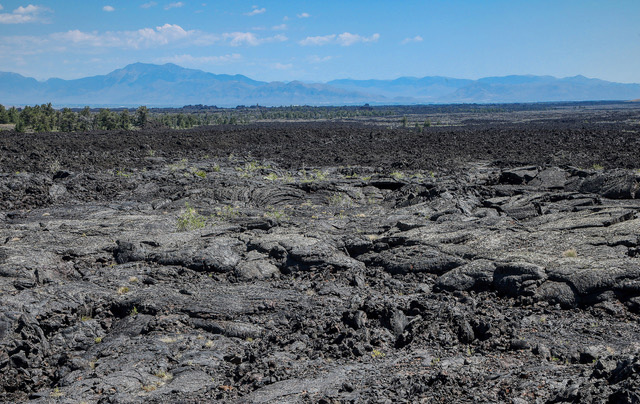 Lava Cascades: When viewing the lava cascades seen at Craters of the Moon one can visualize red hot molten lava cascading across the surface of the Earth following fissure eruption. It almost appears that the lava is in motion but it hasn’t moved in thousands of years. Photo by Gary Warren/ladailypost.com
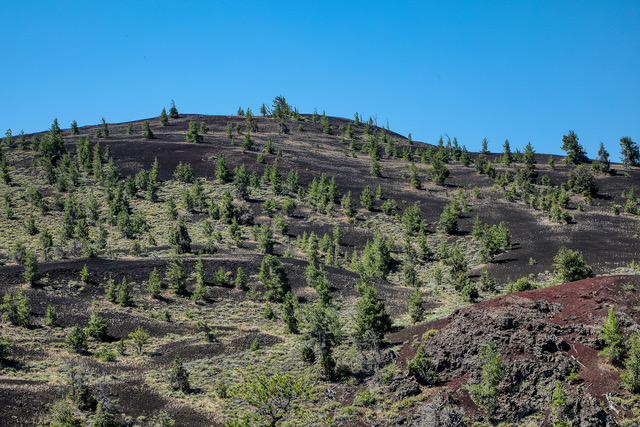 Trees and Lava: Trees and lava coexist in this view of Craters of the Moon in the area of the North Crater Trail. The afternoon sunlight creates interesting shadow designs among the trees and lava covered surface of the hillside. Photo by Gary Warren/ladailypost.com
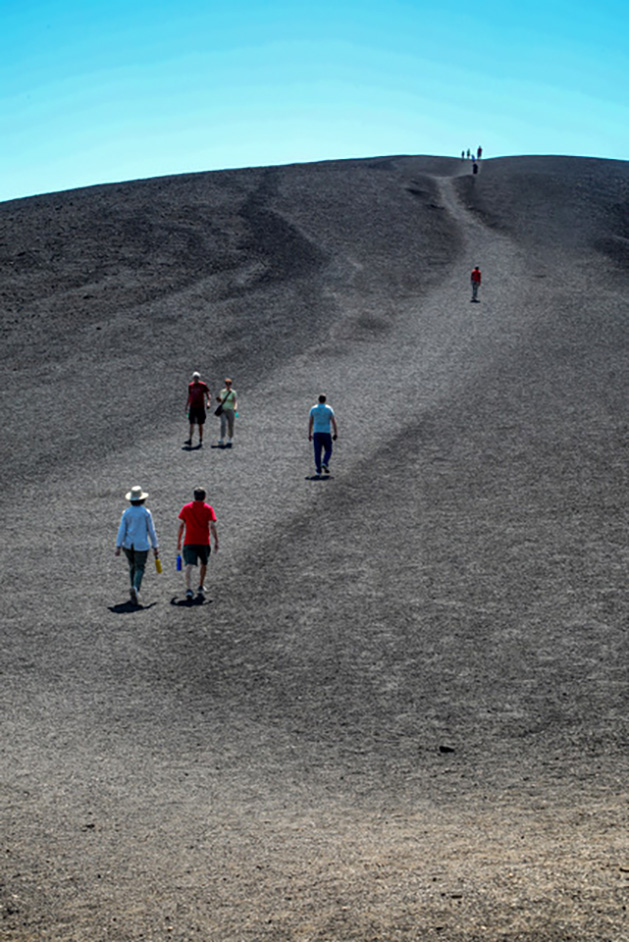 Inferno Cone: One of the popular hikes in the park leads hikers to the top of Inferno Cone, a basaltic cinder cone. The trail is short but steep. Located near the center of the seven mile loop, the view from the top allows hikers a great view of the park in all directions. Photo by Gary Warren/ladailypost.com
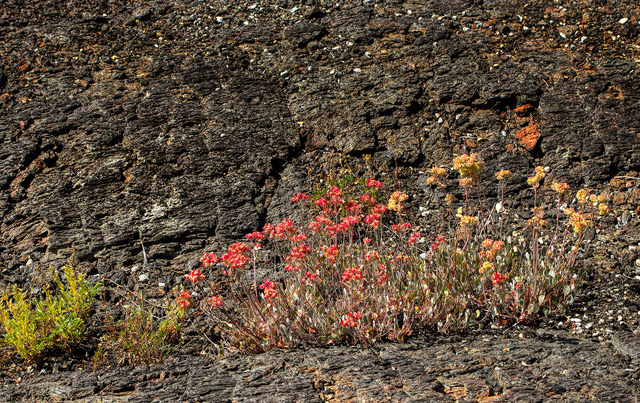 Blooms: Plants do exist in the harsh environment of a lava field but only if they are able to withstand the stress due to dry winds, very little water and the hot temperatures of the black lava rock. Shown are some blooms spotted during our visit in July. Photo by Gary Warren/ladailypost.com
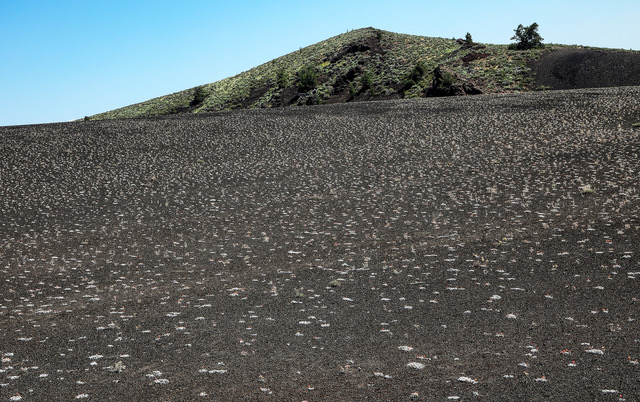 Dwarf Buckwheat: Dwarf Buckwheat is very common at the Craters of the Moon. This tiny plant grows to only about three inches in height. However, the root system is about three feet wide. Shown is a cinder cone with hundreds of the small plants in bloom. These plants grow with spaces between each plant because of the wide root system which prevents the plants from growing close to each other. Photo by Gary Warren/ladailypost.com