
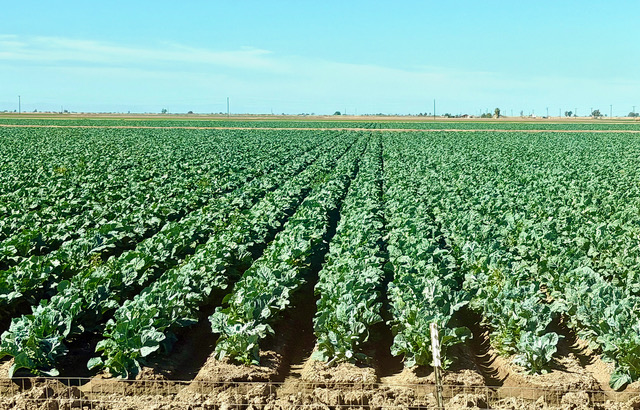
 Rows and Rows: Green fields from a winter crop grow along the roadway in Yuma County. The beautiful green fields and sunny blue skies were a nice change from winter scenery. Photo by Gary Warren/ladailypost.com
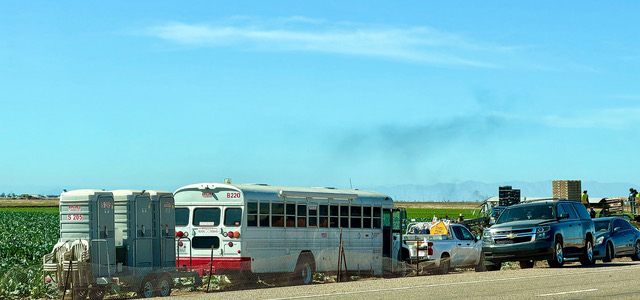 Migrant Bus & Workers: Thousands of Mexicans are bused across the border into Yuma County to work in the crops. The workers have visas for temporary foreign agricultural workers and are legal workers on the farms. The workers are bused back across the border every day after work. Shown is a typical white bus used to transport workers to the crop sites. Thousands of seasonal workers also arrive from various locations throughout the country to work the crops. Photo by Gary Warren/ladailypost.com
By Gary Warren
Photographer
Formerly of Los Alamos
One does not often think of agriculture as a major economic force in the state of Arizona, but the folks in Yuma County, Ariz., know it well. Agriculture in Yuma County is more than a $4 billion industry in the Arizona economy.
Crops can be grown year-round in the sunny, warm climate of Yuma, Ariz. Winter is a busy season, as that is when the majority of the green leafy vegetables are grown in the area. Yuma County supplies about 80-90 percent of the country’s leafy vegetables. Winter crops include varieties of lettuce, cauliflower, broccoli, kale, and root vegetables such as carrots.
Summer crops consist of wheat, cotton, Medjool Dates, watermelons, cantaloupes, honeydew, and a variety of citrus fruits. Lemons are the most popular of the citrus crops.
We were traveling to the southwest and Southern California in February when the dry wintery weather became very wet and windy along our intended route. We did what we could do. We left Kingman, Ariz. and rather than entering California, we drove due south down the western side of Arizona to Yuma.
Yuma County is on the U.S.-Mexico border in southwest Arizona. It also borders California on the western side of the county. The Colorado River flows down the western border of Arizona and passes along the western side of the county.
Yuma has the distinction of being one of the world’s sunniest cities. We did experience one very windy day, but the remainder of our stay was sunny and warm. While spending a few days waiting out the rainy weather in Southern California, we got to know the area a little more by touring around and enjoying the scenery.
What makes this portion of the desert a good agricultural area? Years of the Colorado River flowing south through the area have deposited river soils forever. This created a fertile valley at a low elevation with the longest growing season in the country.
The region has become a leader in the growth of leafy vegetables over the last 50 years. Advances in irrigation methods have enabled the area to grow large crops year-round. While irrigation is definitely necessary, the amount of water used in irrigation has actually decreased thanks to modern irrigation methods and knowledge today.
We enjoyed taking time to drive all around the area and gaze at the beautiful green crops and try to guess what was grown in each of the crops. We were not good at that, but we thoroughly enjoyed seeing and watching the crops as many were being harvested during our time in the area. It is very common to see migrant buses and transport trucks loaded with boxes of vegetables as you move about Yuma and the county.
Of the approximately 65,000 workers who work the crops, many are immigrants from Mexico bused across the border every morning and bused back home every night. The workers have visas for temporary foreign agricultural workers, making them legal workers. In addition to the immigrant workers, thousands of seasonal workers come to the area in the winter to work the crops.
The next time you purchase lettuce or other leafy vegetables at the market or in a restaurant, chances are very high that the food was grown and cultivated in Yuma County, Ariz., thanks to these hard working individuals who work daily to put food on our table.
Editor’s note: Longtime Los Alamos photographer Gary Warren and his wife Marilyn are traveling around the country, and he shares his photographs, which appear in the “Posts from the Road” series published in the Sunday edition of the Los Alamos Daily Post.
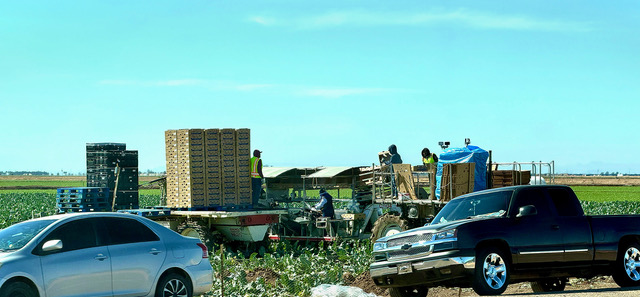 Processing: In addition to harvesting the crops, workers process the vegetables and box them. Transport trucks will then pick the boxes up and deliver them to warehouses where they are prepared for shipment across the country. Photo by Gary Warren/ladailypost.com
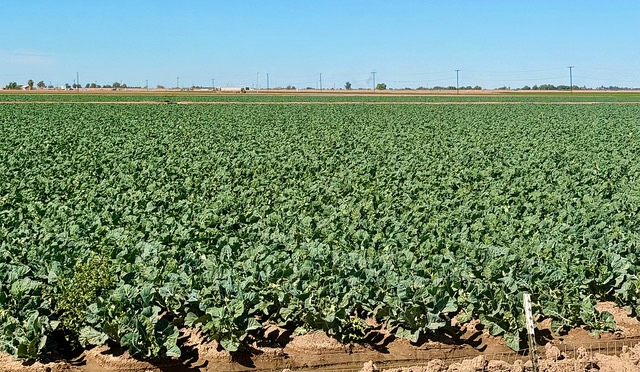 Crops: Another view of the green leafy crops of lettuce, broccoli, and a variety of other vegetables, which are grown in Yuma County. The county is a national hub for U.S. grown leafy vegetables as 80-90 per cent of the country’s leafy vegetables are grown in this county. Photo by Gary Warren/ladailypost.com
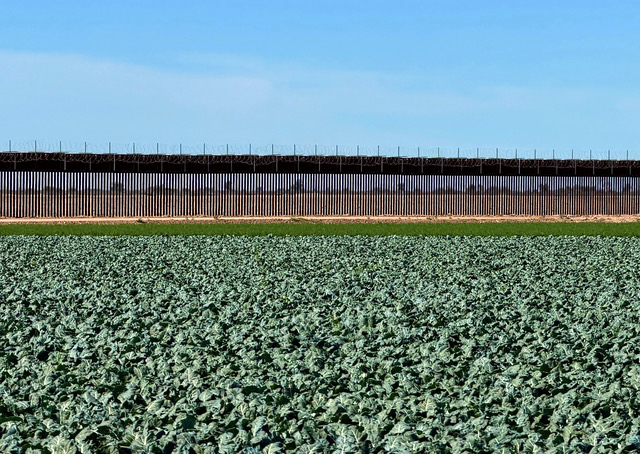 Against the Wall: A small crop was spotted in a village located on the border of the U.S. and Mexico. The border wall between the two countries can be seen just beyond the crop. Photo by Gary Warren/ladailypost.com
 Date Palms: An orchard of Medjool Date Palms was seen in an area in eastern Yuma. There are numerous date palms seen in this area and across southeastern Arizona. We had never eaten the dates until we began traveling this part of Arizona, but we always manage to stop and buy fresh dates on our trips these days. Photo by Gary Warren/ladailypost.com
 Rectangular Trees: While this is not an agricultural crop, we saw these strange trees with rectangular foliage. I have no idea what tree it is, but we found it quite different and unique. We saw the trees when driving down a street in San Luis, Ariz., in southern Yuma County. Photo by Gary Warren/ladailypost.com