
 Duncan House: The Duncan house in Animas Forks, Colo. was the nicest home in town when Animas Forks was a thriving mining community. The two story house was restored during a restoration process in 2013-2014. Visitors can tour the home when Animas Forks is open. The area is open in summer months usually from June through September. Photo by Gary Warren/ladailypost.com
By GARY WARREN
Photographer
Formerly of Los Alamos
Since this is the ghostliest week of the year, I think it is appropriate to feature a tiny ghost town in Colorado. Last week’s Post From the Road featured the scenic beauty of the magnificent San Juan Mountain in southwest Colorado and this Post will feature the ghost town of Animas Forks, Colorado.
While the San Juan Mountains are some of the most beautiful mountain ranges in the country, the peaks are dotted with remains of the mining industry which brought miners from all over the world in search of precious metals and riches.
Much of what remains from the state’s mining era litters the mountains with dilapidated and decaying structures. The gold and silver mining that exploded in the 1800s lived a short but very prosperous life. The mining industry hit hard times by the early 1900s and most of the remaining mines were shut down.
Some equipment was moved to other mining sites but most of the structures and mining equipment was left behind in the mountains across Colorado. One such area was the town of Animas Forks, Colo. located high in the San Juan Mountains at an elevation of 11,200 feet. This mining camp became a small community and thrived for a few decades before falling on hard times and was abandoned by the 1920s.
The first log cabins were built at Animas Forks in 1873 and by 1876 the mining camp was developed into a small mining town. A lumber mill was built nearby and milled lumber replaced the log structures.
In 1876, Animas Forks had 30 cabins, a general store, post office, hotel and saloons. About 450 residents called Animas Forks home at least for most of the year. Every winter the mining operations slowed or stopped due to harsh mountain weather and residents would flee Animas Forks to Silverton, Colo. about 12 miles away.
By the late 1880s mining had declined and many residents moved on. In 1891 a fire destroyed several structures but the town recovered and rebuilt. A rebound in mining in 1904 brought new life to Animas Forks but it was short lived as the mined closed in 1910 and some of the mining equipment moved to another location a few years later. By the 1920s there was no one left in Animas Forks and it was abandoned.
Today there are nine buildings remaining at Animas Forks. In 1997 the Colorado Historical Grant was awarded to stabilize the remaining structures. In 2013-2014 more extensive restoration work was funded to make the structures safe to enter. Unfortunately, the mining mill and property across the road from the townsite is privately owned and is in a much more decayed state.
The U.S. Bureau of Land Management (BLM) owns the property where the town of Animas Forks and the nine remaining structures sit. The BLM and San Juan County manage the townsite. The structures are a mini museum of the mining era in Animas Forks to inform visitors of the town’s history. In 2011, Animas Forks was listed on the National Register of Historic Places.
The mining days at Animas Forks is history. Fortunately, a portion of this thriving community has been saved for future generations to see and experience. The area is remote and can be reached during summer months via an unimproved road out of Silverton, Colo. Four wheel drive vehicles are required to navigate the roads safely.
The beauty of the San Juan Mountain range and the remote location of Animas Forks, Colo. make this a very enjoyable day trip when visiting southwest Colorado. There are many other remnants of the mining era scattered throughout the area but Animas Forks is the larger of the mining camps in the San Juans.
Is Animas Forks ghost town haunted? I don’t think so but some who visit claim that it haunted. The only way to find out is to visit the ghost town in person.
Editor’s note: Longtime Los Alamos photographer Gary Warren and his wife Marilyn are traveling around the country, and he shares his photographs, which appear in the “Posts from the Road” series published in the Sunday edition of the Los Alamos Daily Post.
 Animas Forks Housing: Nine structures remain in Animas Forks, Colo. today. Shown is a row of the cabins which were typical for housing miners during the boom years of mining at Animas Forks. All of the structures were stabilized in 1997 and more extensive remodeling was done to make the structures safe to enter in 2013-2014. Photo by Gary Warren/ladailypost.com
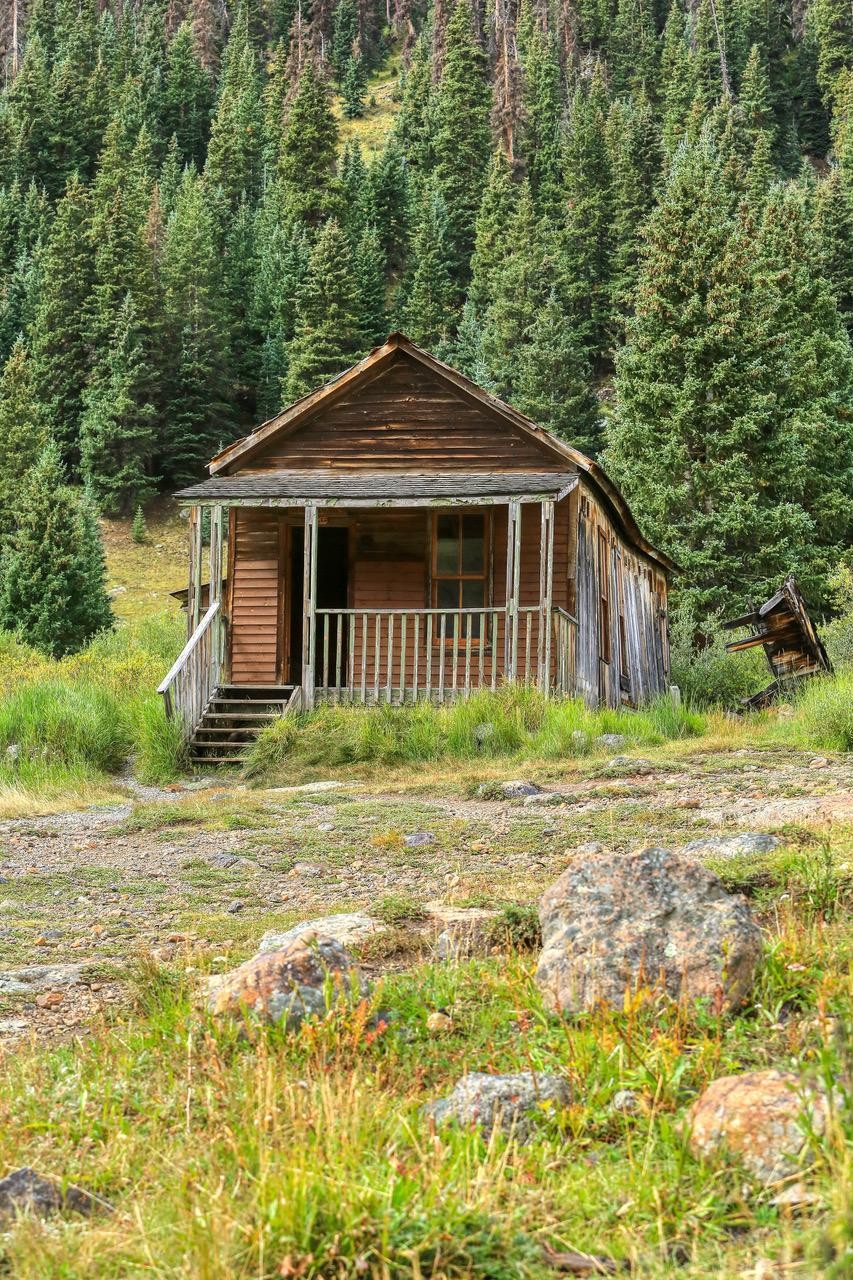 Mountain Cabin: Another example of a cabin in Animas Forks, Colo. Originally cabins were constructed with logs but those were replaced in the 1880s with structures made with lumber that was milled nearby. Many photos and documents are displayed in the houses as a mini museum that tell the history of Animas Forks. Photo by Gary Warren/ladailypost.com
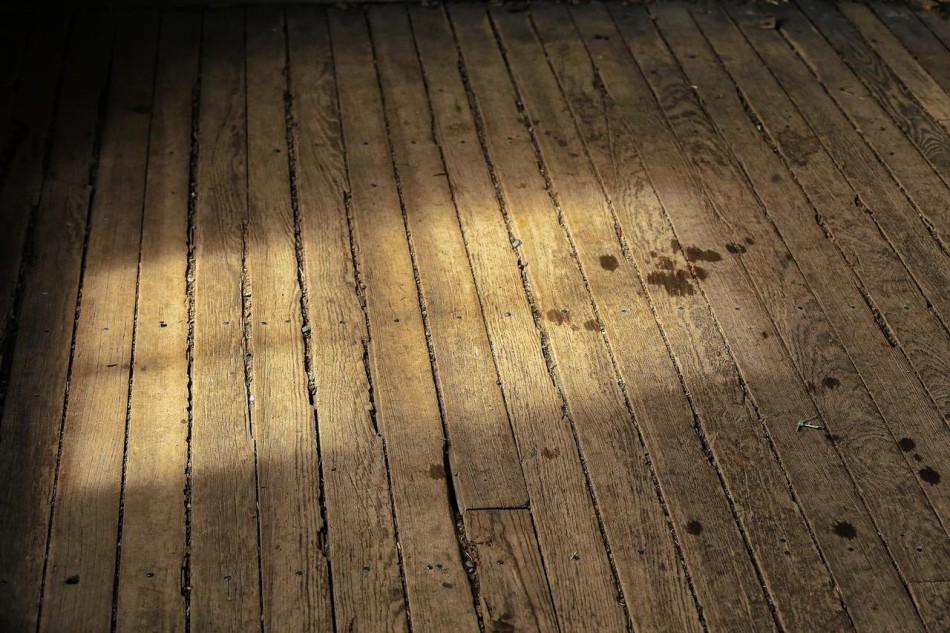 Storied Planks: Planks of worn flooring over 100 years old as seen in a cabin at Animas Forks, Colo. One must imagine what stories these historic buildings could tell. Photo by Gary Warren/ladailypost.com
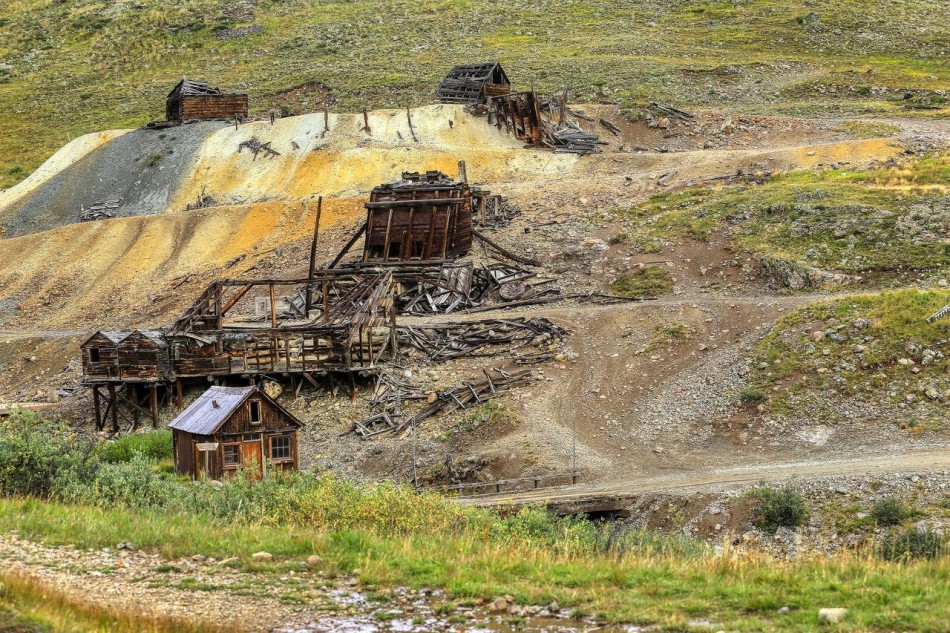 Mining Complex: The mining complex consisted of several buildings when the mine was operational at Animas Forks. A view of the complex is seen from the townsite of Animas Forks, Colo. The large building ruins are those of the mill which was the most important and active building in the complex. Photo by Gary Warren/ladailypost.com
 Splintered; The mill at the mining complex at Animas Forks, Colo. is shown in its deteriorated state. The townsite of Animas Forks is owned by the Bureau of Land Management (BLM) and has been restored in recent years but the mining complex is privately owned and has not been touched. Unfortunately, the splintered remains are about all that remain of the mining site. Photo by Gary Warren/ladailypost.com