
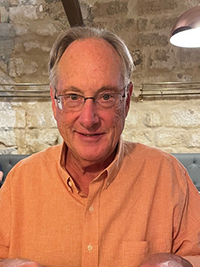
NAMI Santa Fe Board President Jonathan Gordon
By KIRSTEN LASKEY
Los Alamos Daily Post
kirsten@ladailypost.com
Misunderstandings, stigmas and myths swirl around mental illnesses. Despite most people experiencing some type of mental illness or knowing someone who is dealing with a mental illness, this isn’t a subject the public is well versed in.
A talk, titled “Beyond Depression: Understanding Serious Mental Illness and Supporting Individuals and Families”, seeks to change all that. It will be held at noon Sunday in the Unitarian Church, 738 N Sage Loop St. National Alliance on Mental Illness (NAMI) Santa Fe Executive Director Betty Sisneros Shover and NAMI Santa Fe Board President Jonathan Gordon, MD will be the speakers. The talk is sponsored by Dr. Tyler Taylor and the Forums Team.
 NAMI Santa Fe Executive Director Betty Sisneros Shover
Gordon and Sisneros Shover will briefly explore the more severe mental illnesses: schizophrenia, schizoaffective disorder, major depression disorder, OCD, PTSD bipolar disorders 1&2 , and borderline personality disorder. They will explain how mental illness can often challenge families in recognizing and responding to symptoms. Additionally, the talk will highlight how NAMI helps with community awareness, support and advocacy to make a meaningful difference for families and loved ones living or knowing someone who is coping with mental illness.
“It’s a great opportunity for us and this unique forum of people to discuss a lot of the issues associated with mental illness, a lot of the myths and a lot of the stigmas and a lot of what we do for outreach and understanding … we are grateful for these opportunities and go with it because people are wanting to learn,” Gordon told the Los Alamos Daily Post Thursday. Sisneros Shover was unable to be interviewed.
He explained the hope is people get a better understanding of what mental illness is and the stigmas associated with it.
“One of five individuals in the United States suffer from mental illness – that’s a given,” Gordon said. Yet, if friends or family are asked if they know anyone dealing with a mental illness, they often say no. Sometimes this answer is more about denial and stigma.
There is also misunderstanding associated with how mental illness impacts an individual, how they communicate and how they need to be communicated with and listened to, which is important, Gordon said.
“If we can bust a myth about mental illness is that … individuals with mental illness – the majority do quite well in society … (they) have jobs, families and friends. They’re doctors, they’re lawyers, they’re professors, they’re architects, they’re engineers, they’re newscasters, they’re sports players … most people with mental illness have functioning roles in society and do pretty well.”
However serious mental illness can be quite different especially with forming and maintaining relationships and work.
Gordon said stigmas towards mental illnesses have always been there. Throughout history, mentally ill people have been enslaved, killed, neutered, thrown into inhumane insane asylums and incarcerated. Today it is estimated between 45 percent and 65 percent of local, state and federal prisoners either have a current diagnosis of or are exhibiting symptoms suggestive of a serious mental illness.
Furthermore, healthcare insurance companies have been hesitant to cover care for mental illness and to fairly reimburse mental health care providers. Not too long ago they limited coverage to mental healthcare provider visits. This is changing with national legislature to ensure parity between physical and mental healthcare but stigmas persists, Gordon said.
The important thing when interacting with anyone with mental illness is “accept them for who they are,” he said. “I don’t think you have to make exceptions in how you talk to them or how you behave.”
It is important to validate them for who they are, Gordon said.
“People with mental illness are really hyper-sensitive to judgement … they feel the world is judging them … sometimes we can create that important relationship just loving them for who they are and being careful with how we communicate, not to pass judgement but just accept them for what they are doing in their own life …,” Gordon said.
About NAMI
NAMI was born out of a discussion between two mothers more than 45 years ago who had sons diagnosed with schizophrenia, Gordon said. They realized that there were very little resources available to them and little opportunity to get the needed care. Plus, the lack of understanding associated with mental illness in the general community pushed for the creation of NAMI.
The National Alliance on Mental Illness, was born out of need and compassion,” Gordon said.
He added that it covers 50 states and has about 500 affiliates.
“It is dedicated to the education and the advocacy and the support for those families and individuals with mental illnesses and to helping to teach about communication, understanding fundamentals of mental illness and really trying to break barriers … with mental illness especially stigma,” Gordon said.
It offers numerous programs such as support groups, educational programs and monthly informational talks on Zoom with experts in the mental health field. All of the programs and events are free.
The crux of everything NAMI does, Gordon said, is “When families have a loved one with mental illness, they tend to isolate themselves and that is more harmful than good and through our courses, and through the work of NAMI Santa Fe, we give the message pretty loud that you are not alone and you shouldn’t be.”
For more information, visit https://namisantafe.org/