
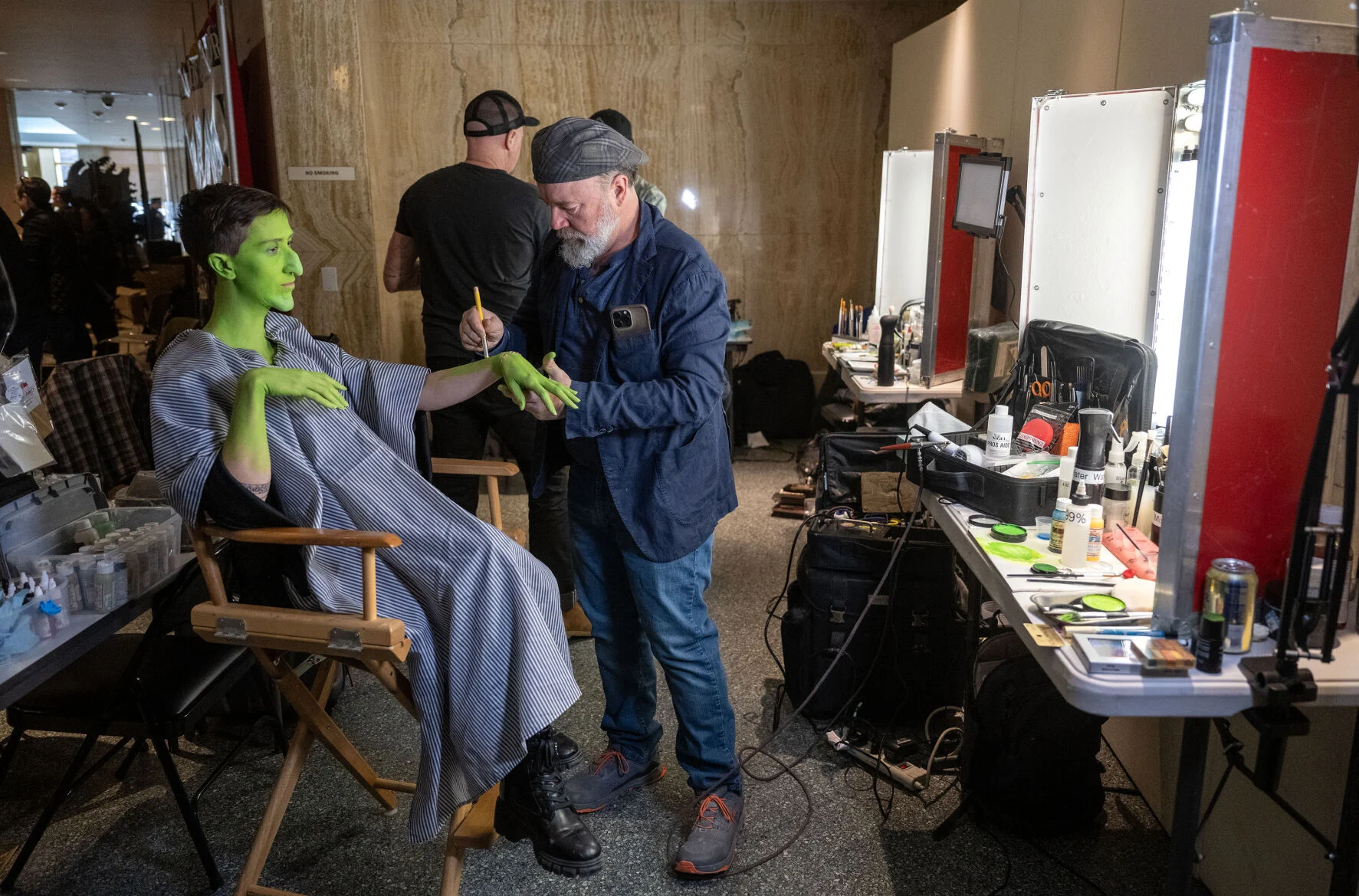
 Academy Award-winning makeup artist Barney Burman applies makeup to Sid Linkletter as he transforms her into the Wicked Witch of the West from The Wizard of Oz Thursday, March 13, 2025, at the Roundhouse. Photo by Michael G. Seamans/The New Mexican
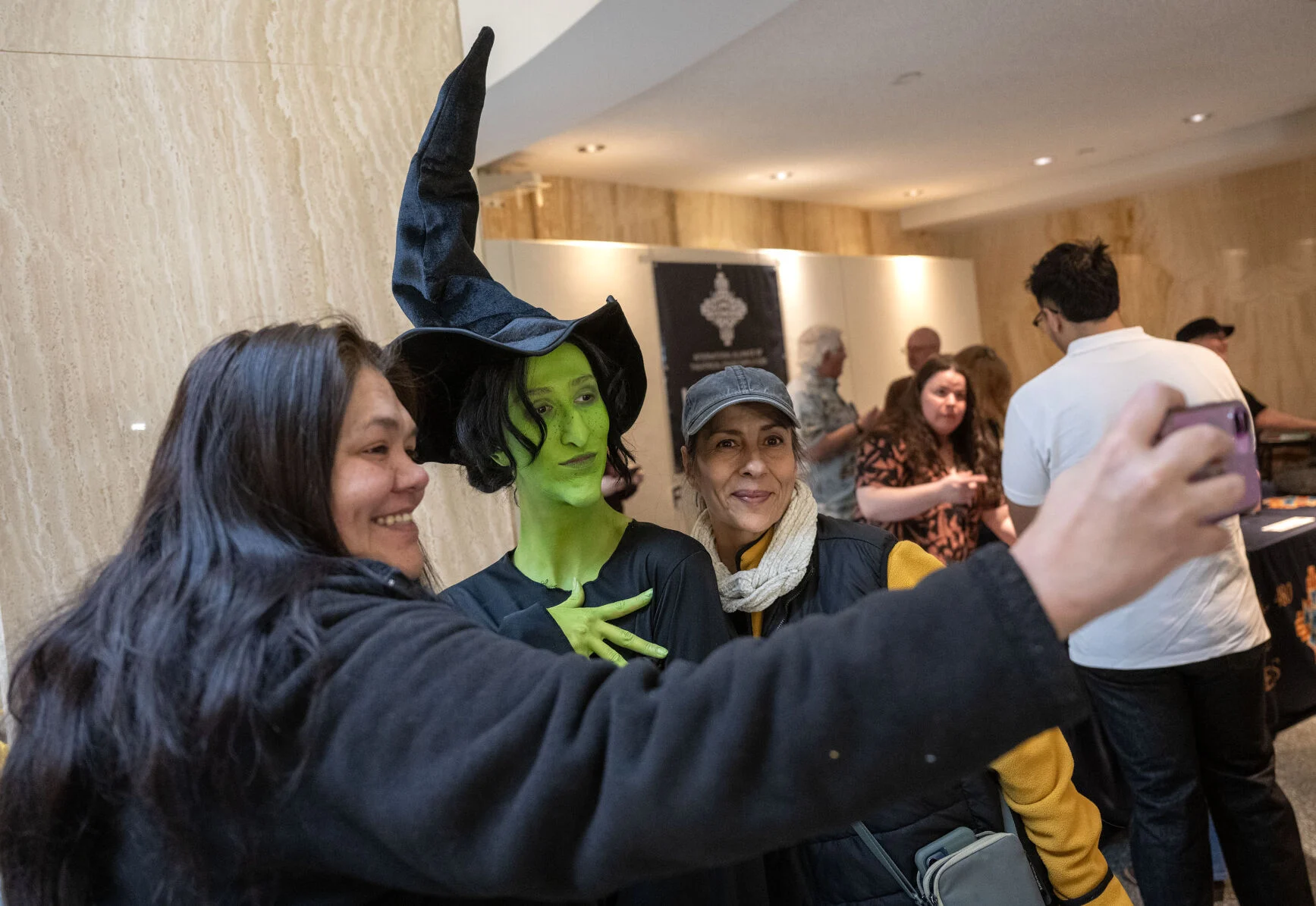 Sid Linkletter, dressed as the Wicked Witch of the West from The Wizard of Oz, takes a selfie with fans as she walks the halls of the Roundhouse Thursday, March 13, 2025. Photo by Michael G. Seamans/The New Mexican
 Sen. Leo Jaramillo, D-Española
The Santa Fe New Mexican Staff:
Cruising through the Senate: Your car may not feature hydraulics, chrome accents or a custom paint job, but New Mexico lawmakers are working hard to make sure your ride looks good.
In a unanimous vote Thursday, the Senate advanced Senate Bill 327, which would honor the Española Valley with a special “lowrider capital of the world” license plate.
Sporting an Española lowrider T-shirt on the Senate floor, Sen. Leo Jaramillo, D-Española, championed the proposal, which would add to New Mexico’s dozens of specialty plates. Jaramillo said plenty of folks have wondered whether he’s wasting his time with a license plate bill, but he argued it’ll be a point of pride for the Española Valley, particularly its younger residents.
“Their heads are going to be held high while they’re cruising low,” Jaramillo said.
Law enforcement qualifications: The Senate on Thursday voted 26-12 to advance Senate Bill 364, a bipartisan proposal to allow immigrants with federal work authorization — such as legal permanent residents and recipients of Deferred Action for Childhood Arrivals — to become police officers and sheriff’s deputies.
Sponsor Sen. Cindy Nava, a Democrat from Bernalillo and a former DACA recipient, said the impetus behind the bill was her brother’s experience. Though he always wanted to be a law enforcement officer, he was prohibited from doing so in New Mexico because he wasn’t a U.S. citizen. Rather than fill one of New Mexico’s law enforcement vacancies, he became a police cadet in Illinois where citizenship wasn’t an issue, Nava said.
Whether Nava’s brother will return to New Mexico to serve as a police officer remains to be seen, though Nava said, “My recruitment effort will be at its best.”
Some Senate Republicans expressed concerns about including DACA recipients, proposing an amendment to instead exclusively allow legal permanent residents to become law enforcement officers, consistent with U.S. military policy. The proposed change was ultimately voted down.
CYFD reform bill continues swift progress: With a little over a week remaining in this year’s legislative session, a package of bills reforming the state’s troubled child welfare system cleared the Senate floor on a unanimous vote Thursday.
Senate Bill 42, which was unveiled late last week, would, among several changes, overhaul the state’s law governing treatment plans for children born with substances in their system and require New Mexico to comply with federal law calling for prevention services of at-risk families.
“In a session full of CYFD legislation, this legislature has united in its common goal of protecting our children,” Sen. Michael Padilla, D-Albuquerque and one of the bill’s sponsors, said in a news release. “This legislation is the most comprehensive reform of CYFD in decades.”
Pocket veto repeal: A proposed constitutional amendment to take away the governor’s power to “pocket veto” legislation is one vote away from appearing on the 2026 ballot.
House Joint Resolution 2 would, if it passes the full Senate and is then approved by voters, amend the state constitution to say legislation which the governor does not sign within the prescribed timeframe becomes law. Currently, if the governor doesn’t act on a bill it is considered vetoed. The proposal would also require a governor to provide a “substantive” explanation for any vetoes.
The Senate Judiciary Committee voted unanimously Wednesday to advance the measure, sending it to the full Senate.
“The founders said the governor doesn’t get the last word; we do,” said Senate sponsor Sen. Joseph Cervantes, D-Las Cruces. However, Cervantes said, partisanship means the Legislature doesn’t always play the independent role the framers envisioned.
“When we have a governor who’s a Democrat, we’re not going to override her veto because it’s considered politically embarrassing to the governor,” he said, adding the same dynamic plays out no matter which party is in the majority.
“Does anybody really believe there’s going to be a veto override of Donald Trump on anything?” he asked.
Cervantes said letting a bill become law without a signature is “essentially … an opportunity for the governor to take a walk,” comparing it to when lawmakers step out of the chamber to avoid casting a vote on a tough bill. He also said requiring governors to explain a veto might make it less likely for a governor to veto a bill out of spite because of unrelated disagreements with a particular lawmaker.
Immigration bill amended to keep detention centers: A bill to restrict state and local governments from taking part in federal immigration enforcement passed out of the Senate Judiciary Committee Wednesday — after it was amended to let the existing immigration detention centers in Otero, Torrance and Cibola counties stay open.
Senate Bill 250 would bar the use of public money or personnel to help identify, arrest or detain someone for being in the U.S. in violation of immigration laws. The committee voted along party lines to advance the bill to the Senate floor, with an amendment specifying it will not “affect an existing written contract between a county government and the federal government for the housing of federal detainees or the extension of such contract.”
The amendment “makes it clear that we’re not dealing with immigration centers,” said sponsor Sen. Moe Maestas, D-Albuquerque. “This bill draws the line at county jails and stat prisons.”
This puts it in conflict with House Bill 9, which passed the House last week and which would require counties with immigration detention contracts to cancel them as quickly as possible. HB 9, which opponents fear would lead the Trump administration to cut the state’s federal funding, currently awaits hearings in the Senate Judiciary and Health and Public Affairs committees.
Maestas pitched SB 250 as a public safety bill that will ensure “scarce resources of our officers and sheriffs on the ground are focused on our communities” without affecting federal funding.
“Every hour an officer is there on a routine traffic stop trying to figure out where a person was born is an hour that they’re not investigating a residential burglary,” Maestas said. “It’s an hour that they’re not maybe pulling over an impaired driver who’s risking lives on the street. An hour where they’re not investigating a homicide in which a dear loved one was taken for our community.”
Quote of the day: “That brings me to my second question: Will these license plates bounce?” —Sen. Ant Thornton, R-Sandia Park, referencing the proposed “Lowrider Capital of the World” specialty license plates.
“Mr. President, once those switches are hit, they definitely are going to bounce,” —Sen.Leo Jaramillo, D-Española.