
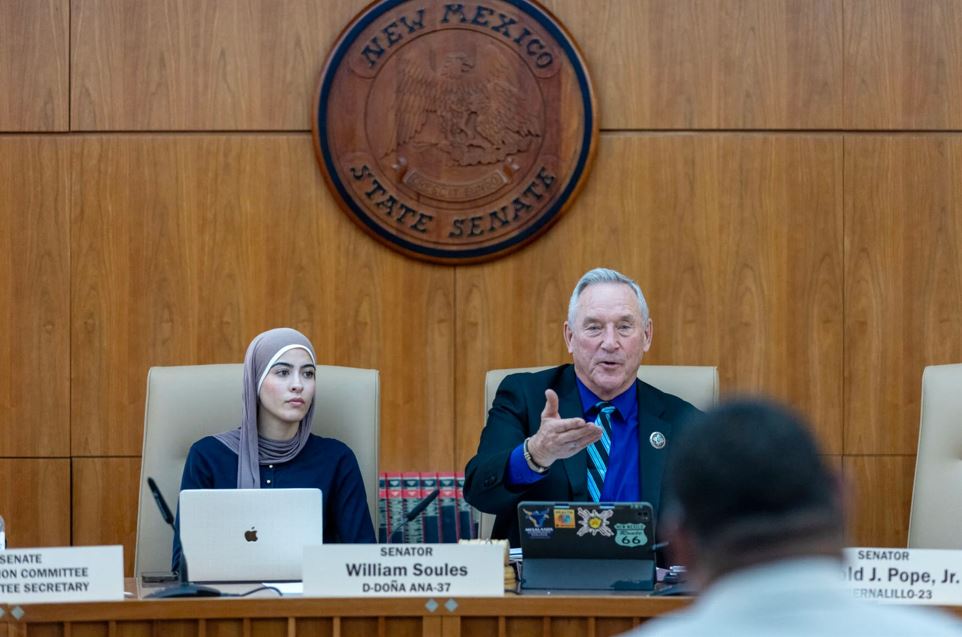
 Sen. Bill Soules, D-Las Cruces, talks to Sen. Harold Pope, D-Albuquerque, during a discussion of Pope’s anti-hazing bill at the state Capitol Wednesday, Jan. 29, 2025. Photo by Michael G. Seamans/The New Mexican
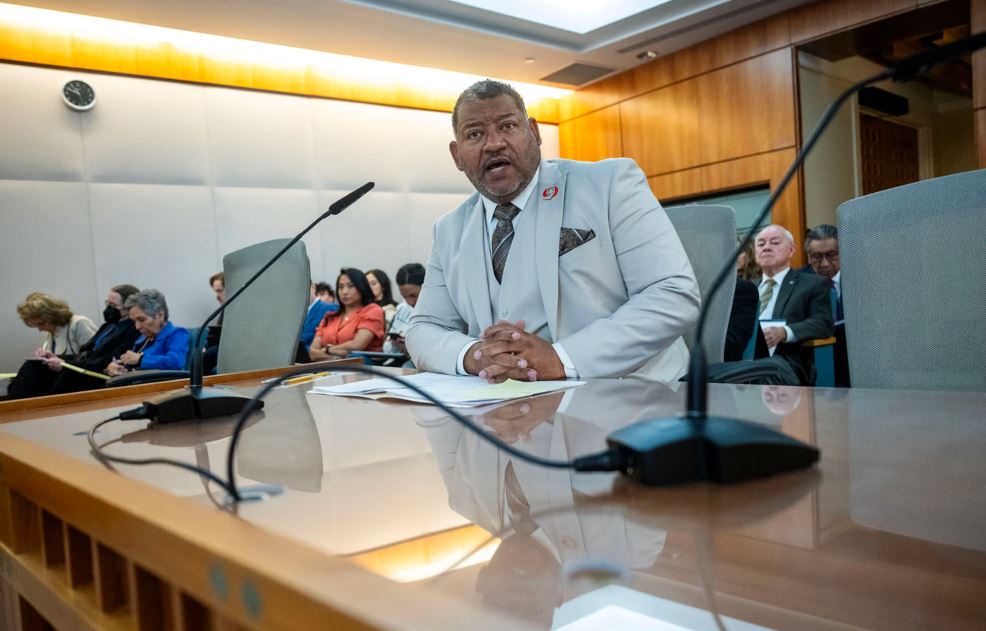 Sen. Harold Pope, D-Albuquerque, presents an anti-hazing bill to the Senate Education Committee Wednesday, Jan. 29, 2025. Photo by Michael G. Seamans/The New Mexican
By ESTEBAN CANDELARIA
The Santa Fe New Mexican
Two bills’ battle for the title of New Mexico’s Anti-Hazing Act is underway.
Three Albuquerque lawmakers have introduced two similar pieces of legislation aimed at cracking down on hazing. Sponsors and supporters of the bills have cited high-profile incidents in New Mexico schools, such as revelations members of the New Mexico State University men’s basketball program sexually assaulted some of their peers, ultimately leading to the firing of longtime athletic director Mario Moccia.
“Schools must be environments where students feel secure and supported, rather than pressured into degrading or life-threatening activities,” Sen. Harold Pope, D-Albuquerque, told the Senate Education Committee on Wednesday. “This legislation represents a critical step towards fostering a campus culture of respect, inclusion and accountability.”
The two bills are largely similar in the prevention measures they would prescribe. But they differ in one key area — how to punish the new crime of hazing.
Senate Bill 10, sponsored by Pope and Rep. Pamelya Herndon, D-Albuquerque, would make hazing and failing to report incidents of it by school employees a misdemeanor.
That differs from Senate Bill 148, sponsored by Sen. Moe Maestas, D-Albuquerque and backed by Attorney General Raúl Torrez. Under that bill, the level of charges an offender faces escalates in severity based on the harm, rising from a misdemeanor for engaging in hazing to a second-degree felony for an incident causing death. School employees who fail to report hazing would also face misdemeanors.
Proponents say SB 148 tougher
Maestas said his bill would address more scenarios than SB 10, including when a person is seriously hurt or dies as a result of hazing.
“I think both bills will serve their intended effect, but in terms of criminal penalties and consequences, the Senate Bill [148] is much stronger,” he said.
State Department of Justice special counsel Sean Sullivan, the primary drafter on SB 148, also pointed to a need to hold the accused accountable to the severity of their crime.
“I think fundamentally, it makes sense to index the potential penalty that an offender can face with the resulting harm,” he said. “Not all hazing is the same flavor.”
During his presentation to the committee, Pope acknowledged the bills’ different approaches in enforcement, but he said his was focused on creating a means of discouraging the practice altogether.
“While this bill doesn’t have the penalties that some folks want, my thought is holding folks accountable and really changing the culture of this idea that folks have to submit themselves to hazing to be part of [an] athletic team or an organization,” he said.
Sullivan also noted another key difference in the two bills — SB 148 defines hazing as an “intentional, knowing or reckless act,” whereas SB 10 would primarily prohibit students from intentionally hazing one another. Sullivan said that would have the effect of SB 148 “encompassing a broader array of prohibited activities.”
ACLU opposes new crime
Some advocates have criticized creating new criminal charges targeting young people, arguing the state should focus more on prevention.
In a statement, American Civil Liberties Union of New Mexico Executive Director Leon Howard said hazing that escalate to harm being done to victims are already addressed in state statute, and that further expanding criminal laws “risks excessive punishment rather than addressing root causes.”
“History has shown that laws aimed at disciplining youth are disproportionately enforced against athletes of color,” he wrote. “The systemic biases that have led to disproportionate suspension rates in schools will undoubtedly affect the enforcement of these laws, exacerbating racial disparities in our criminal legal system.”
K-12 vs. higher education
Pope’s bill, which failed during last year’s legislative session, faced its first committee Wednesday, and was held until Friday amid concerns it would enforce the crime of hazing at public and private K-12 schools.
New Mexico School Superintendents Association Executive Director Stan Rounds said during public comment that lawmakers and legislative staff must first examine how to enforce a criminal charge of hazing on juveniles, noting they are different from college-age students.
“There’s a policy issue of how you deal with juveniles and juvenile conduct,” he said. “That hasn’t been studied sufficiently for this bill.”
Lawmakers agreed, with the committee chair, Sen. Bill Soules, D-Las Cruces, saying the legislation felt like “two separate bills that are pushed together awkwardly.”
Pope agreed to carve out sections of the bill covering juveniles.
SB 148 includes similar language including juveniles in its current draft, which may prove to be a snag as it moves through the Roundhouse. The bill is set to be heard in the Senate Judiciary Committee, but had not been scheduled as of midday Wednesday.
There are other similarities between the two bills.
Both require higher education institutions to implement anti-hazing education and for people or organizations participating in or enabling hazing to forfeit public funding and scholarships. Both strip organizations of official recognition for allowing hazing to happen on their watch.
They would both also require colleges to prohibit hazing in their codes of conduct, create hazing prevention committees and prevent a victim’s consent or willingness to participate in hazing from disqualifying the criminal charge.
Both bills also aim to let victims sue, though Sullivan said lawsuits under SB 148 could go further, allowing hazers, administrators who failed to prevent hazing and schools themselves to be sued.
“What we’re saying is we expect you to take preventative steps to keep that from happening,” he said.
Esteban Candelaria is a corps member with Report for America, a national service program that places journalists into local newsrooms. He covers child welfare and the state Children, Youth and Families Department. Learn more about Report for America at reportforamerica.org.