
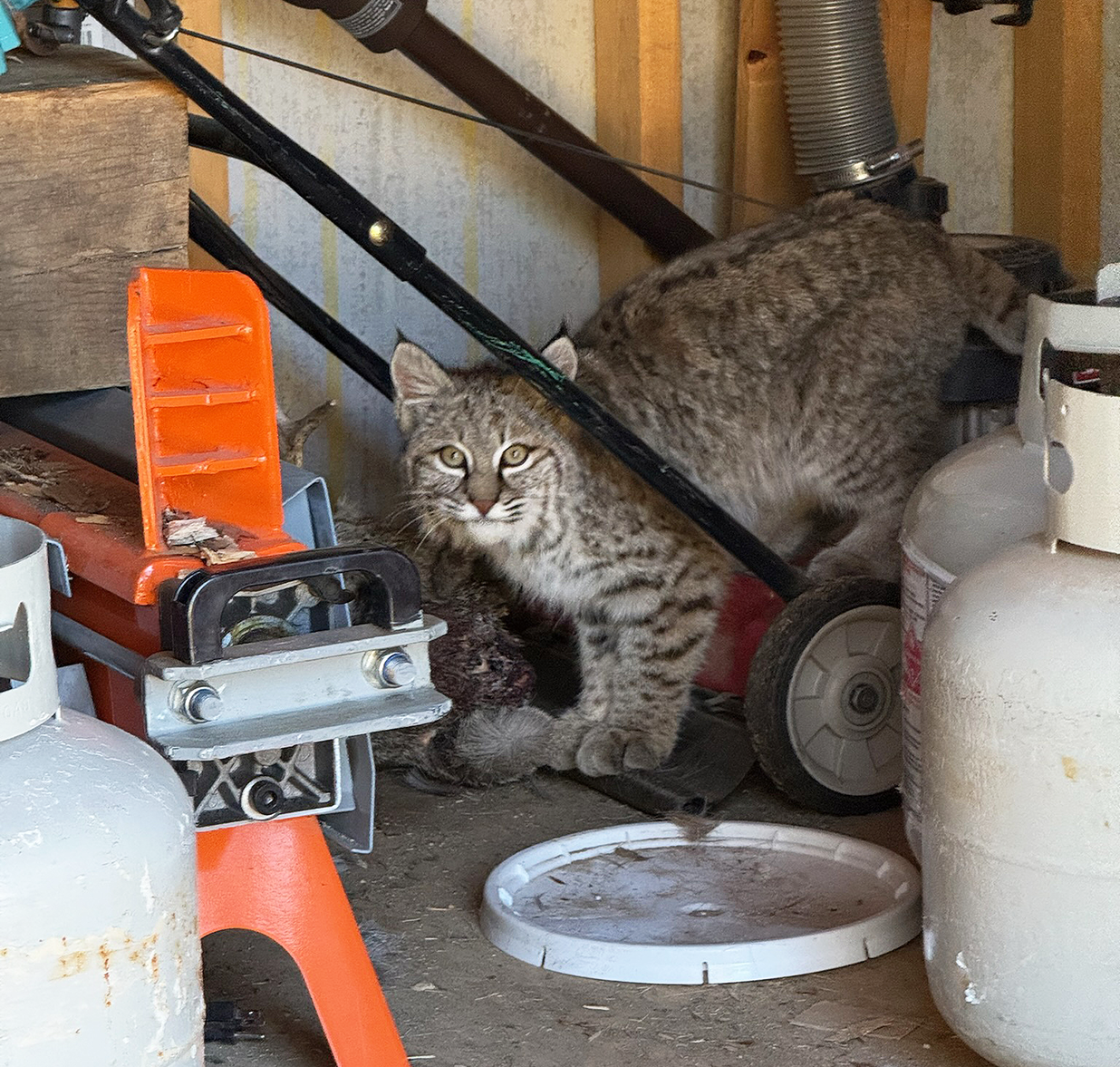
 A bobcat roots through a resident’s shed in February in Eastern Area. Photo by Jim Goforth
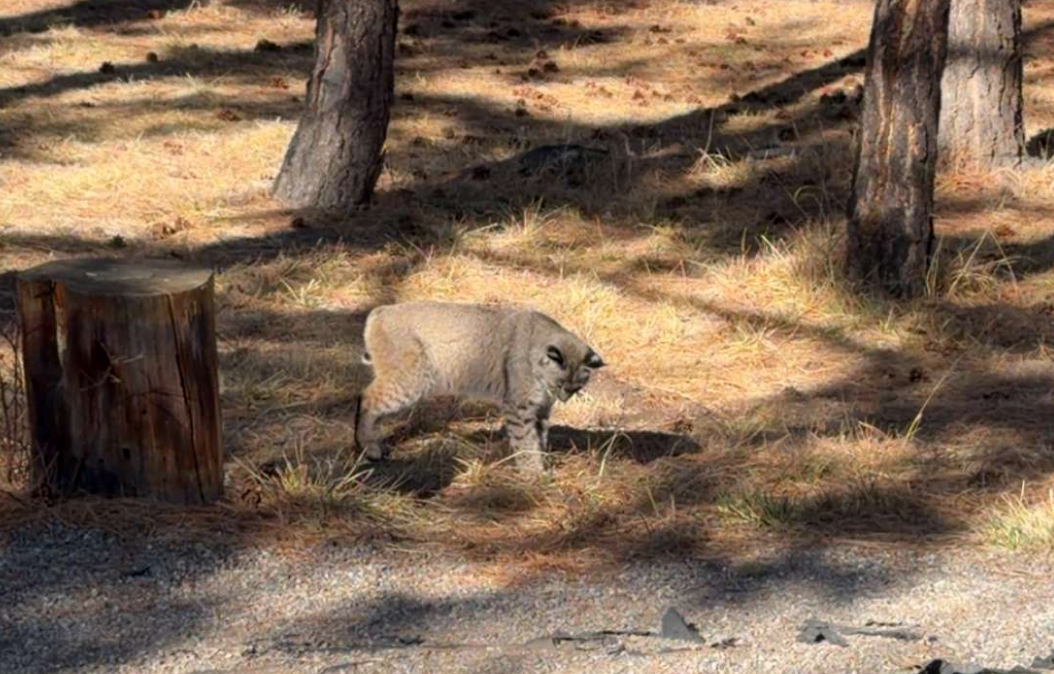 A bobcat hunts around the grounds at Immaculate Heart of Mary Church in February. Photo by Amanda Bucklin
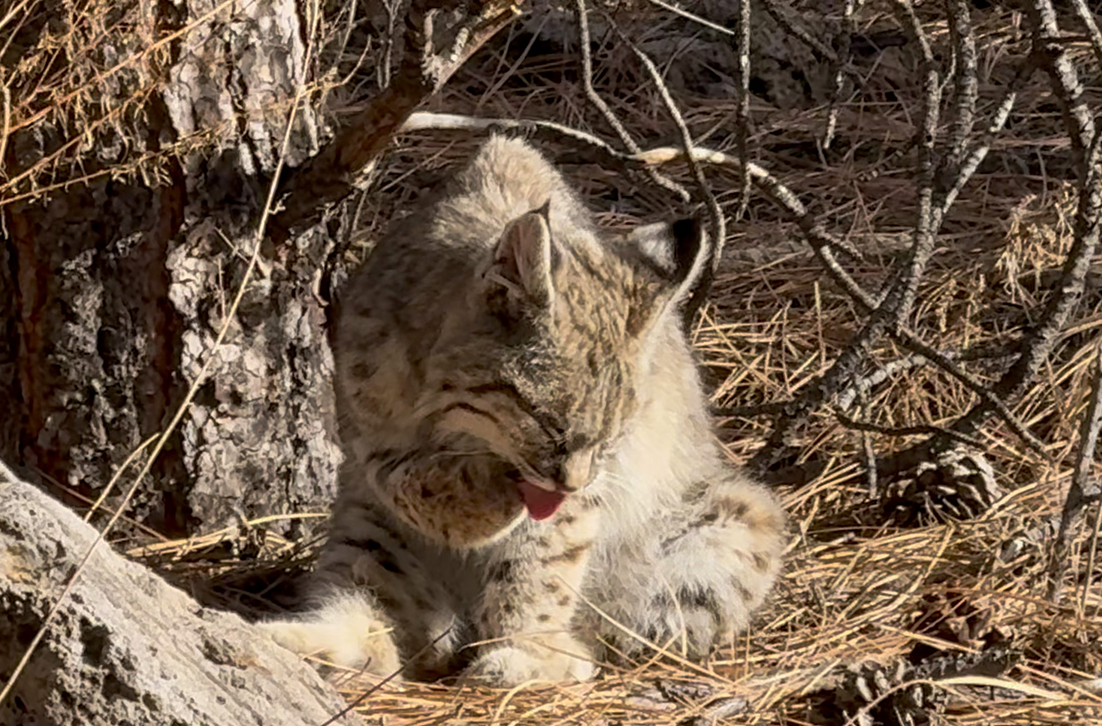 A bobcat spruces up in February in downtown Los Alamos. Photo by Kurt Steinhaus
COUNTY News:
Bobcats are found throughout Los Alamos County and have been spotted regularly in the downtown area in the past few weeks. Although elusive and difficult to observe, it is not unusual for the bobcat’s habitat to include a densely populated urban area.
These cats are much smaller than a mountain lion, weighing only 12-40 pounds. Their spotted flanks, which are mottled with black, gray and reddish colors, and their bobtail make them easy to recognize. Make sure not to confuse them with a young mountain lion, which can look very similar, but has a long tail.
A wanderer by nature and shy and seldom seen, the bobcat prefers the cover of cliffs and rocky slopes, where their dens are usually located. As a result, spotting a Bobcat on the trails in and around Los Alamos is usually more common. Like other cats, bobcats are nocturnal hunters, but recently we have seen them hunt during the day in the townsite. An opportunistic hunter, their diet commonly includes rodents, rabbits, deer and insects. Bobcats depend on evasiveness and seclusion to avoid predators, including coyotes, mountain lions and especially humans.
These animals are called wildcats for a reason, remember to be cautious if you should corner a bobcat. It will defend itself vigorously. You may choose to watch and enjoy a bobcat or bobcat family sharing your yard. However, if you have small pets or livestock, you may want to discourage the bobcat from coming onto your property. Remember, it is always a good idea to keep wildlife wild.
Follow these tips around your home:
- Keep Pets Inside: Bring cats and small dogs indoors, particularly from dusk to dawn, which are peak hunting times.
- Secure Small Livestock: House chickens, rabbits, and other small animals in sturdy, completely enclosed, roofed pens.
- Remove Attractants: Remove bird feeders, as they attract rodents and birds that feed bobcats. Store garbage in secure containers.
- Eliminate Shelter: Trim shrubbery, bushes, and high grass to remove hiding spots. Close off spaces under decks and outbuildings.
- Deterrents: Use motion-activated lights, sprinklers, or loud noise-makers to startle and discourage them.
What to Do if You Encounter a Bobcat?
- Make Noise: Scare the bobcat off by yelling, banging pots, using an air horn, or spraying it with a garden hose.
- Appear Larger: Raise your arms, wave jackets, or stand on higher ground to look intimidating.
- Back Away: Do not turn your back or run; instead, slowly back away while maintaining eye contact.
- Do Not Corner: Never trap a bobcat in a corner; leave them an escape route.
- Report Aggressive Behavior: If a bobcat appears bold, sick, or repeatedly visits, contact the New Mexico Department of Game and Fish at 505.412.8796.
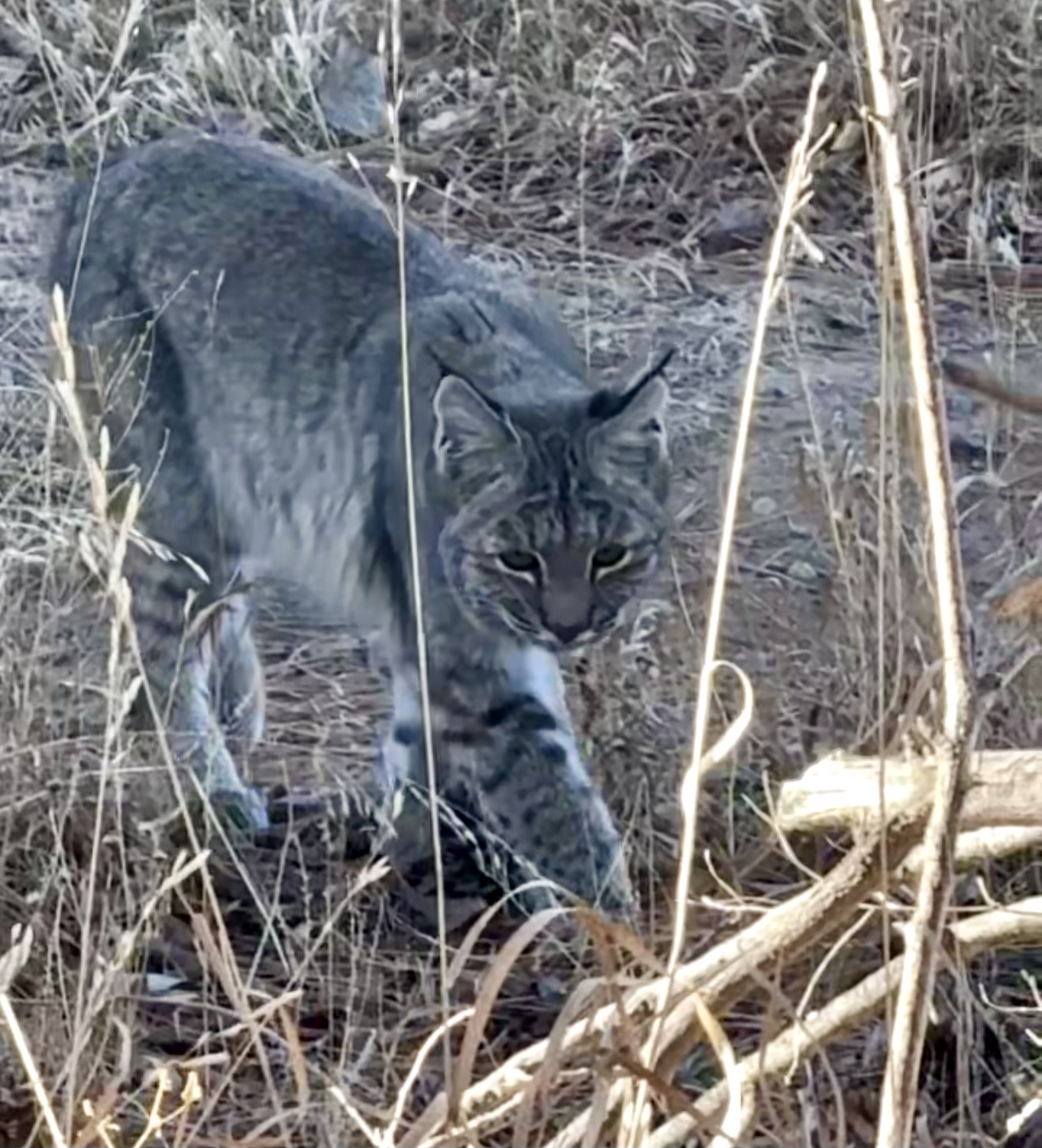 A bobcat on the prowl in February in North Community. Photo by Kristine Rutledge
 A young mountain lion in 2025 in downtown Los Alamos. Photo by Cheryl Pongratz