
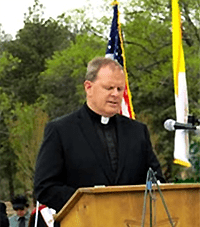
 By Fr. Glenn Jones:
It’s interesting to witness the paroxysms of many over Elon Musk becoming the first trillionaire—the launching of the SpaceX to public trading bumping him through that heretofore unattained ceiling. Of course, it’s a tenuous title; if the stock market takes a downturn or the economy goes into one of its periodic recessions, he’ll likely lose that trillionaire mark and only be worth several hundred billion … poor thing. Of course, most of his wealth is in stock and company ownerships (companies which employ tens of thousands of people, by the way: Tesla 134,000, SpaceX (including Starlink) 22,200, then Neuralink, The Boring Company, xAI and X (formerly Twitter)). He doesn’t have a trillion in cash in a vault. And other present and future plans include Terafab (computer chips), household robots, robotaxis (already running), ventures to Mars, orbiting data centers (using free solar energy and no cooling water), cellphones, and who knows what else. Love him or hate him, Elon will eventually affect virtually every person’s life on this planet. And maybe on others if his Mars thing actually comes to fruition.
“Tax the rich!!”, of course, is the inevitable political outcry. But is that a good idea? The news is replete with stories of corruption and fraud these days, some estimating fraud may account to $1 trillion annually in itself. Are we enamored with the efficiency of government? If so, we’d likely be the first in the history of the world to be so. Sadly, so much that goes to the government is wasted on poor management, special interest projects, etc. Like the stereotyped “trust fund kids”, those who don’t earn it feel free to spend it, and then are shocked when there’s nothing left. Government, though, always has the taxpayer ATM.
St. Paul writes: “As for the rich in this world, charge them not to be haughty, nor to set their hopes on uncertain riches but on God who richly furnishes us with everything to enjoy. They are to do good, to be rich in good deeds, liberal and generous, thus laying up for themselves a good foundation for the future, so that they may take hold of the life which is life indeed” (1 Timothy 6:17-19). What Paul doesn’t say is: “Have the government tax them more!”
Should Elon be magnanimous with his wealth? Certainly. After all, generosity is one of the universal virtues. But before we throw stones at him (or anyone else), we need to take stock of ourselves and be less judgmental of others. “Musk could do so much good with his money!!” Yes, but so can we. How generous am I with what I have? Do I really need overseas trips, a fancy car, all the trappings that relative wealth affords?
Jesus says in the Sermon on the Mount: “Do not lay up for yourselves treasures on earth, where moth and rust consume and where thieves break in and steal, but lay up for yourselves treasures in heaven, where neither moth nor rust consumes and where thieves do not break in and steal. For where your treasure is, there will your heart be also,” (Matthew 6:19-21), and we hear of His response to the rich young man who inquired of the path to Heaven: “‘You lack one thing; go, sell what you have, and give to the poor, and you will have treasure in heaven; and come, follow me.’ At that saying his countenance fell, and he went away sorrowful; for he had great possessions” (Mark 10:21-22). Are we reluctant to give of what we have? Not that we are called to live in absolute destitution, but certainly we need to constantly re-evaluate our lives as to excess that can easily be divested. And often hardly even missed once gone.
We are constantly bombarded with messages urging us to secure our own comfort, build bigger barns, and hoard resources for that uncertain tomorrow. Yet, the scriptures present a different idea: true wealth is measured not by what we keep, but by what we give away. At the heart of the Christian faith are those twin virtues of charity and generosity.
Of course, our ultimate model in Jesus Christ. St. Paul wrote: “For you know the grace of our Lord Jesus Christ, that though he was rich, yet for your sake he became poor, so that you through his poverty might become rich” (2 Corinthians 9:9). Jesus did not merely teach generosity; He embodied it by emptying Himself of heavenly glory to meet the spiritual and physical needs of humanity. Therefore, when we practice charity, we are not simply performing a good deed, but mirroring Him, serving as the hands and feet of God’s love on the earth as Jesus’ disciples.
Finally, St. Paul notes that “God loves a cheerful giver” (2 Corinthians 9:7). True generosity is not motivated by guilt, legalistic obligation, or a desire to manipulate God into granting material blessings. Instead, it flows from gratitude and love. We give because we have already received beyond measure. By living in charity, kindness and generosity, we honor our Creator, alleviate human suffering, and reflect the unconditional love of Him who gave everything for us.
Editor’s note: Rev. Glenn Jones is the Vicar General of the Archdiocese of Santa Fe and former pastor of Immaculate Heart of Mary Catholic Church in Los Alamos.