
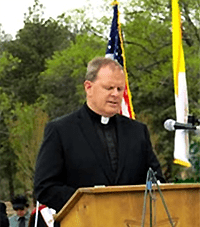
 By Fr. Glenn Jones:
I came across a pretty good series on Prime the other day called “Genius”, in which four seasons cover some notable persons in history—specifically the lives of Einstein, Picasso, Aretha Franklin and Martin Luther King, Jr. The season covering Picasso focused largely on his many romantic relationships and rather hedonistic lifestyle, which resulted in much angst, anger, sadness and chaos in Picasso’s life and the lives of his various wives, mistresses and their resulting children. As the series progresses, the viewer can’t help but wonder if the real Picasso had many regrets at the end of his life; he was rich, successful and famous, yes, but so many opportunities were lost in the portrayed focusing on himself, especially with not coming closer and more involved with his children. Apparently not a religious man, one wonders whether he ever sought solace and closeness with God. At least this is how he is portrayed.
Few of us live without some regrets, regardless of the modern popularity of proclaiming “No regrets!” on social media and bumper stickers. Well … how about that time you “used” someone for your own gain, regardless of the harm or pain you caused. Or that petty (or maybe not so petty) theft? Enacting a disproportionate revenge for a slight? Lying to save self from responsibility? Insults to “get back” at someone who may have even been acting in good faith even though rightfully denying something to you? Adultery? Hatred? Disdain? Neglect or mistreatment of loved ones? And, then, how did the guilt and shame of it gnaw at your conscience, sometimes for years and even decades? Maybe even … still?
As God is our designer, He knows very well that we tend to do harmful things against Him or one another, and so He knew that we needed a mechanism to cleanse both soul and conscience. For this, Catholics have the sacrament of confession/reconciliation, in which the remorseful penitent confesses sins to a priest and, by God’s grace working through the priest, is absolved of that which he confesses in good faith, and even of those which may have been lost to memory over time.
“Well, isn’t that so very convenient. Just tell your sins and all is wiped away? You can just go sin with abandon then? What’s the Biblical source for that?!” Well…so glad you asked.
First of all, while it is often ridiculed, confession is not just a “Get out of Hell free” perfunctory exercise; one must have a sincere desire to amend one’s life and subsequently confess the sins he recalls, having at least the intention of not committing the sins again. Yet the Church recognizes the fallibility of the human will and that conversion is a process, and so the penitent may fail, but the door of God’s mercy remains always open to those who are sincere in their desire to amend their lives. The Church, as the family of God and Body of Christ, always longs for the straying to come home.
This Sunday (April 12 this year) we have a source for confession in the Catholic Mass Gospel reading recalling to the resurrected Jesus’ appearance to the apostles: “… he breathed on them, and said to them, ‘Receive the Holy Spirit. If you forgive the sins of any, they are forgiven; if you retain the sins of any, they are retained.’” (John 29:22-23) So the first thing that Jesus does when He comes to the apostles—the first bishops—is to grant them power to forgive sins. But confessing sins was not new, though Jesus here imbues it with a much greater grace. The pre-Christian Jews offered sin offerings with attendant confessing of sins. We also read that those baptized by John the Baptist would confess their sins publicly. And there are other scriptural examples as well of people confessing sins to relieve their souls and consciences, asking God’s forgiveness.
“But why confess to a priest? He’s just a man, likely as sinful as I! I can confess directly to God!” Well, why then did Jesus grant the apostles that power to forgive? And the priest may very well not be pure himself (likely isn’t), but God uses imperfect instruments to distribute His perfect grace. The saints used the image of sunlight being just as pure as it shines through a dirty window as it is through a clean one.
A favorite image of mine comes with the story of Elijah and the leper Naaman in 2 Kings 5. Naaman, a powerful, important man, is instructed by Elijah to wash in the Jordan to be healed. But Naaman storms off, questioning why he should wash in such a muddy stream when rivers in his own country were cleaner. He finally acquiesces and washes, and is cleansed of his leprosy. Similarly, it is not the “muddy stream” of the priest which heals, but rather the grace of God via the priest’s physical instrumentality—the spoken word—as the priest acts through Jesus’ command above. As the muddy Jordan could not boast of power to heal Naaman, a priest cannot claim any power of his own, but rather is totally dependent on the grace of God. But, if Naaman had refused to wash, he may have never been healed.
Yes, God is our designer and maker, and He thus knew that we as both spiritual and physical creatures need an outlet to heal both soul and conscience. And have we not experienced this in our lives? Do not we often ache to tell someone…anyone…the evil we have done to release the burden of guilt? As is said, a burden shared is a burden lightened. So why do we fight that urge so? Yes, there is shame at our failures, but the relief unburdening far eclipses it.
So, Catholics, do not avoid confession; what can be better than a promised gift of God of forgiveness? For non-Catholics, while we cannot offer you sacramental confession, at least understand the gift, and perhaps at least find strength in mentors to help lead to a better and holier life: “… confess your sins to one another, and pray for one another, that you may be healed.” (James 5:16)