
 Scene from ‘Tecolote’ with performers Esteban Rosales, Ruby Morales, Zarina Orduño Mendoza and Lauren Jimenez, choreographed and narrated by Yvonne Montoya. Photo by Dominic Arizona Bonuccelli
By MARLENE WILDEN
Los Alamos Daily Post
marlene@ladailypost.com
Los Alamos audiences will witness a rare convergence of personal history, regional memory and evocative dance in Safos Dance Theatre’s evening-length work, Stories from Home, premiering Friday, Oct. 3 at Duane Smith Auditorium.
Directed by founder and choreographer Yvonne Montoya, the Tucson-based company presents a layered performance centered on northern New Mexico and Mexican American heritage — said to be a narrative seldom seen in a mainstream concert venue.
Montoya, originally from Albuquerque, traces her creative roots to the oral traditions of her father, grandparents, and ancestors evicted from Barranca Mesa on the Pajarito Plateau.
Honored with a 2019-2020 Kennedy Center Citizen Artist Fellowship and a Dance/USA Fellowship, Montoya is no stranger to illuminating marginalized stories on stage. In 2022, her company received a National Endowment for the Arts grant in the principal category for Stories from Home.
The work includes 12 dances that unfold into eight interrelated stories.
Each draws on notable historical events:
- The loss of language during the 1940s Americanization programs;
- Creation of the atomic bomb;
- Illnesses tied to U.S. government projects; and
- Fate of Sephardim during and after the Spanish Inquisition.
The result is an intricate quilt — part regional chronicle, part intimate memoir.
‘Braceros’ & ‘Deslenguadas’: Dance as Oral History
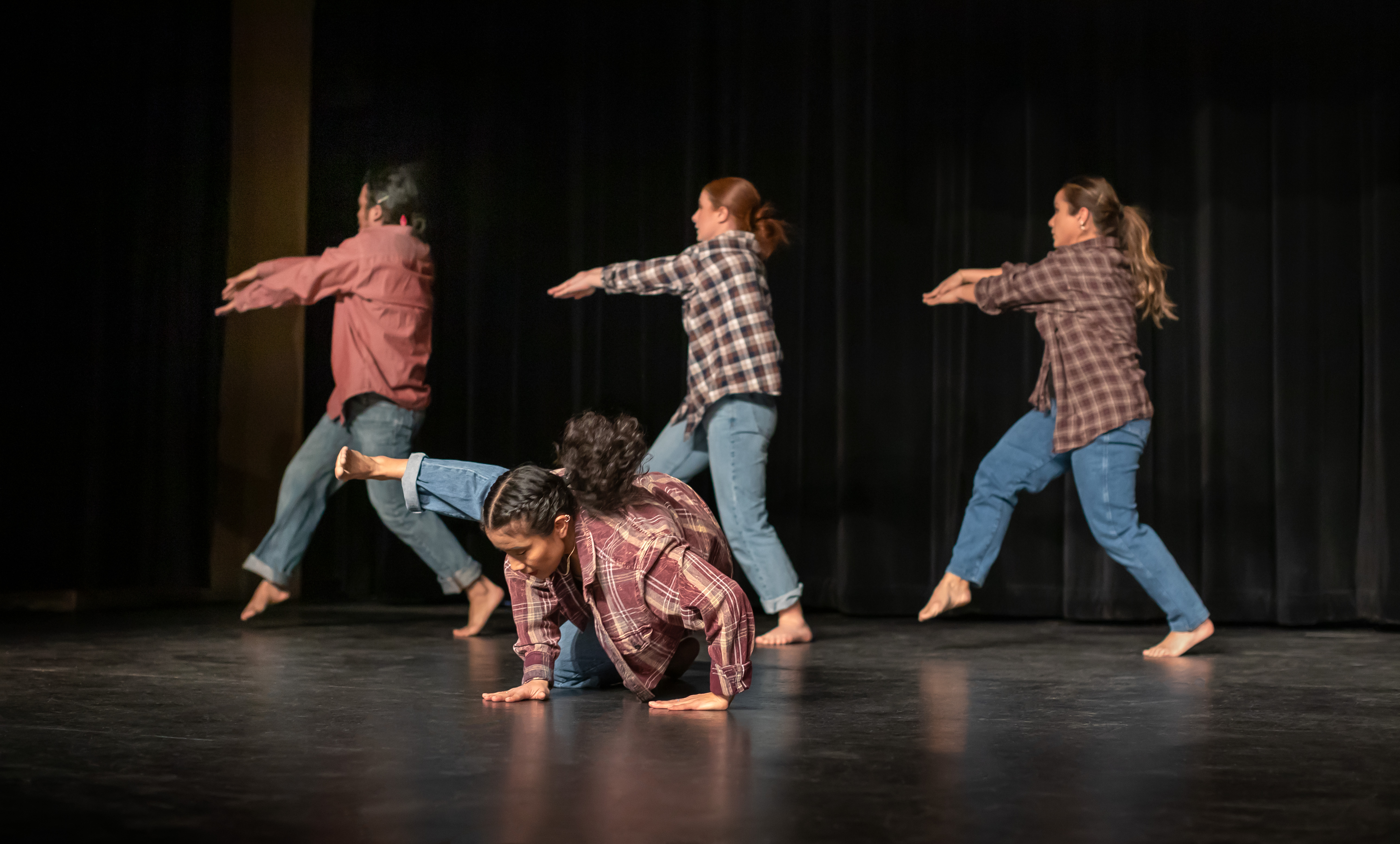 ‘Braceros’ with Esteban Rosales, Ruby Morales, Luz Zarina Orduño Mendoza and Lauren Jimenez, is dedicated in loving memory of Yvonne Montoya’s father Juan ‘Johnny’ Montoya Sena. Photo by Estefania Mitre
The segment “Braceros” pays tribute to Montoya’s father and his experiences as a migrant laborer in the 1960s. Soloist Vincent Chávez makes his Los Alamos debut, performing the role for the first time this season. Alongside Ruby Morales, José José Arrieta Cuesta, Angela Bass and Madeline McDonald, Chávez moves to Samuel Peña’s driving score, enriched by the voice of Montoya’s father. Montoya’s choreography mirrors her father’s gestures — muscular expressions of persistence, faraway glances, and raw poetry in the mechanization of the human body. Rhythmic repetition blends fluidity with sharp staccato punctuation, channeling both sweat and sorrow.
“Deslenguadas” is a captivating quartet that combines movement, music and spoken word to examine the complex intersections of language, identity and cultural resilience within the Latine community. Inspired by Gloria Anzaldúa’s seminal essay “How to Tame a Wild Tongue,” the piece challenges stereotypes and gives voice to multifaceted realities of linguistic assimilation.
For a Northern New Mexico audience, the dance carries added resonance. In three sections, the dancers convey the cross-generational impact of Americanization programs on Nuevomexicano Spanish speakers in the Pojoaque Valley, particularly in El Rancho, where children were sent to schools to abandon Spanish for English. In a personal monologue, Montoya recounts her mother’s experience attending kindergarten in Los Alamos for that purpose.
Montoya sees her turn to choreography as not just about artistry but also about preserving a lineage of storytelling.
“Our bodies carry the memories of labor and of language, the stories that often go unheard,” she said. “Dance became the modality I could trust, a way to continue my father’s storytelling tradition. Through movement I can unlock what words cannot always reach, those ancestral truths that get passed down through little motions, silences, and even in our DNA. In that way, the watermelon my father once lifted and the Spanish my mother was told to leave behind both find a home on stage, seen and undeniable.”
‘Pajarito’: Toxic Echoes of Progress
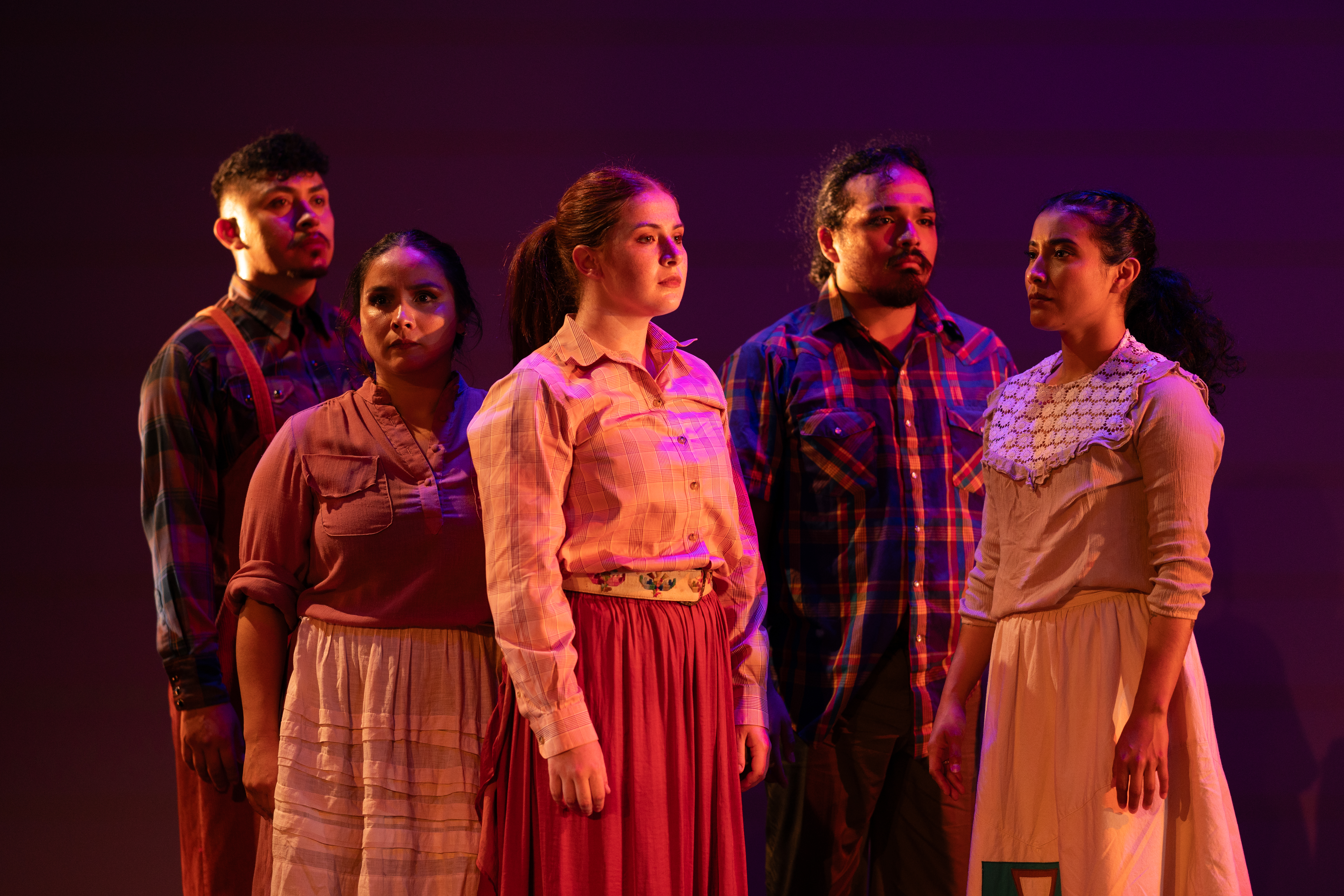 ‘Pajarito’ with Ruby Morales, Esteban Rosales, Luz Zarina Orduño Mendoza, David Bernal Fuentes and Lauren Jimenez. Photo by Dominic Arizona Bonuccelli
In “Pajarito”, Montoya probes the human cost of scientific advancement. Collaborating with her cousin, University of New Mexico historian Myrriah Gómez, she transforms archival photographs and oral histories into movement; dancers embody both pride and precarity of working at Los Alamos National Laboratory. Peña’s spacious arrangement reflects the burden of the nuclear legacy, framing each recoil and fall.
Principal dancer Ruby Morales said the physical and emotional weight of the piece strikes deeply.
“Our people experience very similar things in different ways, and dancing this work affirms that shared history of survival,” Morales said. “When I move through Pajarito, I feel those echoes in my body, connecting my story to those who came before me. You hear low booms and waves, shifts that let you move through time, almost like a locomotive passing. There are pinging sounds, flutters of wings, rushes of air and melodies that rise, reminding you that even through loss there is beauty and persistence.”
‘Siglos. Sueños. Sefarad.’: Ancestral Memory in Motion
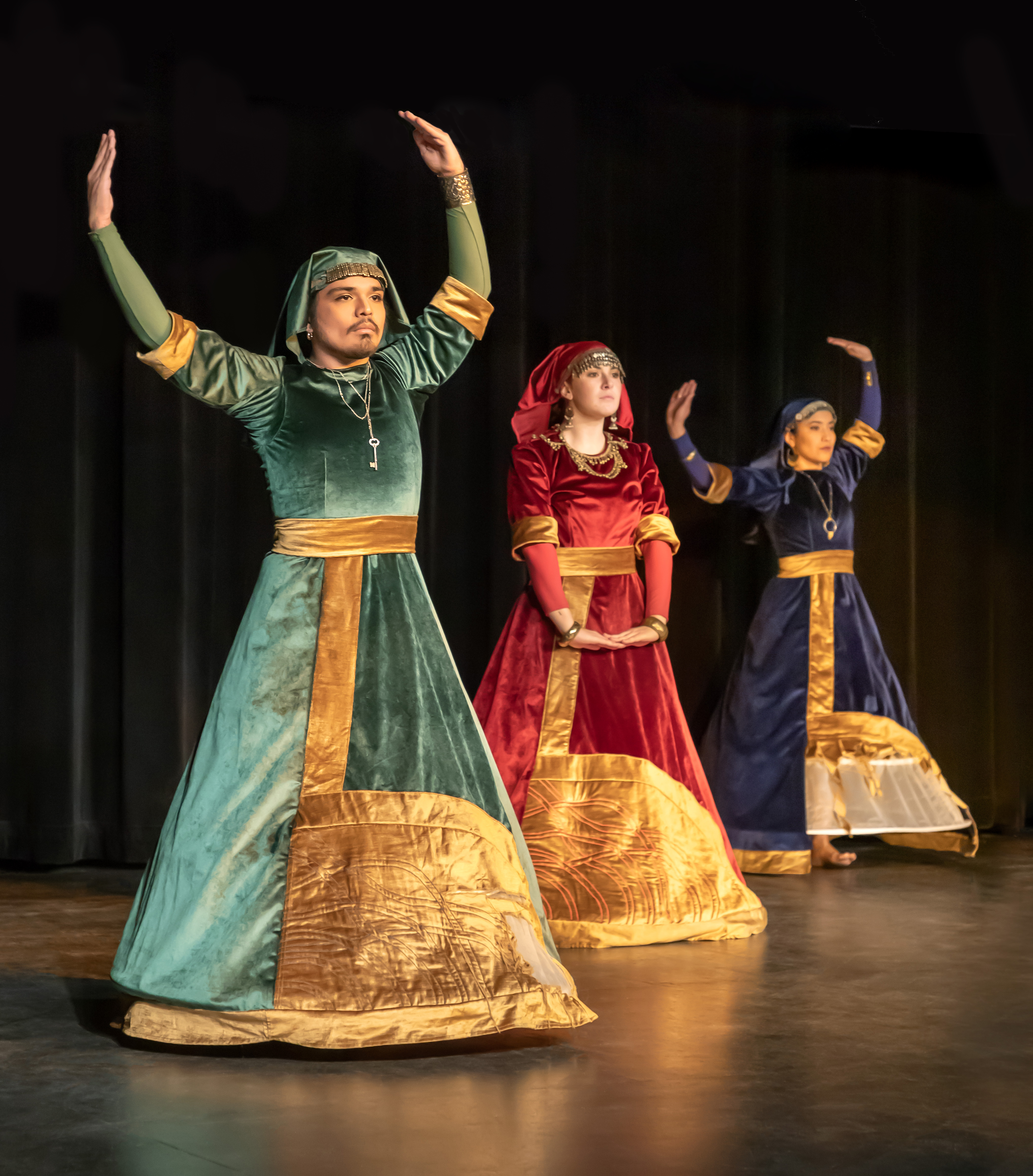 Esteban Rosales, Lauren Jimenez and Ruby Morales in ‘Siglos. Sueños. Sefarad.’ Photo by Dominic Arizona Bonuccelli
The most haunting section may be “Siglos. Sueños. Sefarad.”, a small ensemble set to “Morena Me Yaman”, a Ladino composition steeped in Sephardic modality. Through delicate shifting patterns, Morales, Arrieta Cuesta, Bass, Chávez and McDonald embody displaced Crypto-Jewish memory. The choreography is enchanting, suggesting hidden rituals etched into muscle memory through centuries of concealment.
Montoya’s choice to spotlight her own Sephardic background merges regional and diasporic connections, affirming that home has many forms: earth, blood and story.
“For generations, the Sephardim hid their culture and faith, passing as something they were not,” Montoya said. “In Spain, I walked through the 12th-century Sinagoga de Santa María La Blanca and sites tied to my grandmother’s family. I wanted to feel those memories in my bones. What I found was a pull to the architecture of lost congregations and the faint traces of rituals that barely survived the passage of time. This dance holds these remnants, making visible what was almost entirely erased.”
Movement, Music & Design: A Southwest Tapestry
Throughout the evening, Samuel Peña’s score spans folk-based percussion, rich strings and haunting vocal lines. The Tempe-based composer fuses Latin rhythms with atmospheric soundscapes, supporting Montoya’s choreography with tonal weight and clarity.
Lighting designer Clint Bryson uses a palette of earthy shadows and stark illumination to shape each vignette, highlighting quiet moments, like Spanish-language monologues and weathered Americana, as well as intricate ensemble scenes. Costume designs by Kelsey Vidic and Mary Leopo root each dance segment in its time and terrain: sun‑bleached fabrics in “Braceros”, plain work clothes in “Pajarito”, richly colored ceremonial wear in “Sefarad”.
What elevates this work beyond retrospective pageantry is the way Montoya treats bodies like living archives. Each dancer carries a story in their spine — in the dip of a shoulder, the extension of an arm, the subtle roll of a head. There is an unvarnished authenticity in the way they move; the dancers are not stylized but embodied, honest and tactile.
When this performance lands in Los Alamos, the proximity to the places that shaped these stories makes each movement feel lived and immediate. This work explores not only family lineage but wider collective identities: migrant, insider‑outsider, survivor.
Montoya’s question lingers after the curtain call: “How do these histories remain in our bodies, our speech, our relationships with land?”
In staging these narratives on a conventional performance platform, Montoya and her ensemble reclaim space for Latine bodies in contemporary dance — a gentle yet insistent reminder that the stories of the Southwest belong on stages and in hearts nationwide.
For those who believe in the power of dance to hold, reveal and heal — or simply want to witness an evening of stunning artistry — this performance is not to be missed.
Details: Safos Dance Theatre presents Stories from Home at 7 p.m. Friday, Oct. 3, at Duane Smith Auditorium. The Los Alamos Arts Council is hosting this event. Tickets and more information is available at www.losalamosartscouncil.org/.