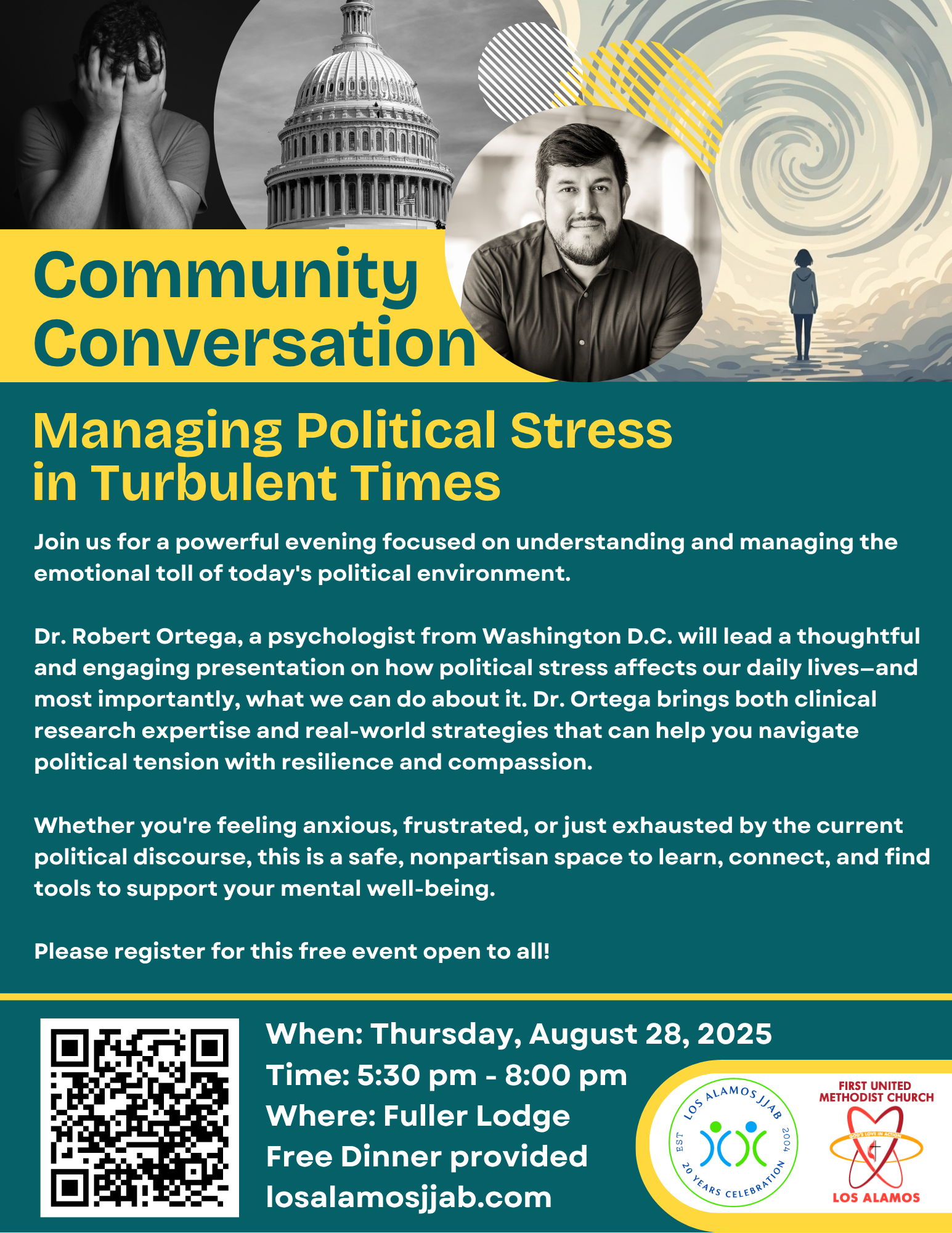
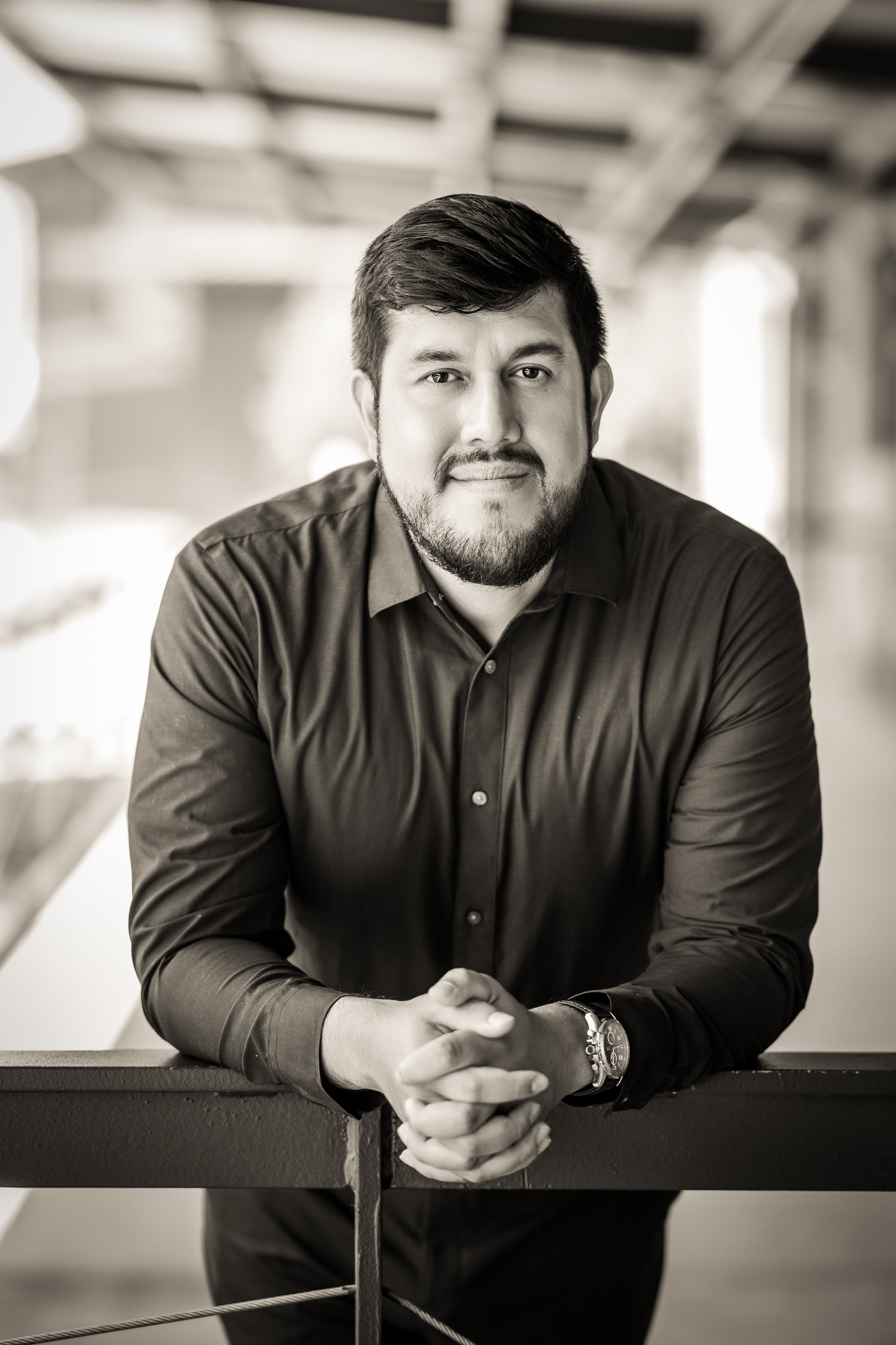
 Dr. Robert Ortega of RIO Therapies in Washington, D.C., will offer strategies for coping with today’s stressful political climate at a forum Thursday evening at Fuller Lodge. Courtesy photo
By MARLENE WILDEN
Los Alamos Daily Post
marlene@ladailypost.com
Dr. Robert Ortega, a Washington, D.C.-based psychologist who specializes in treating people who work in social and political activism, will offer strategies to help Los Alamos residents cope with today’s stressful political climate. His forum is 5:30-8 p.m. Thursday at Fuller Lodge.
The free, nonpartisan event is hosted by Los Alamos JJAB, led by Ortega’s brother, Phillip Ortega. The program aligns with JJAB’s mission to help families strengthen connections and build resilience.
Ortega draws on research and clinical experience to share tools for managing tension with compassion. The event is open to all community members.
In an exclusive interview with the Los Alamos Daily Post, Ortega explained that participants can move from feeling overwhelmed to taking steps that support their well-being. The interview has been lightly edited for length and clarity. Registration information appears below at the end of the Q&A.
Q: What first drew you to focus on political stress as a psychologist?
Dr. Ortega: I grew up in El Paso, Texas, and later moved to Washington, D.C., for college. I went from a small, insular community to one full of activists and advocates, and I became fascinated by how passionate people often burn out. My graduate research looked at how political and social issues affect mental health, and I’ve carried that focus into my clinical work. I realized we need to help people not just survive stress but also find sustainable ways to stay engaged.
Q: When you talk about ‘political stress’, how do you define it?
Dr. Ortega: It’s that uneasy feeling you get when the political world feels inescapable. It shows up like chronic stress—your nervous system is constantly activated, and that has real physical and emotional consequences.
Q: Many people in Los Alamos say they feel overwhelmed or worn down by today’s discourse. From your perspective, why is political stress such a significant issue right now?
Dr. Ortega: We live in a time when information comes at us constantly, and often in emotionally charged ways. Politics isn’t just about policy debates anymore—it touches people’s identities, values and even their sense of safety. That kind of repetitive exposure can leave people anxious, frustrated or exhausted, especially when they don’t feel they have control over the larger forces at play.
Q: What are the most common ways political stress shows up in daily life?
Dr. Ortega: Political stress rarely stays in your head—it shows up in daily routines. Maybe you’re wide awake at 3 a.m. replaying the latest headline, or too drained to focus at work. It can creep into dinner conversations, turning family time into arguments, or leave you snapping at colleagues when tensions run high. Over time, that pressure wears on your body as much as your mind. It really seeps into every corner of life.
Q: Do you see generational differences in how people cope with political stress?
Dr. Ortega: Yes, though no one is immune. Young adults, especially teens and those in their early 20s, report the highest levels of political stress. They’re still developing coping skills, so constant exposure, particularly through phones and social media, hits them hard. Older generations often have more experience regulating their exposure, but they’re not untouched. Many didn’t grow up having hard conversations about politics or identity, so it can feel especially uncomfortable to navigate these topics now. On the other hand, younger generations are growing up in much more diverse environments, so they often bring an awareness and sensitivity to issues that help them understand today’s challenges in a different way.
Q: For people overwhelmed by nonstop political news, what’s the first step to regaining balance?
Dr. Ortega: Mindful media consumption is key. Take stock of how much time you’re spending gathering information versus how much you’re actually acting on it. Most people lean heavily on information and neglect action. Look for the sources that include reporting that focus on potential solutions. Building a sense of what it takes to be successful helps people break free from feeling stuck in information overload.
Q: What do you hope Los Alamos community members will take away from your presentation?
Dr. Ortega: My hope is that people recognize they don’t have to choose between caring for their own well-being and their community involvement. Both are possible, and both matter. Civic engagement isn’t about having to save others or taking on the role of a hero. People often think they need to be Martin Luther King Jr. to make a difference, but real change comes from steady, collective participation—supporting the leadership of those most directly affected. Even simple acts, like attending a school board meeting and listening, make a difference. Numbers count.
Q: For those who can’t attend your presentation, what’s one small practice you’d recommend?
Dr. Ortega: Spend more time living actively. Pair that with regular reflection—check in with yourself about what matters most and take one small step toward that value. The step doesn’t have to be big; what matters is doing things that bring joy and connection. That might look like calling a friend, showing up at a meetup or volunteering an hour of your time.
Q: What keeps you hopeful in turbulent times?
Dr. Ortega: I believe in humanity. History shows us we’ve been through incredibly difficult periods before, and people have risen with compassion and creativity. In times of distress, humans often discover new ways of supporting each other. That gives me hope.
Q: Do you personally have a ritual when the political climate feels heavy?
Dr. Ortega: If conversations feel draining, it’s okay to step back or redirect gently. Sometimes the healthiest thing you can do is let go of responsibility for others’ stress and give yourself permission to rest. It helps to lean on small recovery rituals. I spend time with my niece, with friends, or with my dog. Stepping away restores perspective. It reminds me that life is more than the news cycle.
Event Details:
“Community Conversation: Managing Political Stress in Turbulent Times” is set for Thursday, Aug. 28, at Fuller Lodge. The event begins at 5:30 p.m. with a complimentary dinner and community welcome, followed by a presentation from Dr. Ortega at 6 p.m. The program will conclude by 8 p.m. There is no cost to attend.
Registration link: form.jotform.com/losalamosjjabinfo/cc-august-2025
For more information: losalamosjjab.com/events