
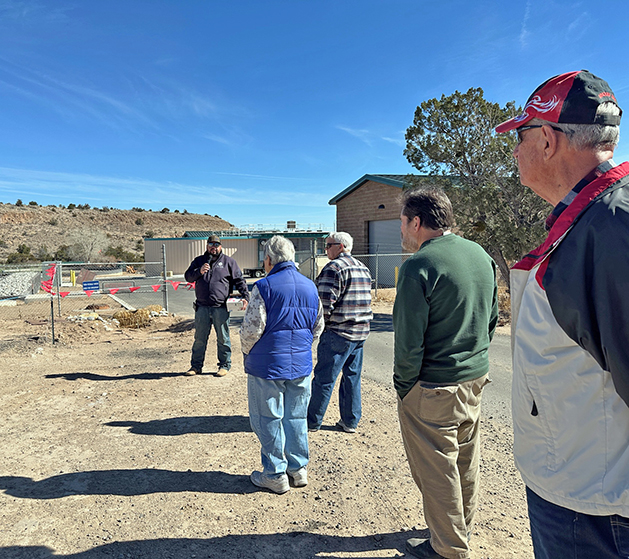
 Los Alamos County Wastewater Treatment Superintendent Josh Silva leads a tour of the new Water Resource Reclamation Facility March 5 in White Rock. Photo by Kirsten Laskey/ladailypost.com
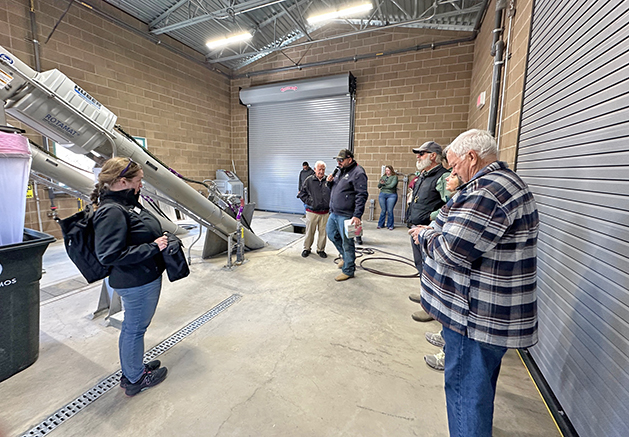 Participants in the WRRF tour check out one of the buildings at the plant and learn about how trash is separated from the waste stream. Photo by Kirsten Laskey/ladailypost.com
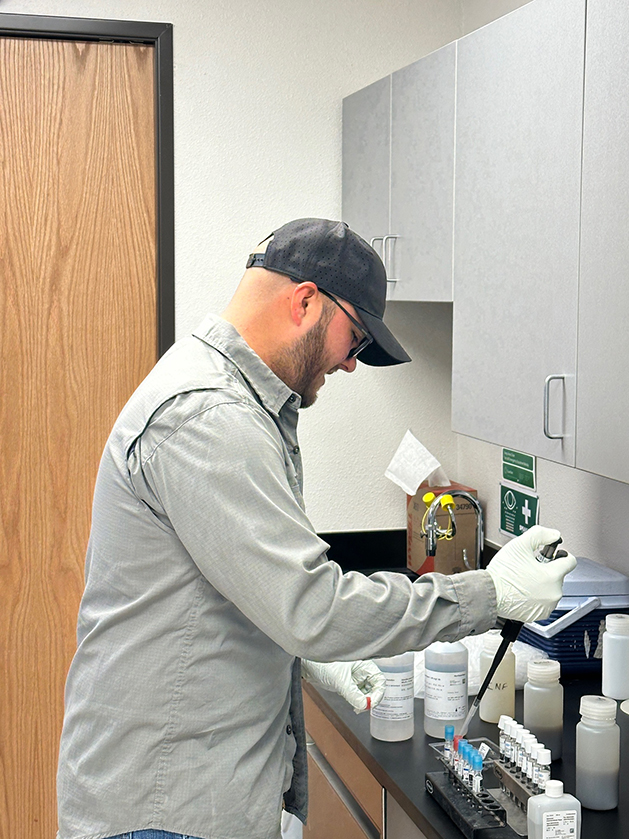 Waste Operator 1 Patrick Moore tests the amount of nitrates at the White Rock Water Resource Reclamation Facility to determine if they meet the permitted levels. Photo by Kirsten Laskey/ladailypost.com
By KIRSTEN LASKEY
Los Alamos Daily Post
kirsten@ladailypost.com
Oh, the mysteries of plumbing. What secrets travel along the maze of pipes that ultimately wind up at a wastewater treatment plant or in White Rock’s case, the White Rock Water Resource Reclamation Facility (WRRF)? Department of Public Utilities staff decided to pull back the curtain and show the community the answer.
The first public tour of the WRRF, which went online just last year, was held March 5. It was led by Wastewater Treatment Superintendent Josh Silva. Another tour will be held April 9 and a third is scheduled for May 14. The tours are open to everyone, though space is limited, and are free of charge. To register, visit ladpu.com/tour.
The tour reveals the entire process of treating waste – from when it first arrives at the facility and trash is sifted out, to large clarifiers where bacteria metabolism occurs and sludge is separated from the water, to exposing water to UV before either being stored to irrigate County-owned fields or flushed out to go into the Rio Grande River.
Meanwhile, the treated sludge will be used to create compost.
The entire operation hums quietly and can be managed online, it was revealed during the March 5 tour. Staff only need to get behind a firewall to manage the entire plant.
Also, it is worth noting that despite managing some of the foulest material imaginable, the facility is pristine and pleasantly odor-free.
While the tour helped participants understand the wastewater treatment operation better, Silva mentioned to the Los Alamos Daily Post that his more than 10 years of working in the wastewater industry has been an eye-opening experience.
Silva explained that when he started working in wastewater treatment he had a lot to learn. However, he conceded that “It’s pretty much everything people think it is.”
Silva also joked, “but there’s no turtles in the sewers.”
Before going through the site, Silva offered some background on the plant. The original treatment facility, he explained, was built in the 1960s and as it aged, the facility was eventually unable to meet federal and state discharge permit limits. As a result, the new plant was constructed.
In an earlier Los Alamos Daily Post article, it was reported that the new WRRF creates the highest class of effluent water, Class 1A.
This is a significant accomplishment because as Water & Energy Conservation Coordinator Abbey Hayward emphasized during Wednesday’s tour, water is extremely important.
“Treat water with the respect it deserves because you are nothing without it,” she said.
 Wastewater Treatment Superintendent Josh Silva discusses the operating system for the WRRF. Photo by Kirsten Laskey/ladailypost.com
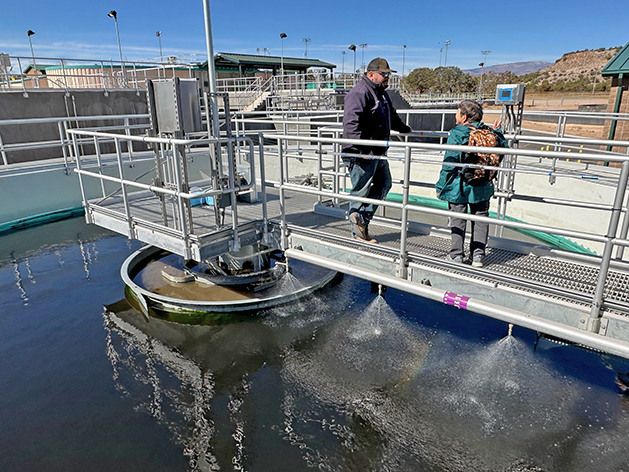 The view of secondary clarifier at the Water Resource Reclamation Facility. Photo by Kirsten Laskey/ladailypost.com
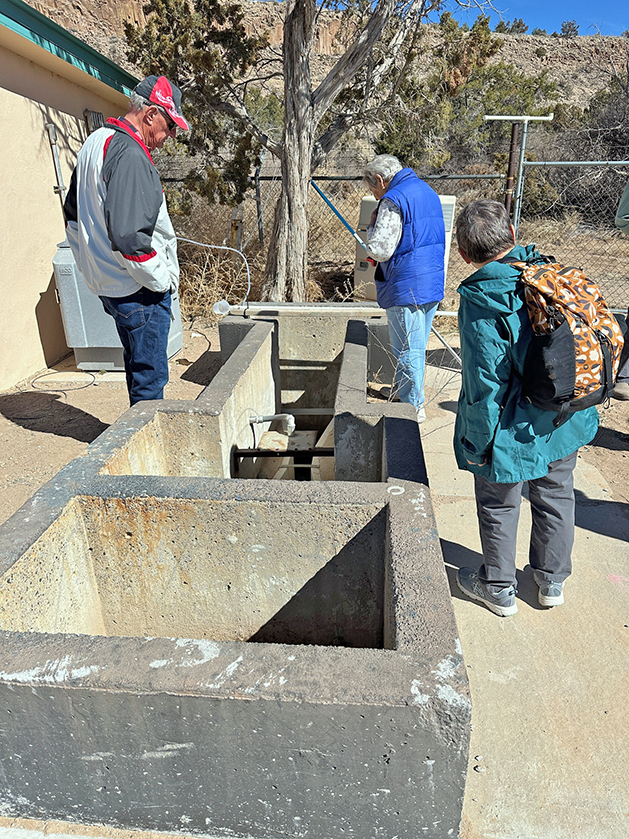 Tour participants check out the location where the treated waste water is released back into the Rio Grande. Photo by Kirsten Laskey/ladailypost.com
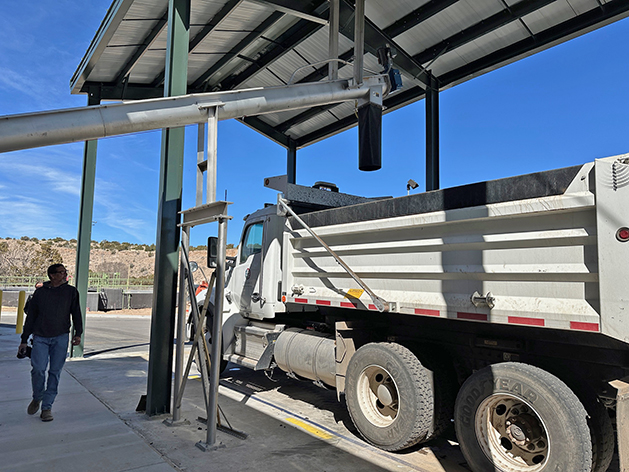 A truck collects the treated solid material at the WRRF; this material will be turned into compost. Photo by Kirsten Laskey/ladailypost.com