
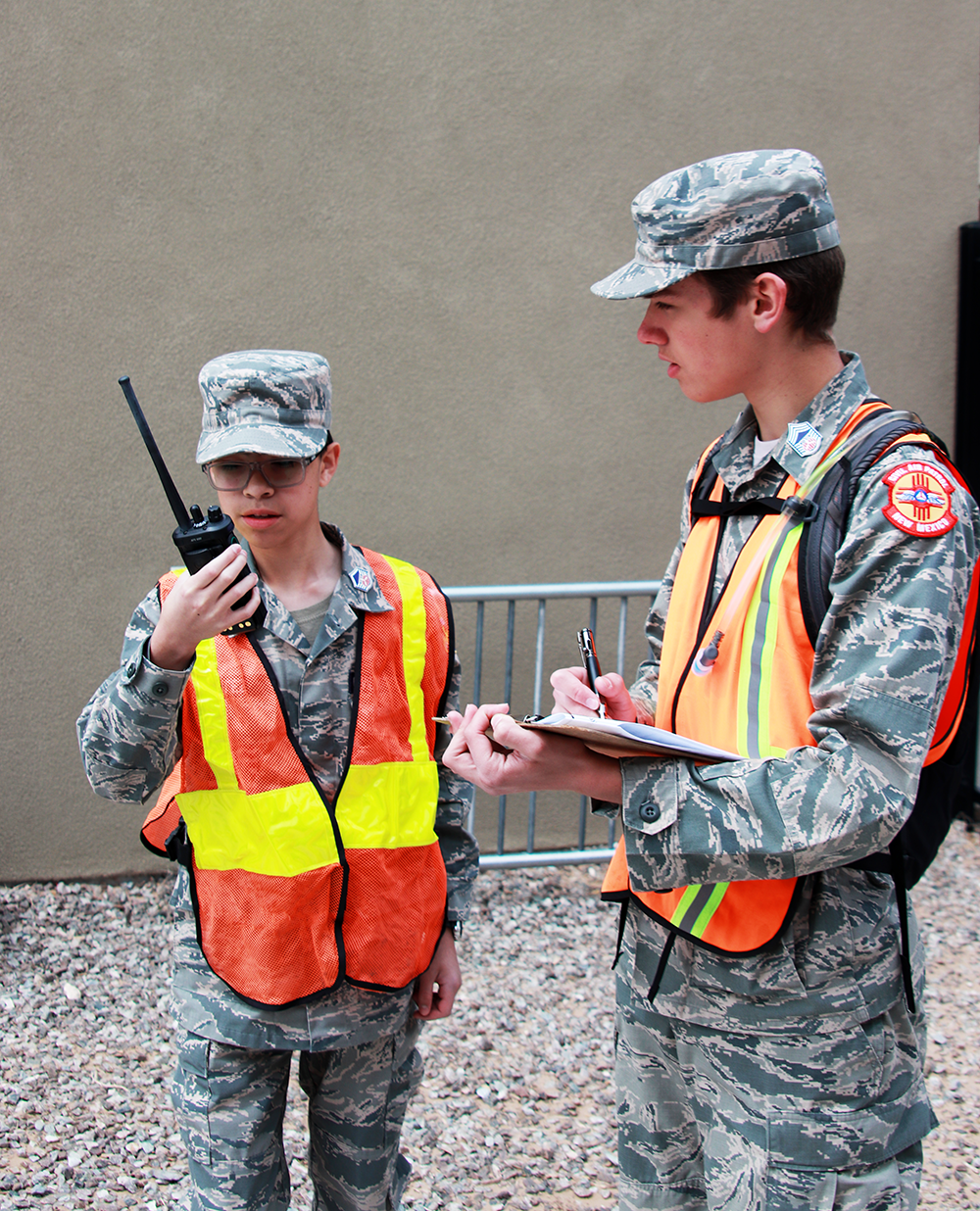
 C/MSgt Quentin Cortez, 13, at left, uses a CAP VHF radio to transmit a message to another group while C/CMSgt Augustin Turner, 15, collects data on the radio glitches during thoday’s solar eclipse. Courtesy/CAP
 1st Lt. Michael Saul collects cloud data using a NASA cloud identifier to determine how the eclipse changes local weather. Courtesy/CAP

Civil Air Patrol News:
ALBUQUERQUE – When the sky darkened during today’s (April 8, 2024) solar eclipse, cadets and citizen scientists from Civil Air Patrol’s New Mexico
Wing lit up the path to discovery, marking a historic day of observation and learning.
New Mexico Wing played a key role in the observation of the solar eclipse, launching its largest single day mission in history. This massive effort highlighted the dedication of our members and significantly contributed to scientific research, with NASA declaring the data gathered as critical for future studies spanning the next 300 to 500 years.
In New Mexico, a total of 69 CAP members participated in the mission, covering 10 research sites across the state. Squadrons from Los Alamos, Albuquerque, Farmington, Edgewood and Roswell all played a part in this historic event.
Collaborating with The International School at Mesa del Sol and ACES Technical Charter School, CAP cadets worked with students to gather this invaluable data. At The International School at Mesa del Sol, 90 students collaborated with Civil Air Patrol cadets, engaging in hands-on scientific inquiry during the solar eclipse.
C/CMSgt Olivia Wriston, 14, shared why she volunteered to come out today, “We’re able to help people for the future. It’s a great learning experience and I won’t be able to see another eclipse for another 20 years.”
This partnership not only facilitated the collection of critical information but also fostered a sense of community and shared purpose. Nationwide, a staggering 1,091 adult volunteers and 2,747 youth volunteers formed 418 solar eclipse observation teams. This mobilization represented about 20% of CAP units across the country, underscoring our organization’s deep commitment to this monumental national initiative.
“Our participation in this solar eclipse mission is more than just observation; it’s about inspiring young minds and developing a love for science and aviation that lasts a lifetime,” New Mexico Wing Commander Col. Andrew Selph said.
The mission’s scope included capturing weather information and utilizing handheld radios to “Capture the Ghost” – a unique radio attenuation phenomenon occurring during solar eclipses. This endeavor aimed at gathering insights could revolutionize weather forecasting models and pave the way for the development of new radio systems resistant to solar disruptions, benefiting both scientific understanding and communication technologies.
Civil Air Patrol’s contribution to the solar eclipse observation underscores our role in scientific exploration and community service. As volunteers, members exemplified their commitment to a mission with the potential to enlighten global scientific communities for centuries to come.
This event highlights Civil Air Patrol’s mission to serve America’s communities, save lives, and shape the future through its role as the U.S. Air Force Auxiliary and dedication to education and youth development.
About Civil Air Patrol:
Founded in 1941 and established as the official civilian auxiliary of the U.S. Air Force seven years later, Civil Air Patrol is chartered by Congress as a nonprofit organization for the purposes of youth development, aerospace education, and to promote general aviation. In an auxiliary role as a Total Force partner of the Air Force, CAP operates the world’s largest fleet of single-engine aircraft for search and rescue, disaster relief, training, and education. Civil Air Patrol is dedicated to serving America’s communities, saving lives, and shaping futures. Visit CAP.news or GoCivilAirPatrol.com. for more information. Follow on Twitter, Facebook, Instagram, LinkedIn and YouTube.
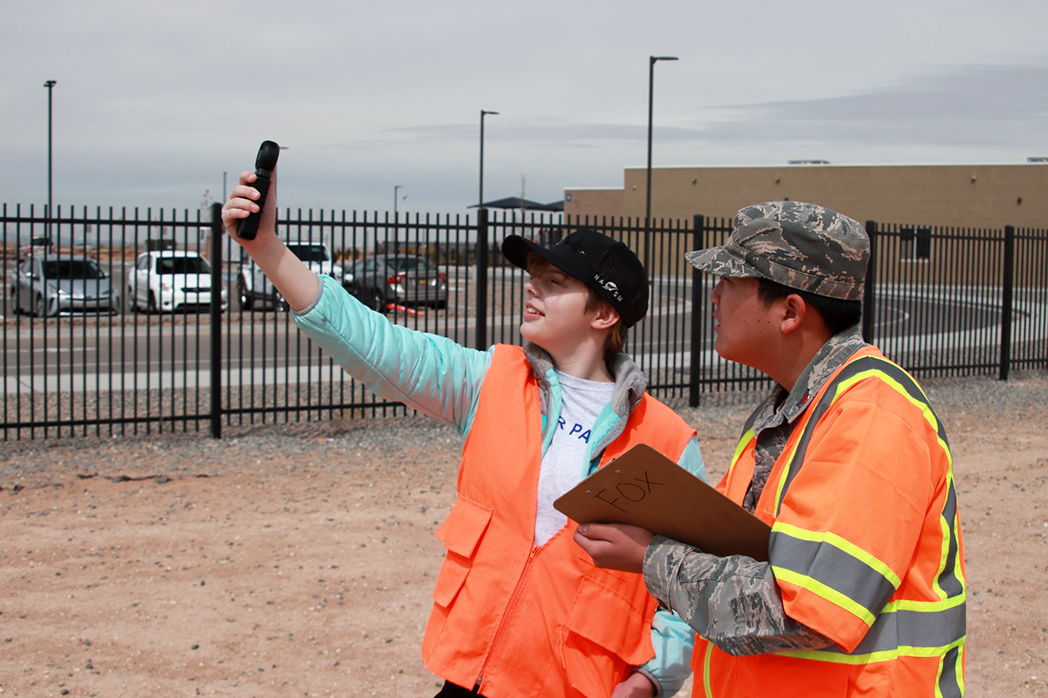 C/Amn Rachel Luther, 14, left, and C/SrA Eric Lindstrom, 13, use an anemometer (wind-speed indicator) to measure how the solar eclipse may impact wind speeds. Courtesy/CAP
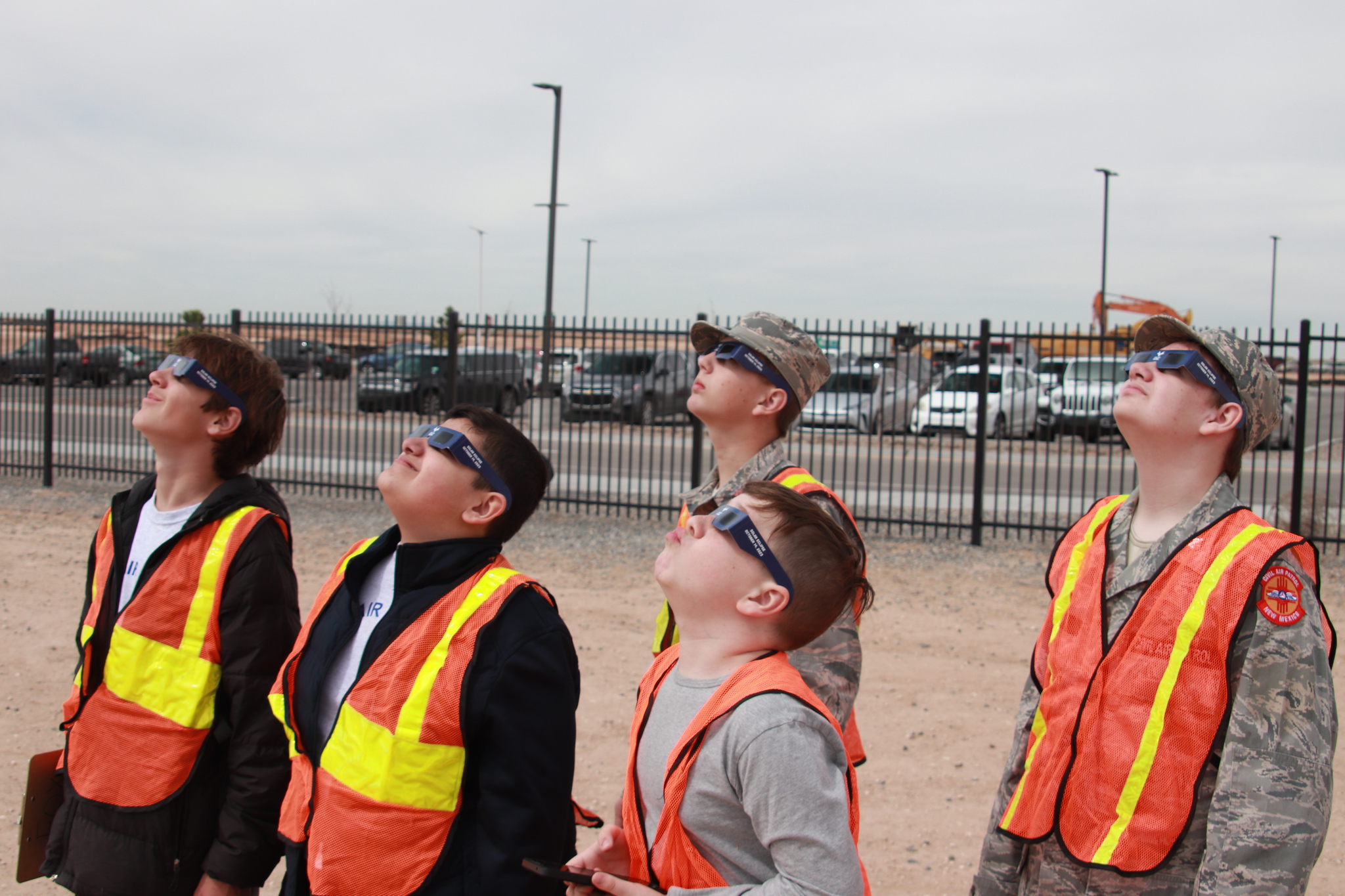 CAP Cadets view the solar eclipse today with a boy scout to record data. Courtesy/CAP