
 By REBECCA RUTHERFORD
Los Alamos
For the Los Alamos Daily Post
Remember when Prime day was once a year as opposed to every single month? Yeah, now you can’t go a week or two without some new Prime Days deal blowing up your inbox, and this month’s special day promises to kick off the holiday shopping season with more amazing deals!
Shoppers aren’t the only ones excited…Stay aware, because scammers keep an eye out for events like these and will use them against customers.
Picture this: you check your inbox expecting a cute cat video or a newsletter about pumpkin recipes, and instead you find an urgent email from “Amazon” claiming your account’s been compromised or your Prime renewal failed. Yikes!
But wait – before you start typing in your password or clicking that link – let’s pause for a minute and learn how to spot the fakes.
Scammers love to push your panic button. Their go-to tactics include:
- “You didn’t place this order – we’re canceling it!”
- “Your package delivery failed – click to fix.”
- “Your Prime renewal failed – update now or lose access.”
- “We detected suspicious activity – confirm your info immediately.”
The aim? Scare you enough to make you act fast – without thinking. Amazon warns these “urgent” emails are a big red flag. Legit Amazon messages will always be found in your Amazon Message Center, not just in your email inbox.
Real emails vs. scam emails – here’s how to spot the difference:

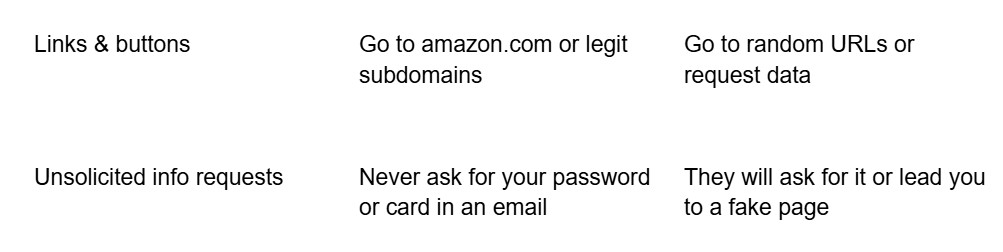
If even one of these things feels “off,” that’s a red flag, don’t click that link!
So what should you do if something seems suspicious?
- Don’t click the link: Especially if it’s demanding action “now.” That’s exactly what the scammer wants you to do.
- Log in yourself: Open your browser (or Amazon app) and type in amazon.com manually. Check your account settings or message center – that’s where legitimate Amazon notices will show up.
- Turn on multi-factor authentication (MFA): Extra layer of armor: even if someone gets your password, they’ll need a second code you receive. This can be through an app, your phone number, or a physical token like a yubi-key.
- Forward suspicious emails: Send the suspect email to reportascam@amazon.com as Amazon suggests.
Report & monitor
File a complaint with the FTC, and keep a close eye on your bank and card statements. Any unrecognized charges? Contact your bank right away.
When in doubt: don’t click – verify.
If an email is acting like a high-pressure salesperson, or if a deal seems too good to be true, it’s probably fake. These emails are meant to scare you into not thinking. Stay alert, stay skeptical, and always initiate contact yourself through known (trustworthy) channels. Do not click the links, go to the website directly, or call the company via a number you have verified through means other than the email.
Editor’s note: Rebecca Rutherford works in information technology at Los Alamos National Laboratory.