
 Craniosacral therapy is a gentle, hands-on technique used to release tension in the tissues surrounding the brain and spinal cord. The treatment is often used to improve nervous system function and support overall brain health. Courtesy/Los Alamos Integrative Health Center
By MARLENE WILDEN
Los Alamos Daily Post
marlene@ladailypost.com
From sharper memory to steadier moods, brain health is becoming the new cornerstone of wellness. Defined as the ability to sustain cognitive performance and emotional balance over a lifetime, it is drawing unprecedented attention nationwide not just for its link to longevity, but for how profoundly it shapes daily quality of life.
In Los Alamos, two local wellness providers are expanding their capacity and offerings to meet the growing demand for therapies that target cognitive function, stress regulation and emotional resilience.
The Los Alamos Integrative Health Center, led by Dr. Nikhil Ramburn, relocated the first week of August to a larger, more contemporary facility designed to better serve its growing patient base. Mullein Leaf Wellness Institute, owned by psychotherapist Michelle Wilde, is adding nervous system regulation services, advanced technology and new practitioners to keep pace with patient needs.
Both leaders say the surge in interest reflects a cultural shift fueled by pandemic-era stress, the aging baby boomer population and a more widespread recognition that brain health can be improved at any age.
Expansion with Purpose
Dr. Ramburn said his decision to relocate his practice stemmed from the need to maintain the clinic’s high standards for holistic healthcare while accommodating more patients.
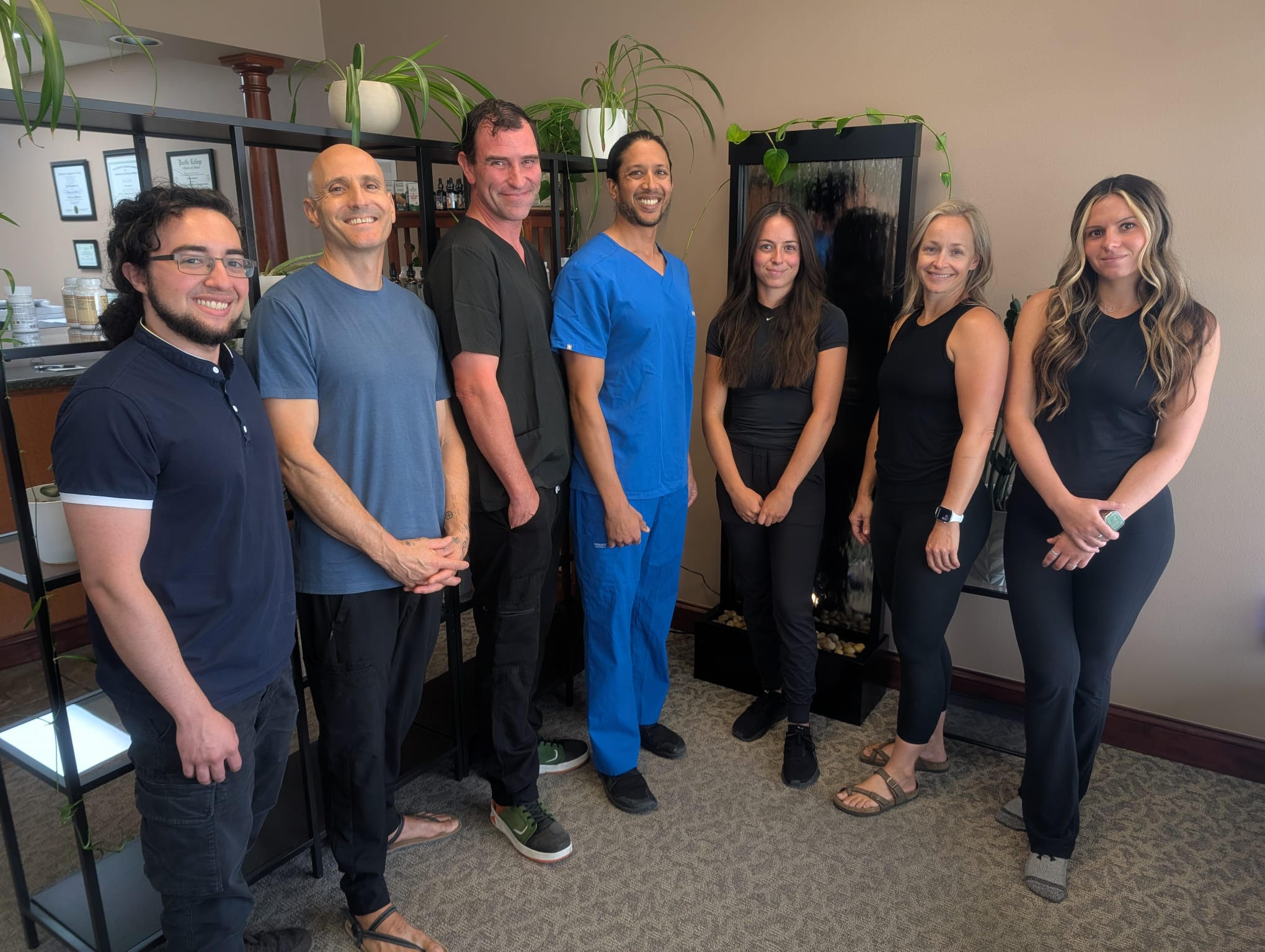 Nikhil Ramburn, D.O.M., with his staff at the new location, 152 Central Park Square. Courtesy/Los Alamos Integrative Health Center
“We have been warmly received by the Los Alamos community, and I am so appreciative of that,” he said. “Expanding into a larger space allows us to better serve our existing patients, reduce wait times, and offer a supportive venue for our team members without compromising the quality of care.”
The new location features more treatment rooms for services that support patients with neurological conditions, autoimmune disorders and fertility issues, as well as a spacious reception area and improved workspaces for staff. Ramburn said the upgrades are as important to healing as the therapies themselves.
“A nice environment is supportive to healing,” Ramburn said. “There are the therapeutic interventions, and then there’s the supportive environment. Both can further along treatment.”
A Growing Brain Health Movement
More patients are turning to somatic therapies such as craniosacral massage, acupuncture, postural integration and targeted dietary supplementation to help the nervous system reset and recover from stress. Neuroscientists studying mind-body interventions at institutions including the National Institutes of Health and major university medical centers say many of these treatments can influence the autonomic nervous system, which controls heart rate, digestion and stress responses. By shifting the body from “fight-or-flight” mode into a parasympathetic, or “rest-and-digest,” state, these therapies may support both mental and physical recovery.
“If we can allow the system to flush out the adrenaline, cortisol and norepinephrine that drive us to get things done, we can recover from stress and get closer to peak performance,” Ramburn explained. “That deep parasympathetic reset releases endorphins and anti-inflammatory pathways that promote healing.”
He defines brain health as “optimizing cognitive performance while cultivating emotional resilience,” noting that it is as relevant to high-achieving professionals as it is to those recovering from illness or injury. “Some of our patients are working to solve complex problems in the material and physical sciences, and it is very rewarding to be able to support them,” he said.
Ramburn also points to generational and technological pressures that are straining the human nervous system. “Our sympathetic nervous system evolved to handle acute threats, not the constant, sustained stress we see now. These therapies help restore the balance we’ve lost.”
One of Ramburn’s longtime patients, Partha Rangaswamy, a 66-year-old engineering analyst and group fitness instructor in Los Alamos, said he approached treatment with a scientist’s skepticism but has found the results undeniable.
“I thought my memory loss and mental fatigue were just part of getting older,” he said. “But my eyesight, hearing and clarity of thought have all improved. I’m teaching high-intensity fitness classes at 5:45 a.m. and keeping up with people half my age. For me, it’s about finding the right people to help you heal and stay fit, and it has left me feeling more balanced and comfortable in all aspects of my life.”
Integrating Science and Touch
Wilde, who has practiced psychotherapy in Los Alamos for 15 years, has been steadily integrating nervous system regulation into her work after seeing limits to traditional talk therapy.
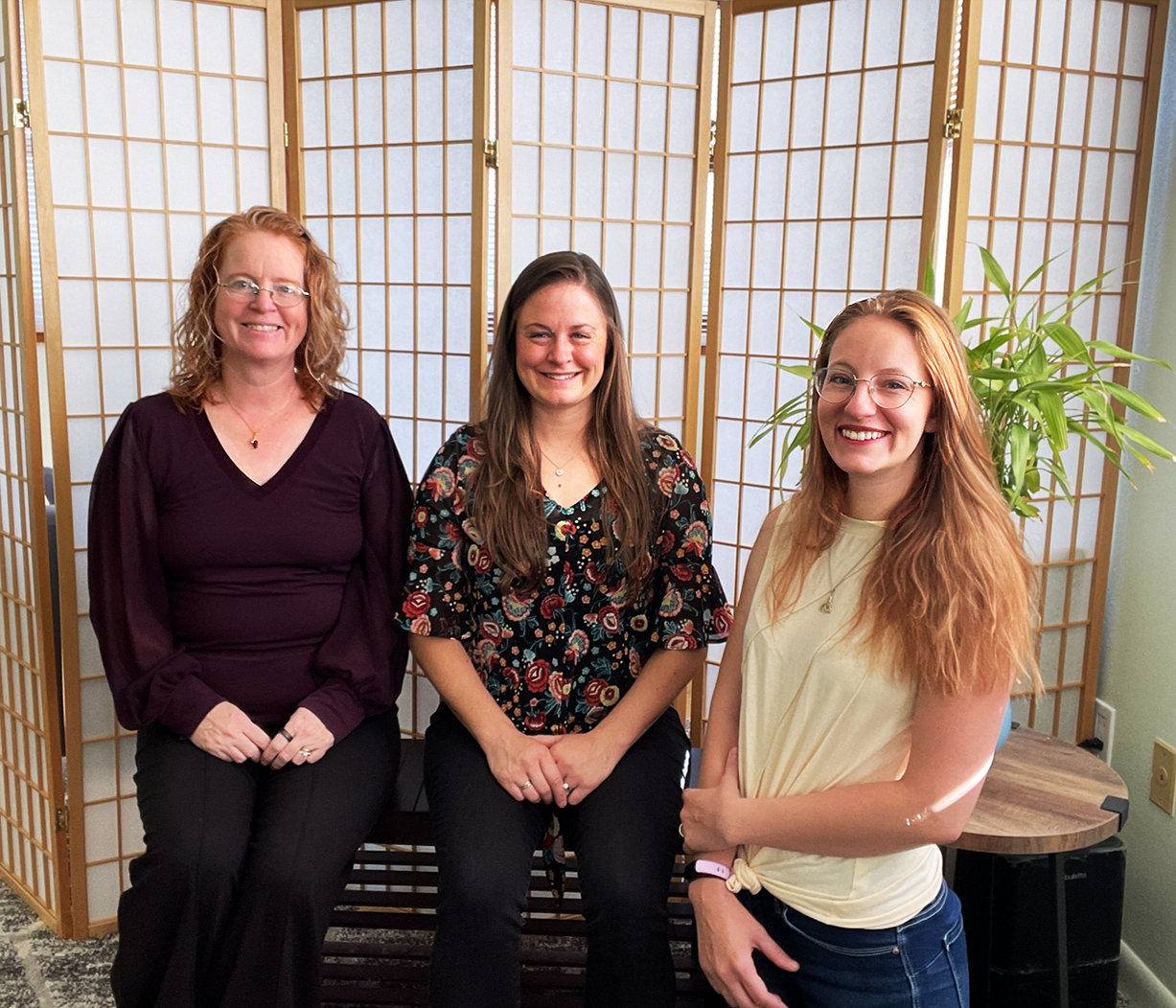 Michelle Wilde, LPCC, LMT, with Elizabeth Castilla and Rebekah Stephens in their office at 3250 Trinity Drive, Suite B-2. Courtesy/Mullein Leaf Wellness Institute
“All psychotherapy and bodywork modalities simply work better with nervous system regulation,” Wilde said. “If we don’t have that, the results just aren’t as effective as they could be.”
Her practice offers the Safe and Sound Protocol, which uses filtered music to stimulate the vagus nerve, and the Rest and Restore Protocol, which promotes systemwide relaxation by adjusting neural rhythms. Wilde also provides craniosacral therapy to improve cerebrospinal fluid flow and release tension in the fascia surrounding the brain and spinal cord — treatments that can help reduce headaches and brain fog.
“People come in for many reasons — hypertension, PTSD, ADHD, anxiety,” Wilde said. “For most clients, the focus is on recovery and replenishment. Most are looking to decrease stress, improve sleep and feel more grounded.”
High-Tech, High-Touch Tools
Wilde’s recent additions include an infrared sauna to boost mitochondrial efficiency and support detoxification, and a pulsed electromagnetic field mat to improve microcirculation. She said clients report deep relaxation and better energy.
“These approaches help people feel seen and heard because they address what’s happening in their bodies as well as their minds,” said Wilde. “I love the science behind things, so I explain why these treatments work. That really resonates here in Los Alamos.”
This fall, Wilde will launch a women’s circle focused on brain health techniques. She is also bringing on a counseling intern to help meet demand.
Local Roots, National Trends
While wellness tourism is a growing industry globally, both Ramburn and Wilde emphasize that their work is built on long-term patient relationships.
“These are the same kinds of improvements that people travel across the world for,” Ramburn said, “but we can experience them right here in Los Alamos.”
The national momentum behind brain-centered wellness, they note, aligns with local strengths: a highly educated community, a culture of scientific inquiry and an environment conducive to rest and recovery.
“These mountains are a place where the nervous system can settle, and that can really further along healing,” Ramburn said.
For Wilde, the appeal is equally straightforward: “Whether someone’s here to recover from burnout or simply optimize their mental performance, brain health is something that can benefit everyone. And it’s never too late to start.”