
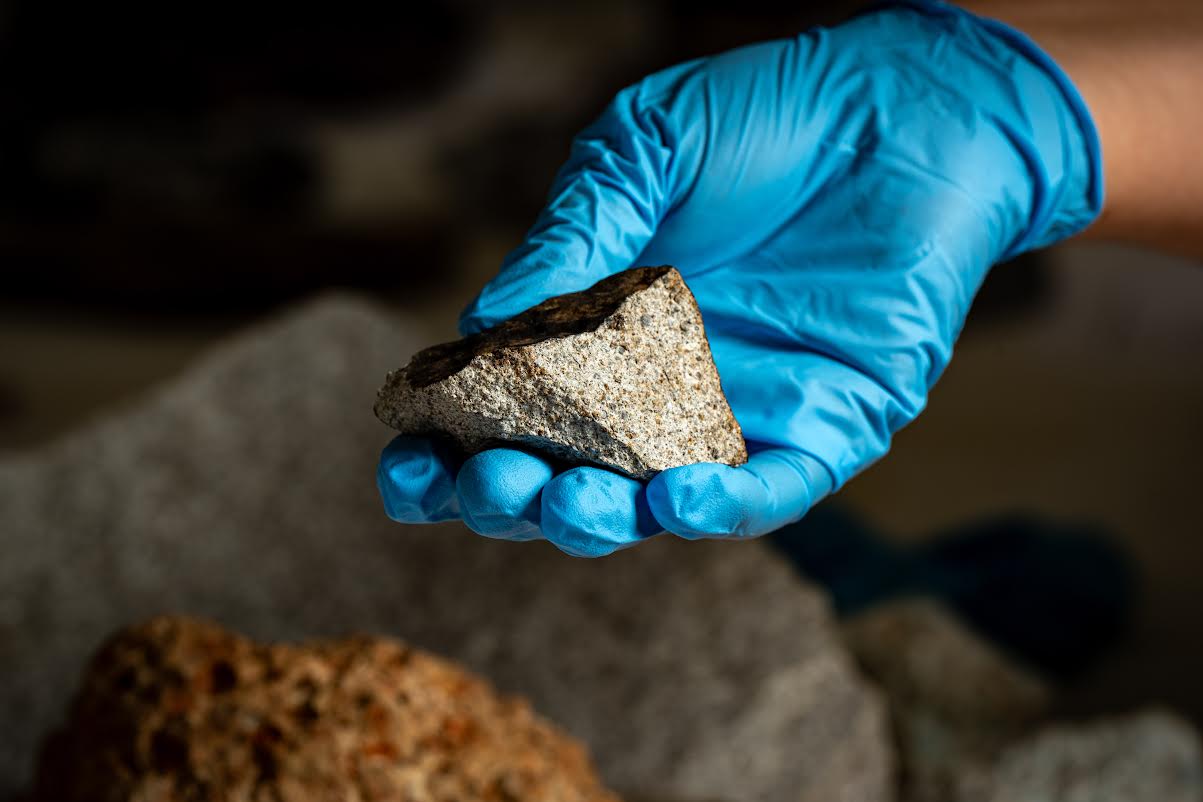
 Specimen of meteorite from June 26 fall event at Tellus Science Museum. Courtesy/Tellus
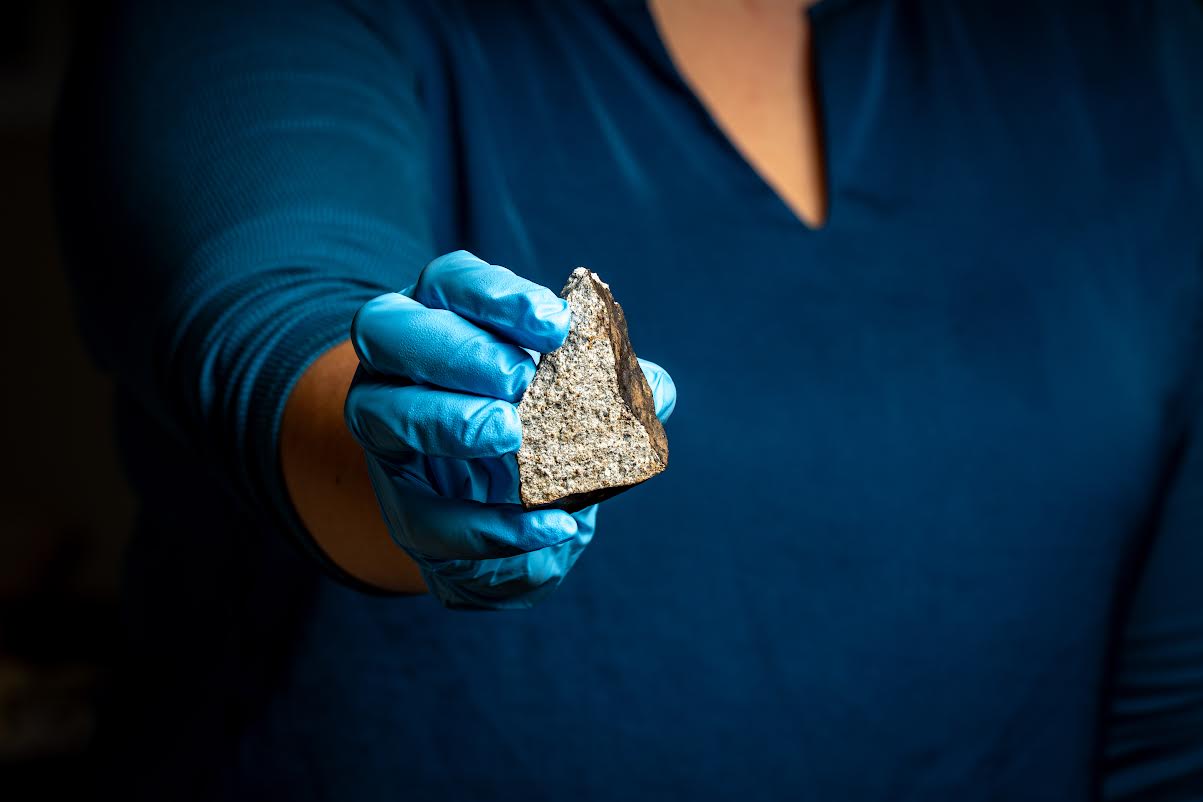 Specimen of meteorite from the June 26 fall event at Tellus Science Museum. Courtesy/Tellus
SCIENCE News:
Tellus Science Museum is thrilled to announce the acquisition of a newly recovered meteorite specimen from the fall event witnessed across the Southeastern United States last week on Thursday, June 26, 2025.
“Meteorite landings like this are pretty rare,” Astronomy Program Manager Karisa Zdanky said. “Space rocks and other debris enter Earth’s atmosphere often, but they usually burn up before reaching the ground – which is the requirement to be called a meteorite. It’s uncommon to have a meteor so bright and so big that it can be witnessed in the day and produce such sizable meteorite fragments.”
The meteor fall, which lit up skies across Georgia, Tennessee, South Carolina, and part of northern Florida, captured national media attention. Witnesses near the fall reported a bright fireball and a loud boom. The meteor disintegrated above Henry County, Georgia, spreading fragments across the area. One piece even hit a local home, causing minor property damage.
According to NASA, the meteor was traveling approximately 30,000 miles per hour when it entered Earth’s atmosphere.
“We’re very fortunate to have this piece,” Director of Curatorial Services, Amy Gramsey said “A meteorite hunter found the specimen on Friday, June 27, in Henry County. It’s a 150-gram chondrite meteorite—a stony-type meteorite containing small mineral granules.”
Last Thursday’s fall was the 29th documented meteorite in Georgia and only the second documented incident of a meteorite hitting a home. The first recorded case of meteorite-related property damage in the state occurred in March 2009 in Cartersville, Georgia, just a few miles from Tellus Science Museum. The so-named Cartersville Meteorite is currently on display in Tellus’ Weinman Mineral Gallery. This new specimen, which has yet to be named, will become a part of the Museum’s permanent mineral collection. Curatorial staff expect to have it on display for the public by the end of summer.