
 Picture 1: A boulder pile attracting children to its top. Photo by Robert Dryja
 Picture 2: The gently sloping shore line of the lake that had been in the Valle Grande. Photo by Robert Dryja
By ROBERT DRYJA
Los Alamos
Areas of the Valles Caldera have remarkable boulders. The boulders are in piles that may be 20 to 30 feet high. They are set in fields of level grass.
Picture 1 above shows such a pile. It is irresistible to children who then clamber to the top and explore caves at its base. How were piles of boulders created such as this one? Several factors may have come together.
The first major eruption in the Valles Caldera occurred approximately 1.2 million years ago. This eruption created the thirteen-mile-wide crater. Repeated smaller volcanic eruptions have occurred since then. The most recent eruption was approximately 50 to 60 thousand years ago and is called the El Cajate eruption.
This eruption resulted in lava covering a much smaller area. This is the source of the boulders that now are found on a broad slope leading into the Valle Grande. Much of this lava was relatively soft and is called tuff. The boulders are composed of a much more solid rock called rhyolite. The rhyolite would have been intermixed with the tuff as part of the lava flow.
The area of particular interest is half a mile wide and a mile long. This area was part of the shoreline of a lake that once existed in the Valle Grande. This lake was created when the El Cajate lava created a broad dam, stopping water from flowing out of the Valle Grande. Water lapping along the shore line eroded the softer tuff.
Picture 2 above shows the broad and gentle slopes that were created and extend into the Valle Grande. Sections of solid lava then were exposed as the softer rock around them eroded away. The boulder piles that we see today are the result. The lake in the Valle Grande drained when erosion created a stream cutting through the lava field. A narrow canyon now exists.
Picture 3 below shows the vertical walls of the solid lava that are along the stream.
But there is something else to consider when looking at a boulder pile. Some boulders lie randomly in pile next to one another. The space between the rocks is where softer soil and volcanic pumice eroded away as shown in Picture 4 below.
However, Picture 5 below shows something different. One large boulder has distinct horizontal lines dividing it into three layers. They look somewhat like pancakes laying on top of one another. The horizonal layers may be the remnants of repeated lava flows from when the volcano erupted. One flow lies on top of one another.
In contrast another large boulder behind it is divided into vertical columns. A layer of lava is very hot when initially created. The surface of a thick layer cools more quickly than deeper down. The cooling surface contracts first, resulting in cracks extending downwards.
The columns therefore may be the result of rain and snow eroding down into vertical cracks that formed when a thick layer of lava split apart as it cooled.
 Picture 3: The slow, meandering stream in the Valle Grande becomes a bubbling, rock lined brook when it passes out of the Valle Grande. Photo by Robert Dryja
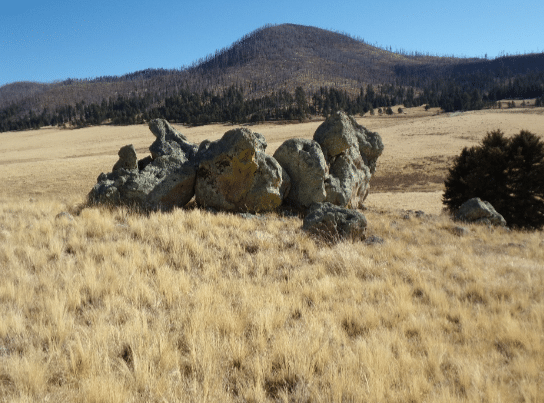 Picture 4: A random pile of boulders. Photo by Robert Dryja
 Picture 5: Horizontal layers in front and vertical columns in back compose this boulder pile. Photo by Robert Dryja