
 By ROBERT DRYJA
Los Alamos
National new sources report that bird populations are decreasing. Steps therefore need to be taken to correct this trend. However a joke from statistics comes to mind. “If you have your foot in a bucket of ice water and your hand on a hot stove, you feel fine on the average.” There can be similar variations among bird species while the overall pattern is important. Data collected over 10 years at a bird feeder presents local patterns.
Forty five different species have come to a backyard bird feeder over the past 10 years. The great majority have made only occasional visits from year to year. However five species have come every year and in significant numbers. These include the house finch, dark-eyed junco, white-winged dove, canyon towhee and Eurasian collared-dove.
House Finch and Dark-eyed Junco
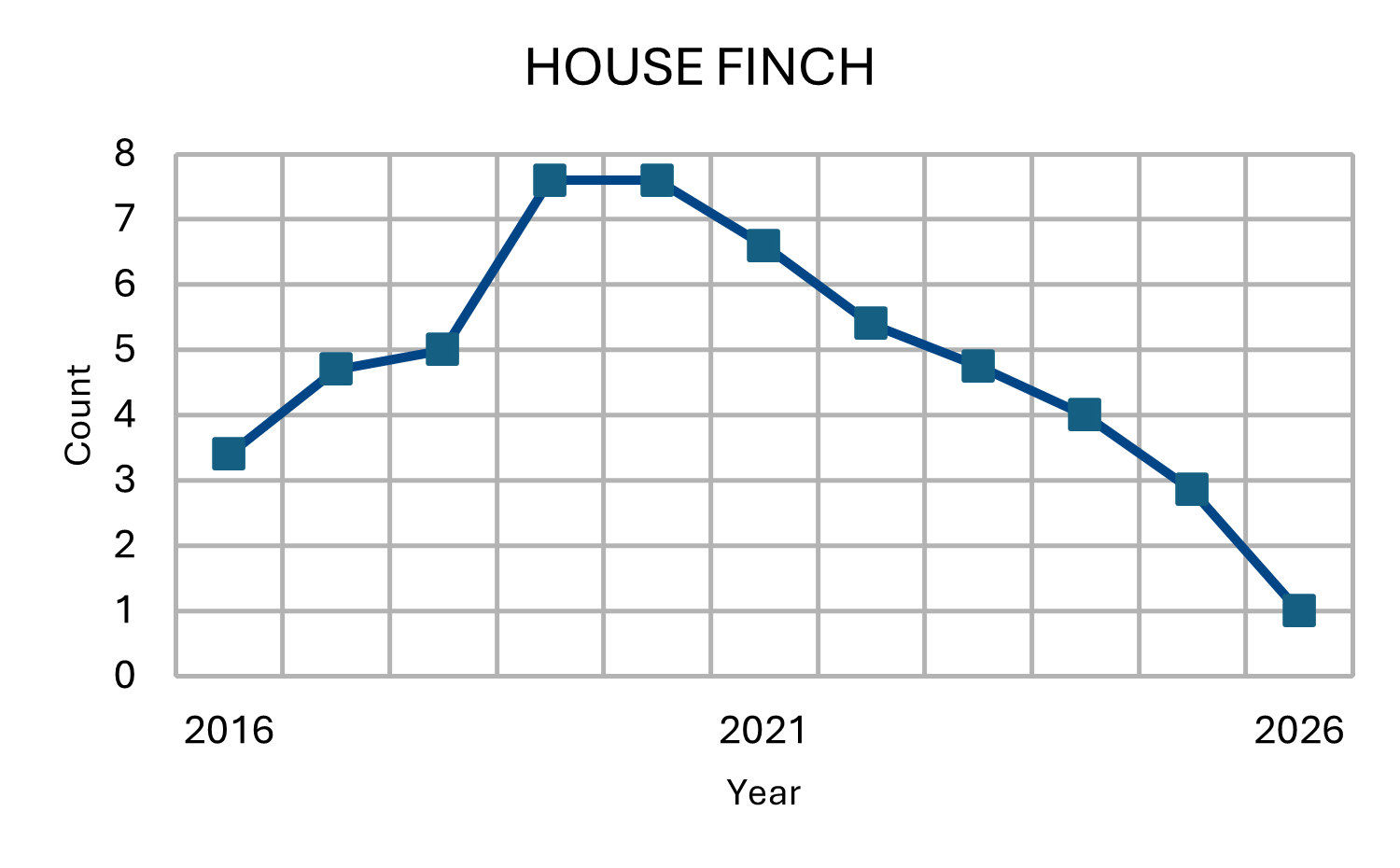
House Finches peaked in 2019 and 2020 with an average of 7.6 being seen on a day. This average decreased on a yearly basis to 4.2 in 2026. This 4.2 reflects 143 birds being seen over 34 days during the year. The 7.6 average seen in 2020 reflects 267 birds seen over 35 days. This local, short term pattern is consistent with the national assertion that bird populations are decreasing.
However the house finch only populated the western United States until the 1940’s. A small number were released in 1940 in Long Island, New York when they were not sold as pets. They then spread throughout the eastern United States and southern Canada. A localized, 10 year decrease may be occurring but the house finch now has spread throughout the entire country over the past several decades. The western United States represented the hot spot while the eastern United States represented the cold spot. On the average they now can be found throughout the continent.
The dark-eyed junco has followed a similar annual pattern. It peaked at a daily group average of 12.0 in 2017. This is based on 324 birds seen over 27 days (324/27 = 12). This average decreased in 2026 to a 3.5 daily group average based on 74 seen over 21 days (74/21 = 3.5). However the dark-eyed Junco is one of the most common birds in North America. It can be found across the continent, from Alaska to Mexico, from California to New York. A recent estimate proposes the dark-eyed junco’s population is approximately 630 million.

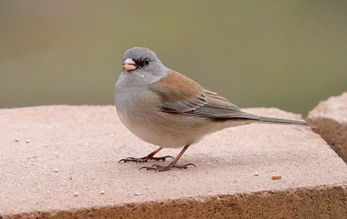
House Finch. Photo by Bob Walker Dark Eyed Junco. Photo by Bob Walker
White-winged Dove
The number of white winged doves seen annually has varied from a high of 298 in 2017 to a low of four in 2023. The four birds seen in 2023 occurred for only one day. The 298 birds seen in 2017 were seen over 26 days. The white-winged dove groupings therefore peaked in 2017 with an average of 11.5 per day. The average then decreased to 2.0 in 2022. However it has increased back to 6.3 in 2026. Unlike House Finches and Dark Eyed Juncos, there is not a consistent downward trend.

White-winged Dove. Photo by Bob Walker
Canyon Towhee and Eurasian Collared Dove
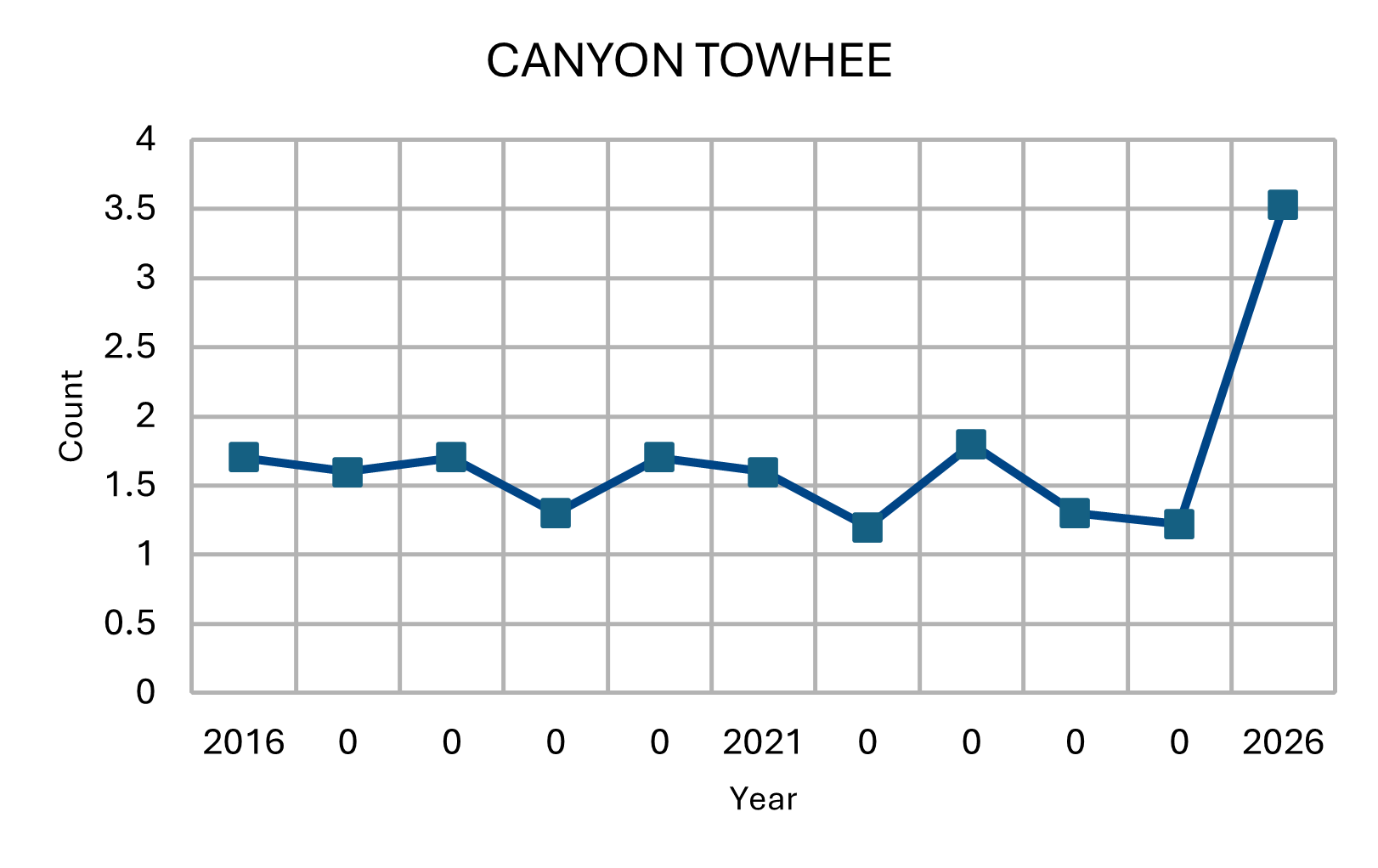
The Canyon Towhee has appeared only in small groups of one to two members from 2016 to 2025. The group size then increased 3.5 in 2026. Although it is in small numbers, it is not following a downward pattern but has remained about the same.
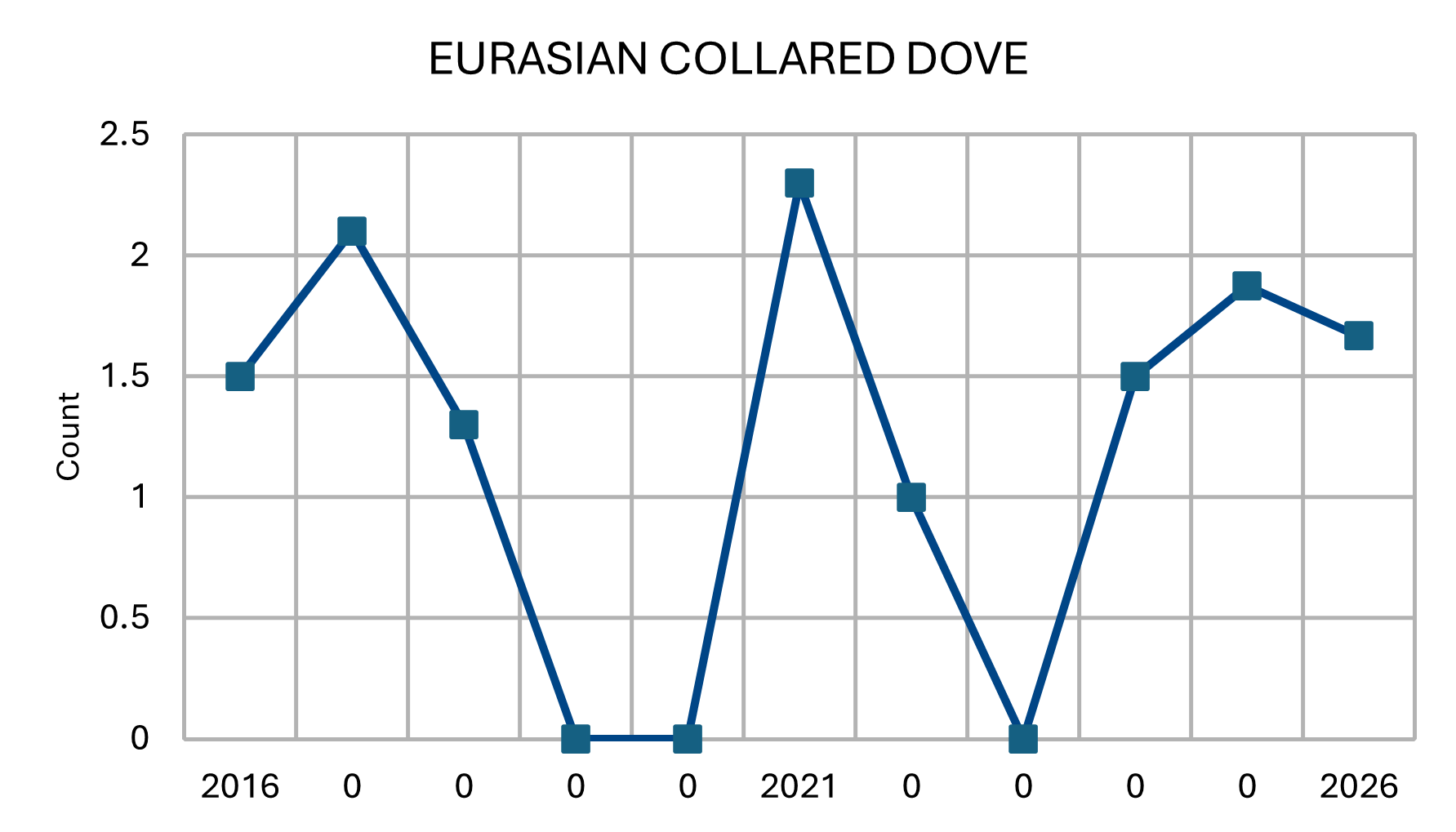
The Eurasian Collared-Dove also has followed a pattern with about one or two members in a group from year to year for most years. However there are three years in which it is has not been seen. Eurasian Collared-Doves came to North America via the Bahamas. Several birds escaped from a pet shop during a mid-1970s burglary. The shop owner then released the rest of the flock of approximately 50 doves. Others were set free on the island of Guadeloupe. From these two sites the birds likely spread to Florida. They now occur throughout most of North America, similar to the spread of House Finches across the continent over several decades.
Although there is an overall decline in the population of birds, there is considerable variation when individual species are compared or localized areas are considered. Multiple strategies and priories are needed to deal with this overall decline.
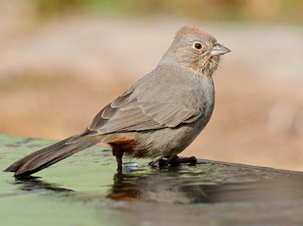
Canyon Towhee. Photo by Bob Walker

Eurasian Collared Dove. Photo by Bob Walker