
 A Spotted owl is roosting quietly during the day near a steep canyon wall. There still is a distinctive circular pattern of the feathers around its eyes even while closed. Photo by Robert Dryja
 By ROBERT DRYJA
Los Alamos
The Spotted owl catches attention for several reasons. Compared to many species, it is a large bird. It is approximately 17 to 19 inches in length and weigh from 1.1 to 2.2 pounds. A house finch in comparison is only 5 to 6 inches long and weighs form 0.6 to 0.9 of an ounce. Spotted owls do not gather in flocks like house finches, but its size makes it stand out when seen.
The anatomy of a Spotted owl also makes it distinctive. It reflects adaptation to actively living in the night. It has large eyes that help it see when light levels become low with only moonlight and stars. Proportionally their eyes are the same size of humans. Feathers form a disk around their eyes. This shape directs sound to the ears that are to either side of the eyes. Feather also can muffle the sound created while flying.
The shape and size of each ear is different. This helps localize where sounds are coming from. Eyes, feather formation, and hearing all help an owl to fly safely at night and to locate pray for food. In comparison, can you imagine a person trying to see a mouse when 20 or 30 feet away in the dark?
Spotted owls are adapted to living in mature forests in canyons. This has meant their habitat throughout the western states has been reduced over the decades as result of forest land been changed to farm land or had trees harvested. There has been an estimated 21 percent decline in habitat across Arizona and New Mexico since 1986. However northern New Mexico still provides a good setting with its mountain ranges that have numerous canyons. The national parks and national forests in this area also provide protected mature forests. Spotted owls do not build nests but instead use branches that have grown so as to provide a nest-like setting. Cliffs and caves that have holes also are used. (Picture 1 was made adjacent to a canyon wall that has two or three nest holes in it.)
Spotted owls remain in their territory rather than migrate long distances when winter arrives. However they may fly a few miles to go from higher to lower elevations to be areas that are not so cold.
The phrase “wise as an owl” has been passed down through generations. It emphasizes the notion that wisdom is not just about intellectual capabilities but also encompasses insight, intuition, and the ability to make sound judgments. The phrase “smart as an owl” is less commonly used, but it can still be understood to mean someone who is clever, quick-witted, or intelligent.
In Greek mythology, the goddess Athene was thought to symbolize wisdom and was often depicted with an owl nearby. This probably was inspired by the owls’ big eyes and solemn appearance. The Greeks also thought owls had some sort of inner light that let them see at night. It was different with the Romans. Romans thought an owl’s hoot was a harbinger of death. They nailed dead owls to their doors to ward off any evil the bird had brought in the first place.
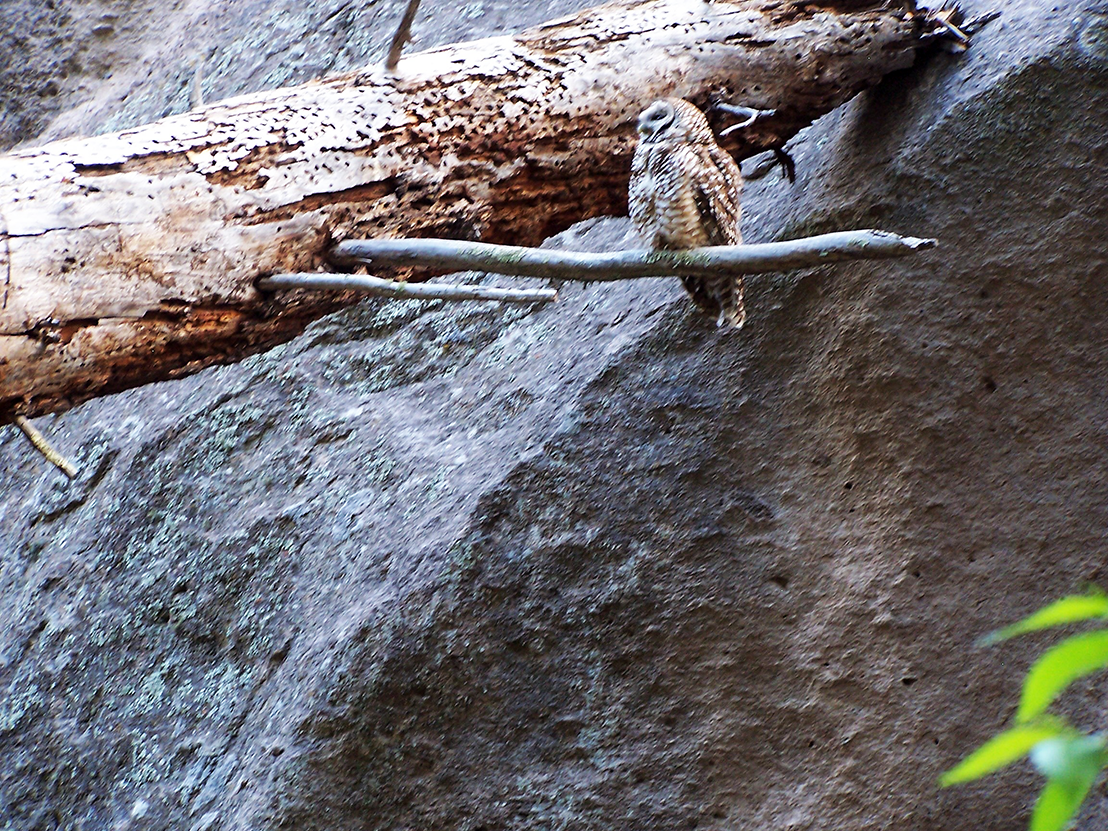 A Spotted owl roosts on branch in front of a canyon wall. It may see small animals on the ground below come evening or night. Photo by Robert Dryja
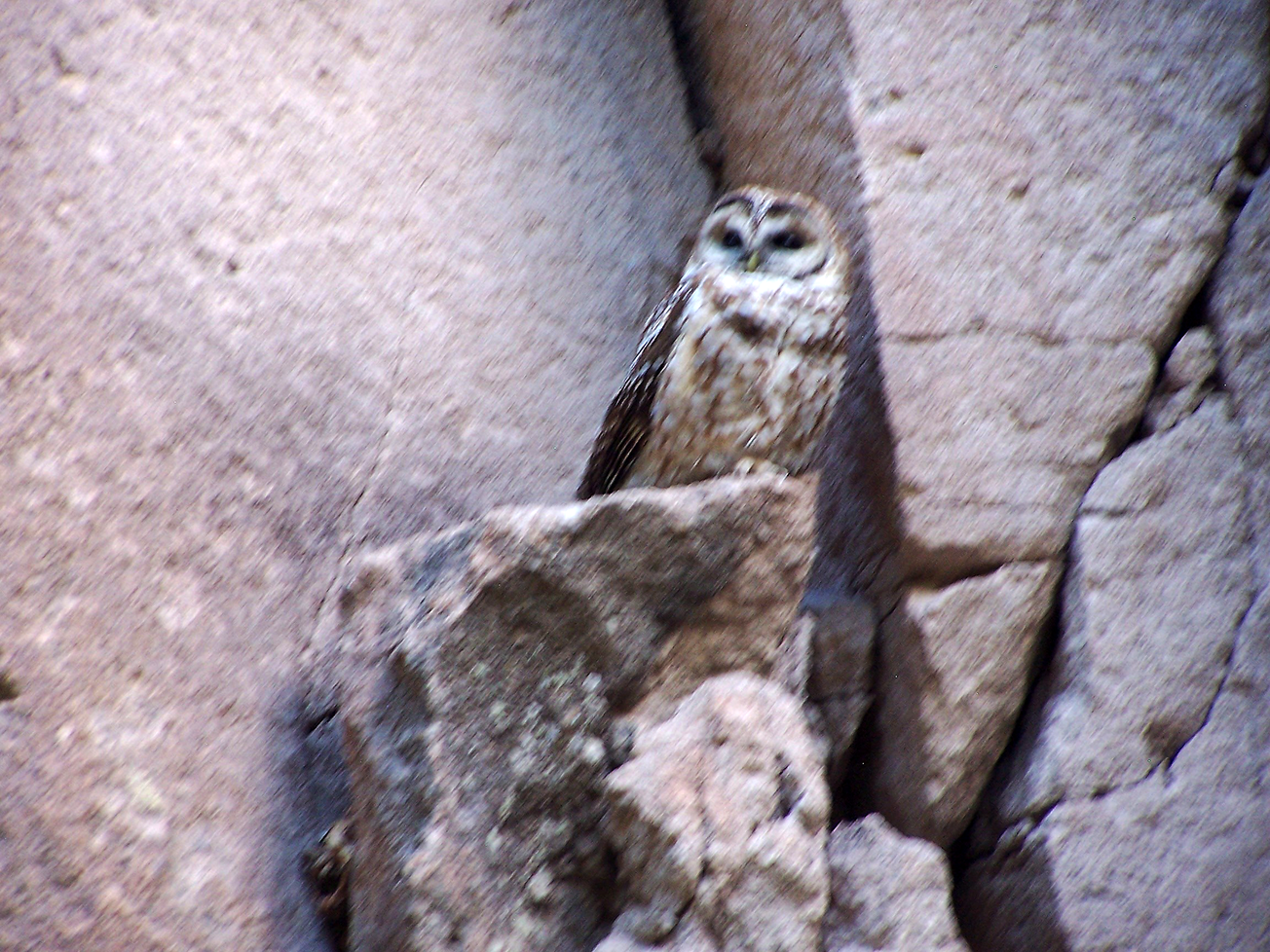 A rock outcropping provides a good spot to roost as an alternative to tree branches. Photo by Robert Dryja
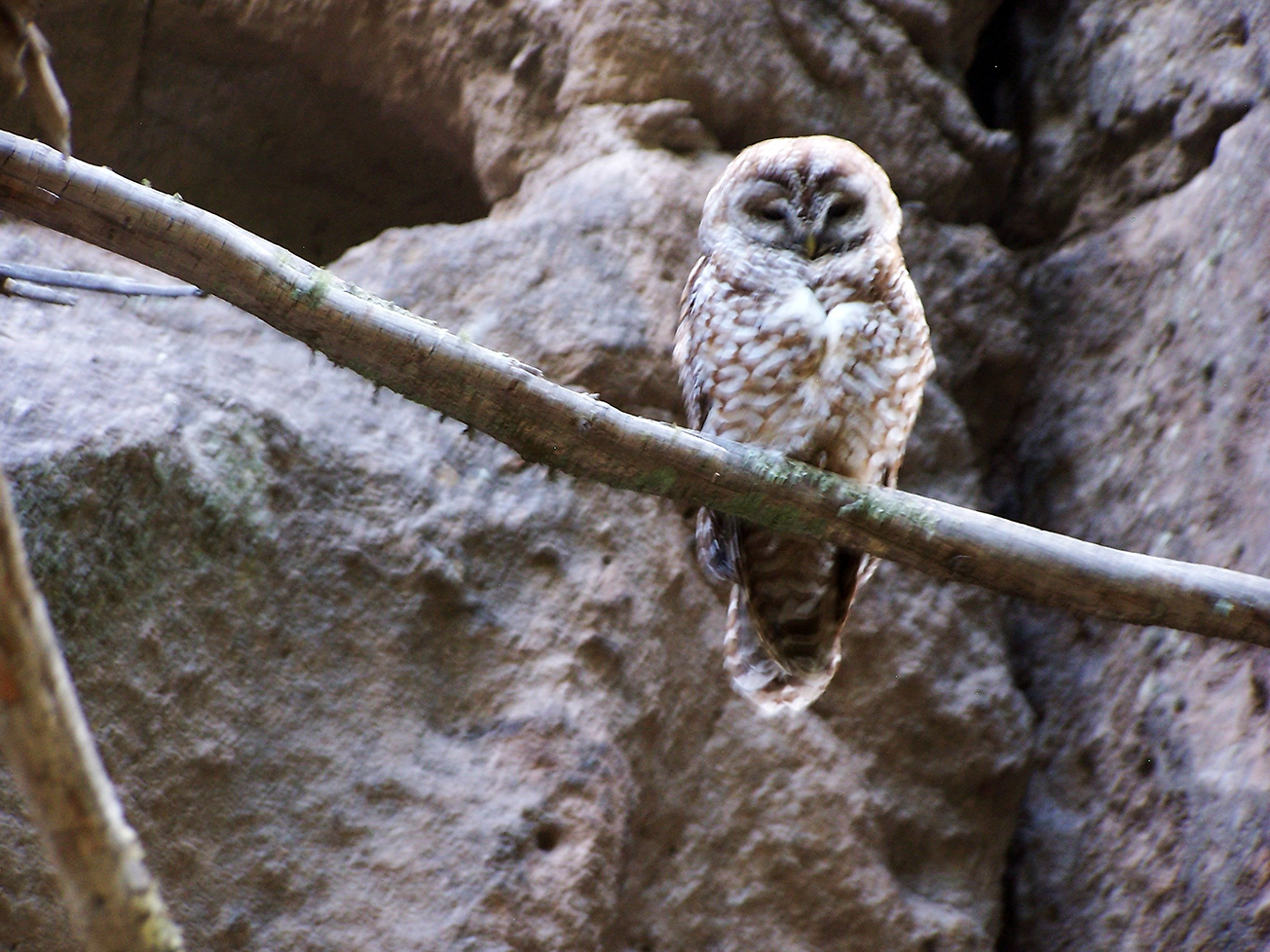 A nesting hole in the cliff wall is immediately between the Spotted owl. Photo by Robert Dryja