
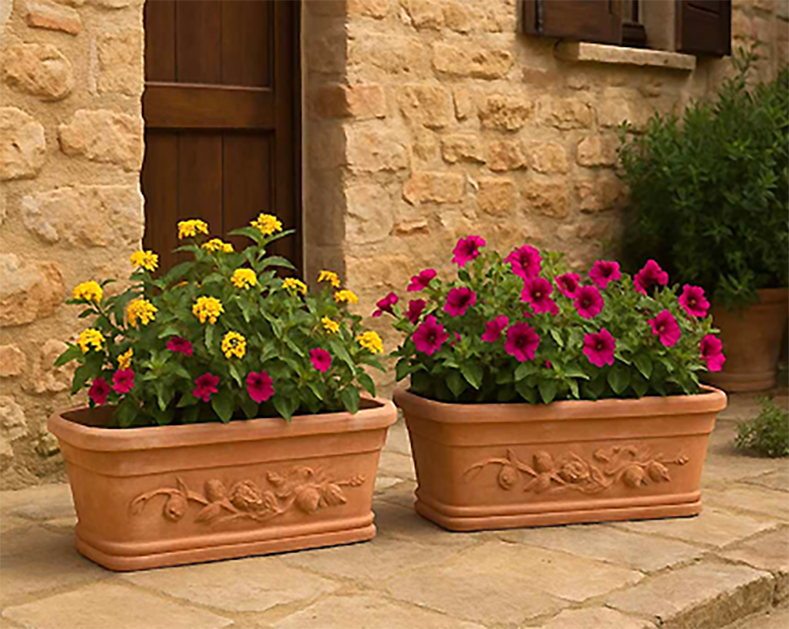
 Picture 1: A canyon can be thought of as an elongated flower pot set in the sun. Photo by Bob Dryja
 By Bob Dryja
Los Alamos
Think of a ceramic flower pot that is made of baked clay and has a particular shape that can help plants in it grow. Also imagine that a person positions the flower pot to be in a particular location to receive the ideal amount of sunlight—not too much or too little. (See picture 1 above)
Now consider the canyon next to the PEEC Nature Center. It is called Acid canyon. It can be thought of as a huge flower pot with a variety of plants growing it. It is positioned so that one canyon wall faces to the north and other wall faces to the south. This means that the north facing wall receives less sunlight because sunlight comes from the south and passes over it. The south facing wall in contrast receives more direct sunlight from the sun shining from the south.
The south facing side tends to be drier because more direct sunlight reaches it. As a result, trees and other plants do not grow as luxuriantly. The north facing side is more sheltered from direct sunlight and provides better growing conditions. Ponderosa trees provide more forest. (See picture 2 below)
A flower pot may have special names associated with it. This occurred with Acid Canyon during World War II. A large drain pipe dumped wastes into the canyon next to what now is the PEEC Nature Center. The wastes came from what was the atomic bomb laboratory by Ashley Pond. The name “Acid” was applied to the canyon. This name has remained as a sentimental reminder even though the canyon was cleaned after the war. (See picture 3 below)
The vertical lava walls of Acid canyon can be considered to be like the bare sides of a clay flower pot with an extended top. Rock erosion and plant decomposition over the centuries has created the soil that covers the bottom of this huge flower pot. Plants are growing best in the bottom of Acid Canyon, much like plants carefully planted in a flower pot. Plants in a flower pot are watered to help their growth. The plants growing adjacent to the creek in Acid canyon also are helped by its water. The greatest amount of growth is taking place by the creek, just like a well-watered flower pot.
A section of the canyon bottom is covered with grasses rather than trees or shrubbery. It does not have the soil composition and water level to support larger plants. This area is analogous to a flower pot that is not so well watered and the plants in it are not growing well.
A short bridge and long bridge cross the creek. Both give interesting views into the creek that flows below them. This is like standing by a flower pot to see plant growth up close.
A flower pot may be decorated with special knobs built onto it. Something similar also occurs in Acid canyon. The Pajarito Plateau originally was created by thick layers of lava flowing from the Valles Caldera volcano. The layers then eroded away in sections, creating the Acid Canyon and the other canyons. The layers did not erode evenly and smoothly. Knobs of lava now can be seen standing by themselves. These knobs were created where somewhat circular bubbles of lava were more resistant to erosion, compared to the softer lava around them. (See picture 4 below) Other areas have lava that is lying in layers, looking like flattened cardboard.
Acid Canyon has a trail that forms a loop around it. (See picture 5 for map below) Its trail head is at the entrance area of the Aquatic Center and is about one mile in length. It is relatively easy hiking. However, a choice is needed for the section that leads directly up to the Aquatic Center adjacent to the Ranch School trail. One option is to follow an easy trail section. The other choice is to follow the Ranch School trail. The Ranch School trail is steeper with switchbacks that eventually merge with the easy section near the Aquatic Center. The boys attending the Ranch School built this trail in the 1920’s. This involved making level walking sections, stone or log steps, as well as switchback sections going up the canyon side.
Unlike the Ranch School trail, the Acid Canyon trail has a broad gentle slope where it starts at the Aquatic Center trail head. It develops some slope when it begins it assent up the canyon side toward its starting point. The Ranch School trail connects with it, but it is far more rugged in comparison.
Like all good flower pots, Acid Canyon has a variety of flowers growing in it. The forest is dispersed in much of the area and it provides a good level of sunlight to help the growth of the flowering plants. (See Picture 6 below). Lichen also can be seen growing on boulders as an alternative to the flowers. The lichen can become very green when algae are actively growing in it.
A Mexican Spotted owl may be seen occasionally. It can be very tame, just sitting on a branch a few feet away with its eyes closed. It is a nice contrast to the flowers growing along the Acid Canyon trail. Think of the occasional bird that visits a flower pot. (See Picture 7 below).
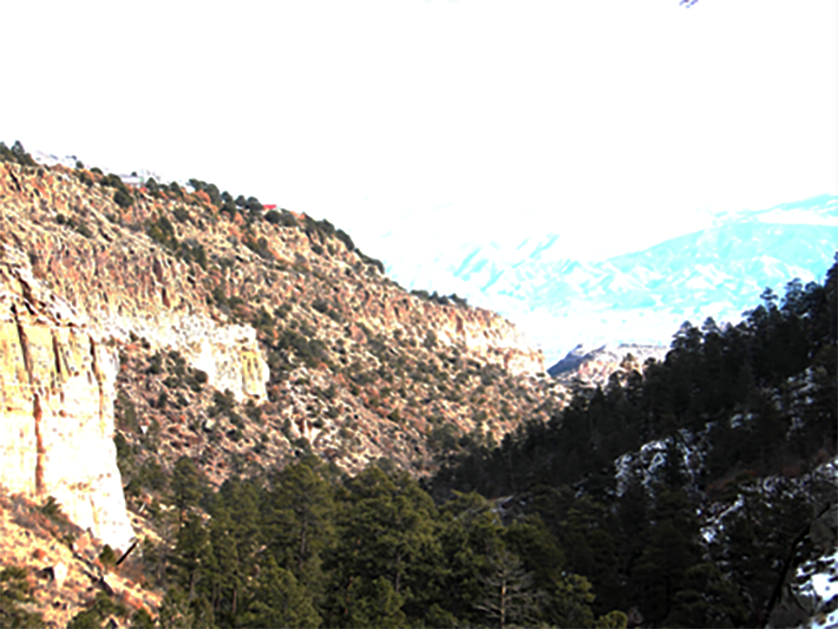 Picture 2: The sunnier, drier north side slope has less plant life, while the sheltered south side has ponderosa trees growing extensively on it. Photo by Bob Dryja
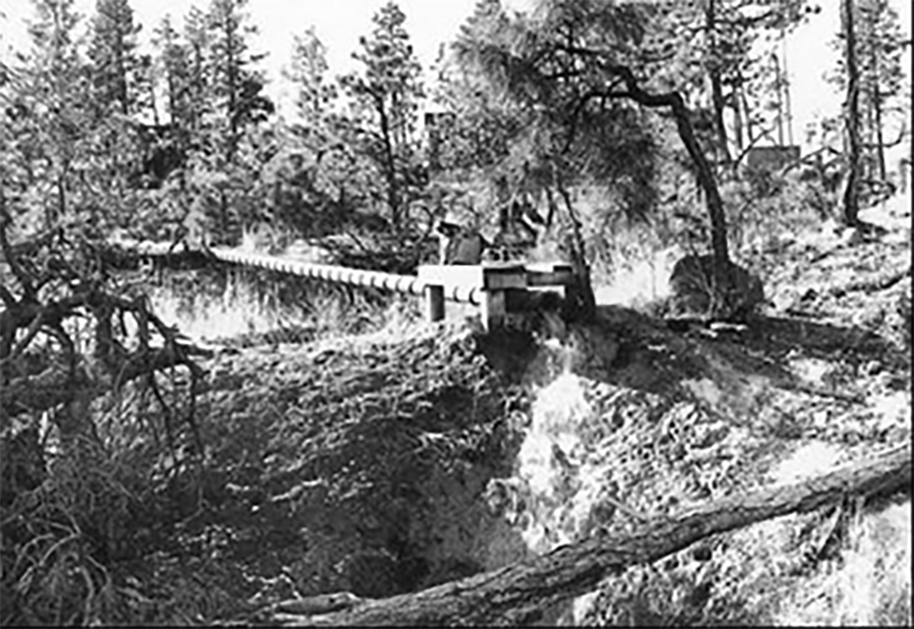 Picture 3: A large drain pipe dumped waste into the canyon next to what is the PEEC Nature Center. The waste came from what was the 1940’s atomic bomb laboratory by Ashley Pond. The name ‘Acid’ was applied to the canyon and has remained ever since, even though the canyon was cleaned after the war. Courtesy photo
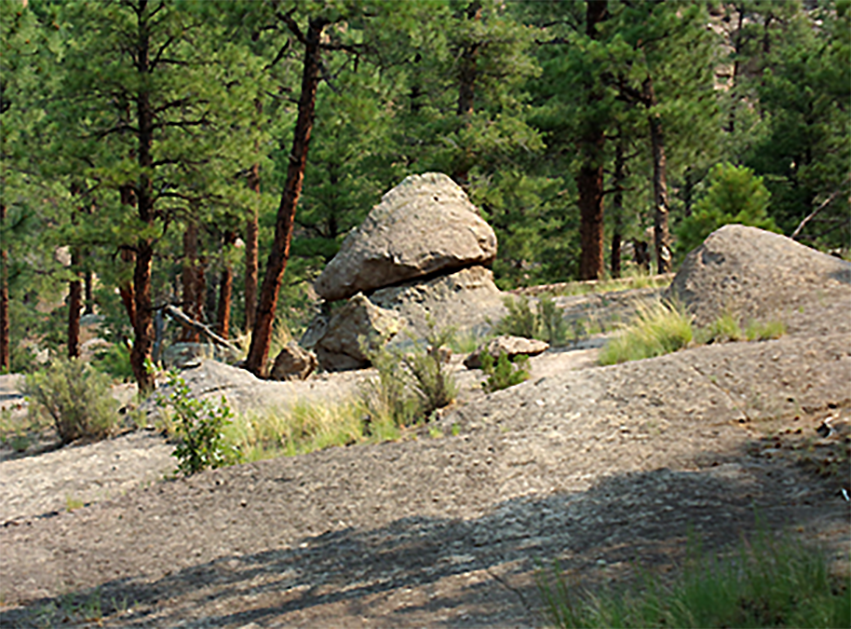 Picture 4: A dense bubble of lava has not eroded as much as the softer lava around it. The bubble protects the softer lava directly below it from eroding, and so a column has developed. Photo by Bob Dryja
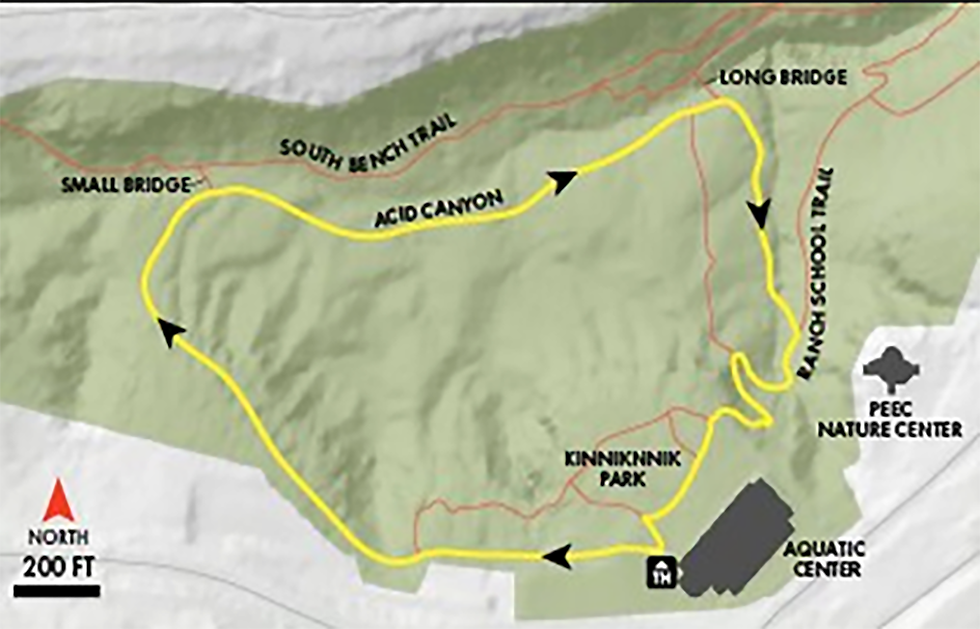 Picture 5: A trail forms a loop going around Acid Canyon. It starts at the Aquatic Center. Image by Bob Drya
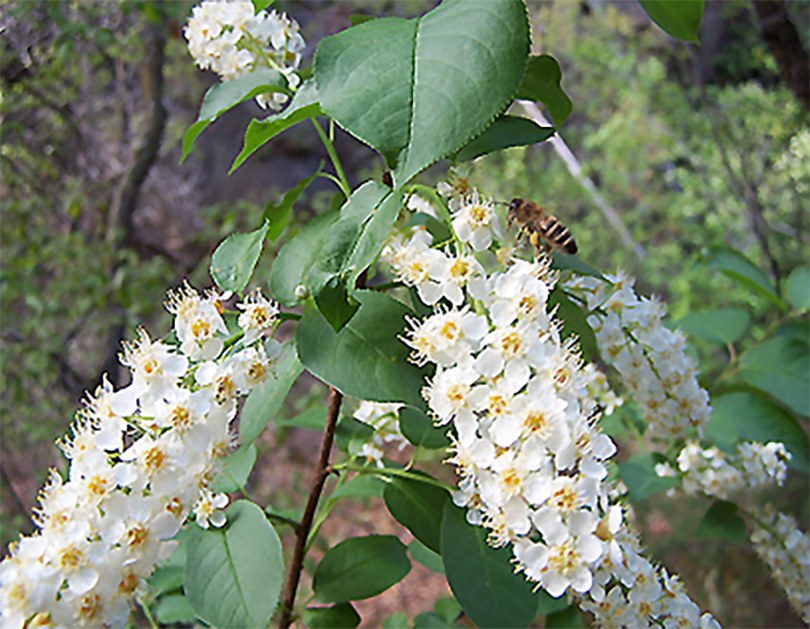 Picture 6: Choke cherry flowers grow in long clusters. Photo by Bob Dryja
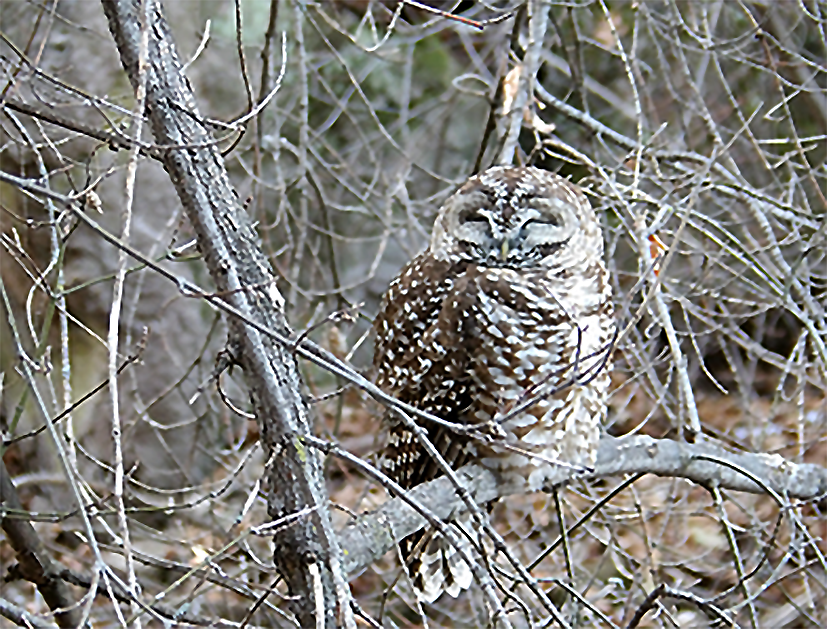 Picture 7: An owl rests peacefully perched on a branch. Photo by Bob Dryja