
 By ROBERT DRYJA
Los Alamos
What do we typically think of when considering a rock? Is it totally solid with perhaps an occasional crack where it may eventually break apart? Is its color mostly the same throughout? Can it be heavy for its size?
The walls of a canyon can be made of wide layers of different kinds of lava rock. One layer may be very solid and vertical in format. An adjacent layer may be of a softer kind of lava that now is crumbling and forming a slope. (See picture 1 below)
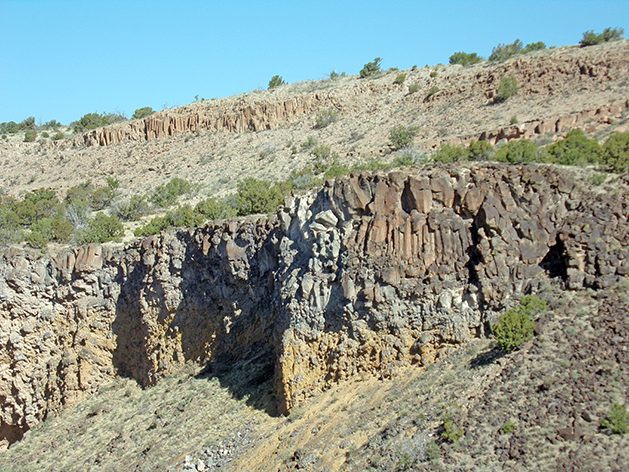 Picture 1: Different kinds of lava result in different kinds of rock layers that form the walls of a canyon. Photo by Bob Dryja
Rocks can be created in interesting ways. Different colored rocks may be created as lava cools with varying chemical compositions throughout it. Separate colored sections become enclosed to create a larger, multi-colored stone.
Picture 2 below shows orange rock and red rock that have become enclosed by a surrounding white layer. The white layer is composed of minerals that precipitated out water, surrounding the orange and red rocks. This rock was found lying out in the open among other rocks.
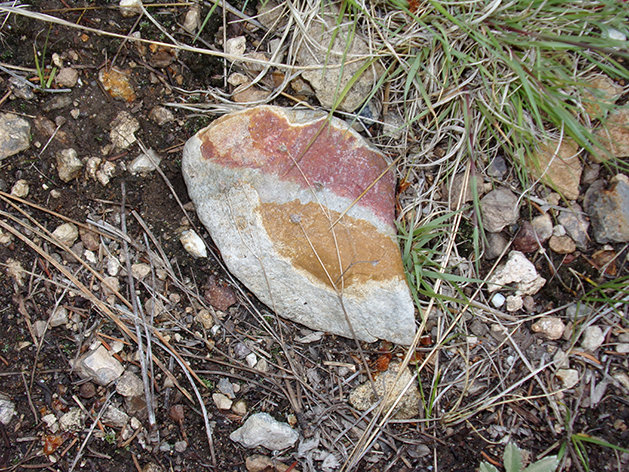 Picture 2: Purple and orange pebbles have become part of a larger rock as a white precipitate encloses them. Photo by Bob Dryja
Erosion can produce a variety of results. Picture 3 below shows a rock that was lying along a beach among numerous other grayish rocks. This particular rock was eroded by waves to become an oval shape. We may consider an oval to be a special geometric shape, but it can be one of many random shapes that erosion can create.
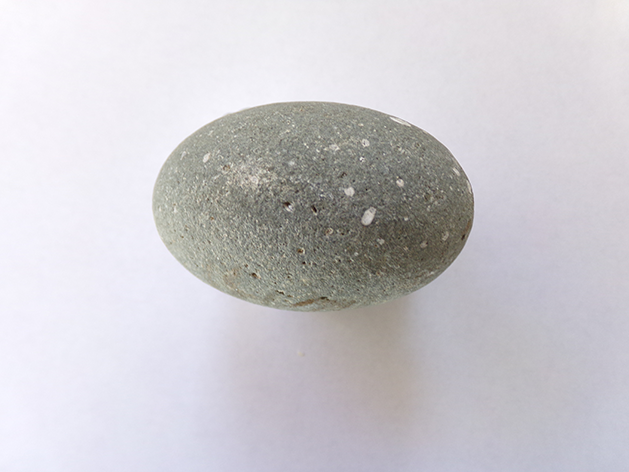 Picture 3: This rock has become a smooth oval. It was eroded into to this shape while lying on a beach where it was washed back and forth by waves. Photo by Bob Dryja
Do we think of seashells becoming rocks? The shells of mussels may accumulate on a beach over many generations. Layers develop that are exposed to air as the ocean tide rises and lowers each day. Rain also falls on the exposed shells. Slightly acidic rainwater dissolves some of the calcium carbonate in the shells. It then “glues” shells together into what is called coquina rock. Very large layers of this kind of rock can develop over the centuries at the ocean side.
Picture 4 below shows a coquina rock. It looks as if it could break apart easily, but history tells otherwise. The Spanish built a fort in 1672 in St. Augustine Florida along the Atlantic coast. It is called the Castello de San Marcos. The goal was to prevent the British navy from successfully attacking. The fort had walls from 12 to 19 feet wide made of coquina rock. No one knew if such a wall would resist being hit by cannon balls shot from British war ships. Cannon balls actually bounced off of the walls or sank in for only few inches when the war ships started firing at the fort. Can you imagine loosing a battle to sea shells?
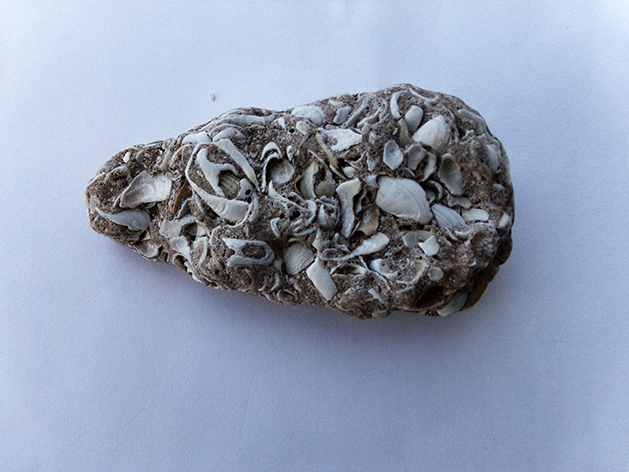 Picture 4: Mussel shells along a beach have been pressed and stuck to one another to create a solid rock. The shells are attached to one another by a carbonate that dissolved out the shells. Photo by Bob Dryja
Consider the possibilities of a field of rock or a particular rock as you walk across the countryside.