
 By ROBERT DRYA
Los Alamos
Plants die back with the arrival of winter. Their dry, brownish leaves and stems are not as interesting compared to summer. However winter provides a good time to explore and ponder patterns of growth that then can be seen in the summer.
Ferns provide one example. A stem initially grows in a curl, not straight. The curled stem in turn has repeating rings of developing leaves. Three kinds of repetition are apparent.
First, stems grow from a curl. Second, little branches grow sideways from a stem. Third, leaves grow in parallel from the little branches. (See Pictures 1 and 2 below) Why do ferns grow this way?
Parallel, repeating lines of growth appear in flowers. The flowers of the Phalaenopsis orchid provide an example. (See Picture 3 below) First, the overall flowers of a Phalaenopsis orchid are repeating copies of one another. Second, there are repeating colored line patterns on individual petals. Third, the single upward vertical petal has one kind of line pattern while the two horizontal petals have their own kind of pattern. Finally, there is a second pair of smaller petals partially hidden behind the horizontal petals. This partially hidden pair has its own pattern of lines. Why do the flowers grow this way?
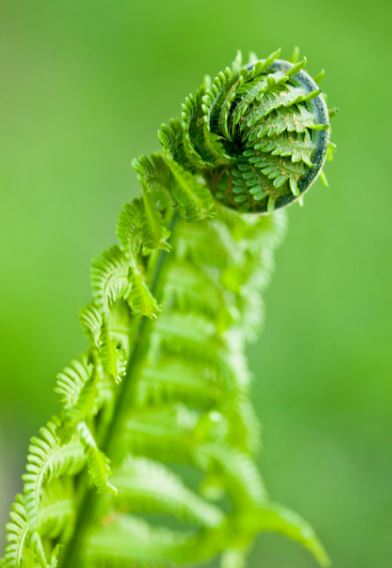 Photo 1: The stem of a fern grows in a curl to start. Courtesy photo
The single vertical petal has a downward petal below it that is highly modified. It is where actual pollination by insects may occur. The other petals are meant to attract insects to this modified metal.
The repetition patterns in a fern or flower indicate that mathematics may be involved. Indeed there is a section of mathematics concerned with the “Barnsley Fern”. The mathematics is used to create a image that can be changed in size to view what are equivalent to the parts of a fern. (See https://en.wikipedia.org/wiki/Barnsley_fern for an introduction to the mathematics.) A mathematical Barnsley Fern can look very much like the fern shown in Picture 2 below.
Each of the lines in a Phalaenopsis flower follows the curved line of a parabolic curve. The line in the middle of a petal is nearly straight while the lines on either side become more curved the further they are away from the middle line. These curves also have other curves extending from them. The curves can be considered to be the result of a set of parabolic equations. (See Fractal Grower (home) for an introduction this form of mathematics.)
The directions kept in a chromosome of a cell already are complex. Imagine how much more complex the mathematics of a chromosome would be if each leaflet of a fern had its own special directions. Imagine if each flower on a Phalaenopsis orchid plant had its own unique chromosomal instructions and each line on a flower had its special chromosomal directions.
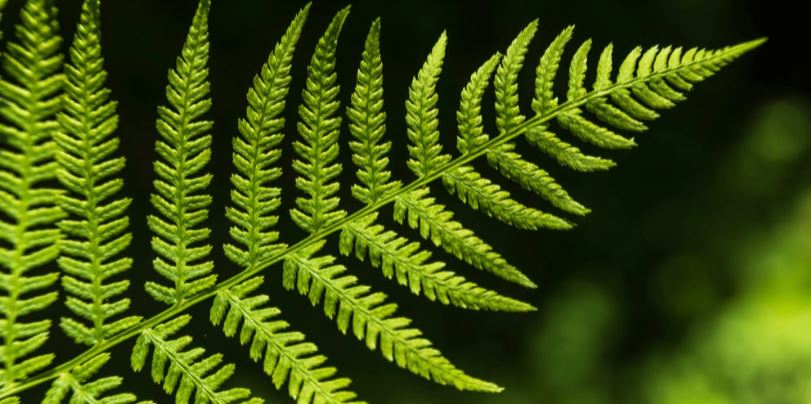 Photo 2: A stem that has uncurled has parallel rows of smaller stems growing from it. These smaller stems in turn have parallel rows of leaves growing from them. This pattern can be created with fractal geometry. Courtesy photo
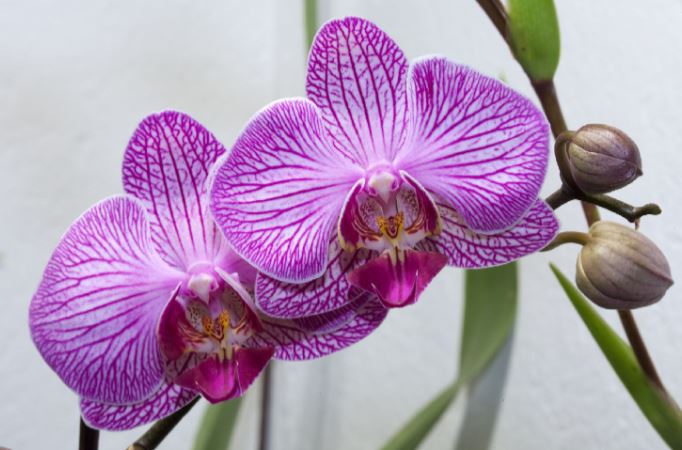 Photo 3: Each flower of a Phalaenopsis orchid is a copy of one another. The lines on the petals in turn are repeating copies. The single vertical petals have one kind of pattern while the horizontal petals have their own kind of pattern. Courtesy photo