
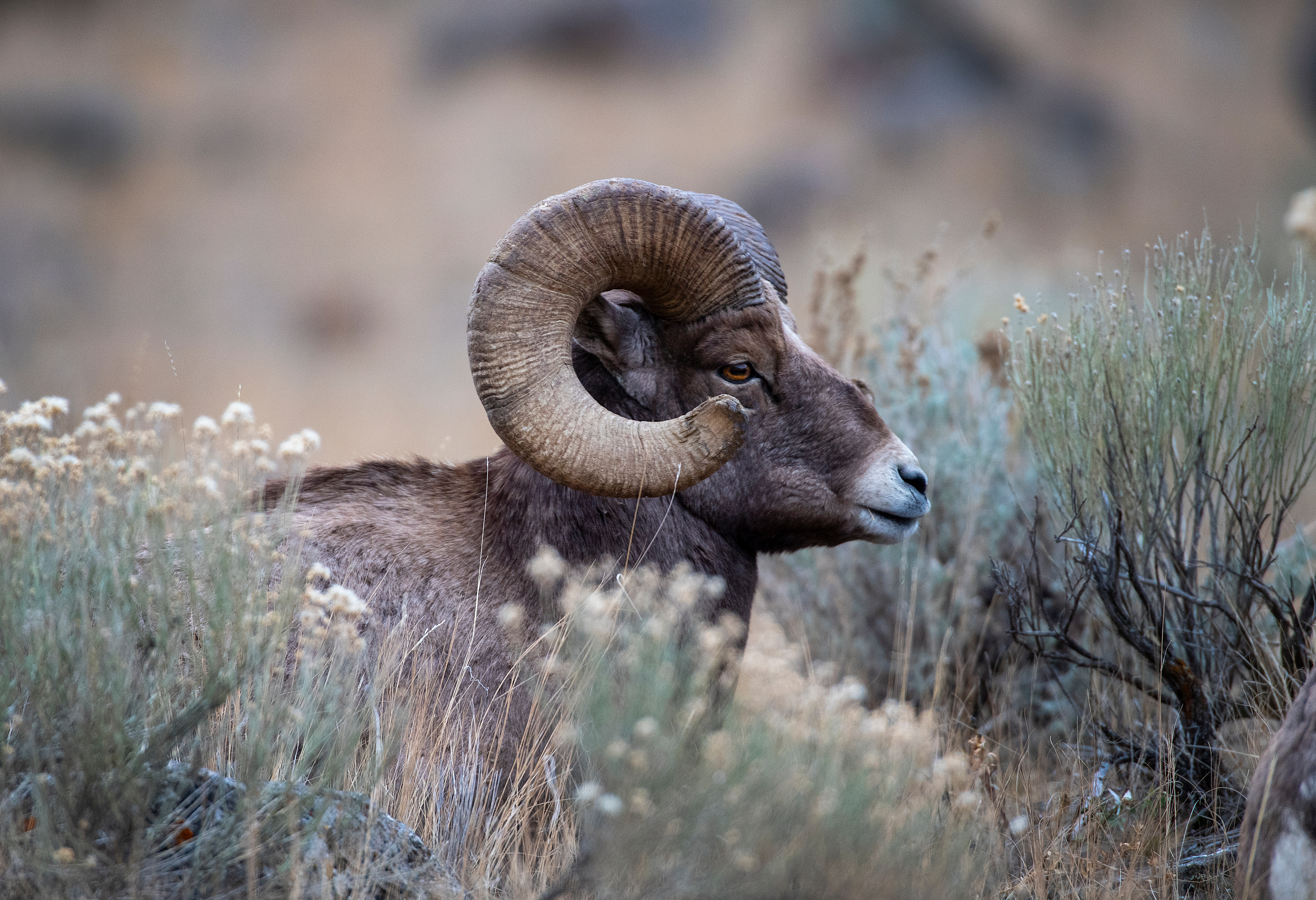
 Bighorn sheep. Courtesy/LAC
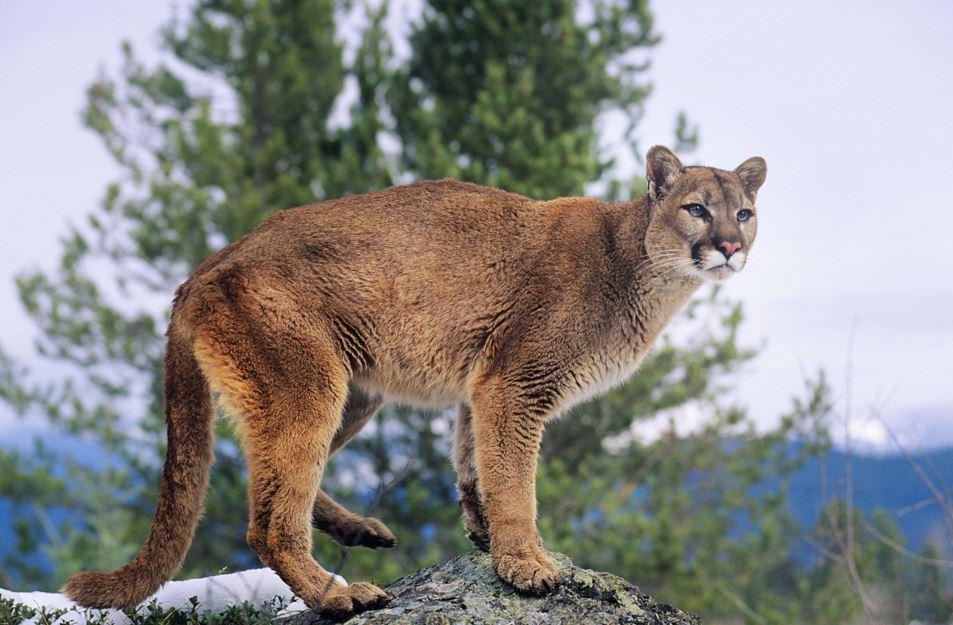 Mountain Lion standing on rock. Courtesy/LAC
COUNTY News:
How Many Mountain Lions Live in the Jemez Mountains?
Based on long-term monitoring of large mammals across the Jemez Mountains, biologists estimate a local population density of 1 adult mountain lion per 100 square kilometers. Within Valles Caldera National Preserve, the population estimate is approximately 3 to 4 adult mountain lions, with others moving through the area seasonally.
Although mountain lions live throughout the park, few people ever see them. They follow their main prey as they move to higher elevations in summer and lower elevations in the winter. At Valles Caldera, mountain lions prey upon elk (mostly calves) and deer. They stalk the animal then attack, aiming for the animal’s back and killing it with a bite to the base of the skull or the throat area. The lion eats until full, then caches the carcass for later meals. Lions spend an average of 3–4 days consuming an elk or deer and 4–5 days hunting for the next meal.
Mountain lions are solitary hunters who face competition for their kills from other large mammals. Even though a cached carcass is harder to detect, scavengers and competitors such as bears and coyotes sometimes find it. At Valles Caldera, black bears are known to take over a mountain lion’s kill. Coyotes will try, but can be killed by the lion instead.
Learn more about the mountain lion on the Valles Caldera National Preserve website: https://www.nps.gov/vall/learn/nature/mountain-lion.htm
Learn more about the wildlife of the Pajarito Plateau on the County’s Living with Wildlife webpage: www.lacnm.com/wildlife
Rocky Mountain Bighorn versus Desert Bighorn – What’s the difference?
Here in the land of enchantment we are lucky enough to have two species of Bighorn Sheep. Rocky Mountain bighorn are mostly found in the northern half of the state, Desert Bighorn in the south. But Rocky Mountain bighorn have also been released in the Gila National Forest, in southwestern New Mexico.
The Rocky Mountain Bighorn Sheep, found in Los Alamos County, is the larger of the two. A large ram (a male sheep) may weigh over 300 pounds and stand over 42 inches tall at the shoulder. They are generally a dark brown to gray/brown color with a white rump patch, muzzle and back of legs. Their coats may appear considerably lighter in spring before the winter coat is shed revealing the darker summer coat beneath. Rams have horns that are massive and tightly curled close to the face. A ewe (a female sheep) will have smaller shorter horns that curve only slightly. Ewes typically weigh 125-150 pounds.
Desert Bighorn Sheep are generally smaller and lighter colored than their cousins. A large ram is usually not over 220 pounds. They stand 38-42 inches tall at the shoulder. The horns of Desert Bighorns are typically longer and not as massive as those of Rocky Mountain Bighorns. They are usually curled close to the face, but may flare widely outward, showing wide variation in horn structure between individuals. Desert Bighorns also have slightly longer ears and tails than Rocky Mountain Bighorns. Desert Bighorn ewes also typically have longer horns than other North American wild sheep females.
Other notable differences between the Rocky Mountain and Desert Bighorn:
- Group sizes can be larger in Rocky Mountain Bighorns with more contiguous forage—occasionally more than 50, whereas in the most xeric Desert Bighorn habitats groups sizes rarely exceed 10.
- Lambing in Rocky Mountain Bighorns in cold alpine habitats show nearly all lambs are born within a month window, usually late May until early July.
- Lambing in Desert Bighorns has been documented during every month of the year although there is generally a pulse between January and March.
Learn more about the wildlife of the Pajarito Plateau on the County’s Living with Wildlife webpage: www.lacnm.com/wildlife