
 By REBECCA RUTHERFORD
Los Alamos
For the Los Alamos Daily Post
In a reminder that the internet will always try to copy anything that isn’t nailed down, Spotify is investigating claims that a self-described “pirate archivist” group managed to scrape a massive portion of its music catalog. We are talking hundreds of terabytes of data, millions of tracks, and enough metadata to make any data hoarder weep with joy…Yikes!
The group, known as Anna’s Archive, says it scraped Spotify at scale using unauthorized accounts and automation. Not a dramatic smash-and-grab through a blinking server room, but the quieter, more modern cyber move of politely knocking millions of times per second until the door gives up.
Spotify, for its part, says this was not a breach of its internal systems. No passwords leaked. No user accounts compromised. Your carefully curated “Songs I Cry To While Cleaning” playlist is safe. The issue appears to be large-scale scraping of publicly accessible data and audio using accounts that should not have been doing that much anything.
This distinction matters, because scraping sits in that awkward gray zone of the internet.
Technically, the data was accessible. Practically, it was never meant to be collected in bulk, archived, and redistributed like a digital Noah’s Ark for pop music.
According to the group’s own statements, the goal is “preservation”. Think less smash-and-run piracy, more digital prepper energy. Their argument is that streaming platforms are fragile, licenses expire, catalogs disappear, and culture gets lost. Their solution is to copy everything now and sort out the legality later.
The music industry, unsurprisingly, does not see it that way.
From a cybersecurity perspective, this story is less about Spotify specifically and more about a problem every large platform faces. Abuse at scale is hard to detect until it is already very big. Scraping often looks like normal user behavior, just faster, more persistent, and powered by scripts that do not need sleep or coffee breaks.
This is also a good reminder that DRM (Digital Rights Management) and access controls are not magic shields. If something can be streamed, it can usually be captured. If something is public, it can usually be scraped! Security teams are left trying to distinguish between a superfan with a lot of free time and an automated system quietly vacuuming up the internet.
For everyday users, the takeaway is refreshingly boring. There is no action required. You do not need to change your password because of this. You do not need to panic about your listening history being leaked into the wild.
For companies, the lesson is less comfortable. Rate limiting, anomaly detection, and abuse monitoring matter just as much as firewalls and encryption. Sometimes the biggest risk is not a hacker breaking in, but a system doing exactly what it was designed to do, just far too much of it.
Is scraping a threat to an average user? Scraping itself isn’t the direct threat. The risk comes from what happens after the data is scraped.
Here is where it can matter to everyday users:
- Public social media info gets harvested and used for phishing or impersonation
- Email addresses scraped from forums or comment sections end up in spam or scam campaigns
- Old or overshared data gets combined with breaches to build very convincing social engineering attacks
- Public photos or posts get reused without consent, sometimes in fake profiles or AI content
In other words, scraping is often the first step, not the final attack.
What can you do to prevent this? You don’t need special tools or paranoia.
A few habits go a long way:
- Lock down social media privacy settings and remove old public posts you no longer want out there
- Avoid posting your email address or phone number publicly
- Be skeptical of messages that reference personal details, even if they are accurate
- Use unique passwords and multi-factor authentication so scraped data cannot unlock accounts
- Assume anything posted publicly can be copied forever
And for the rest of us, this is another chapter in the long running saga of the internet asking a simple question. If it can be copied, who gets to decide whether it should be?
Editor’s note: Rebecca Rutherford works in information technology at Los Alamos National Laboratory.
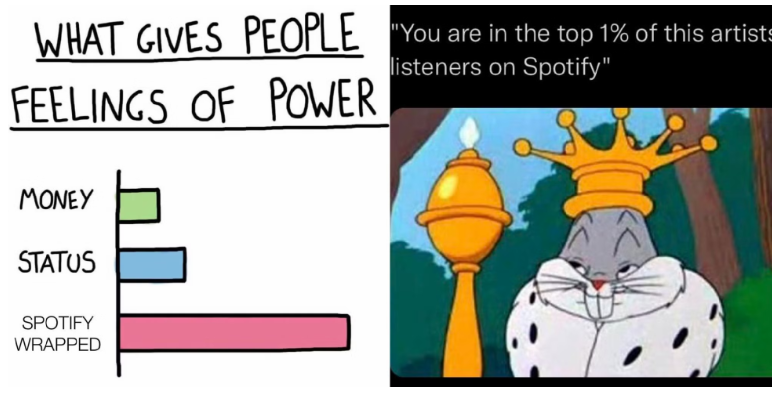 Spotify meme. Courtesy photo
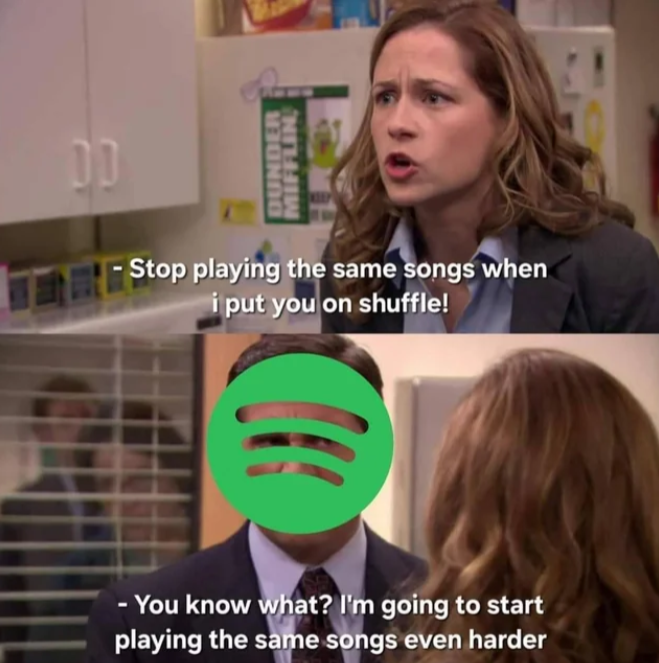 Spotify meme. Courtesy photo