
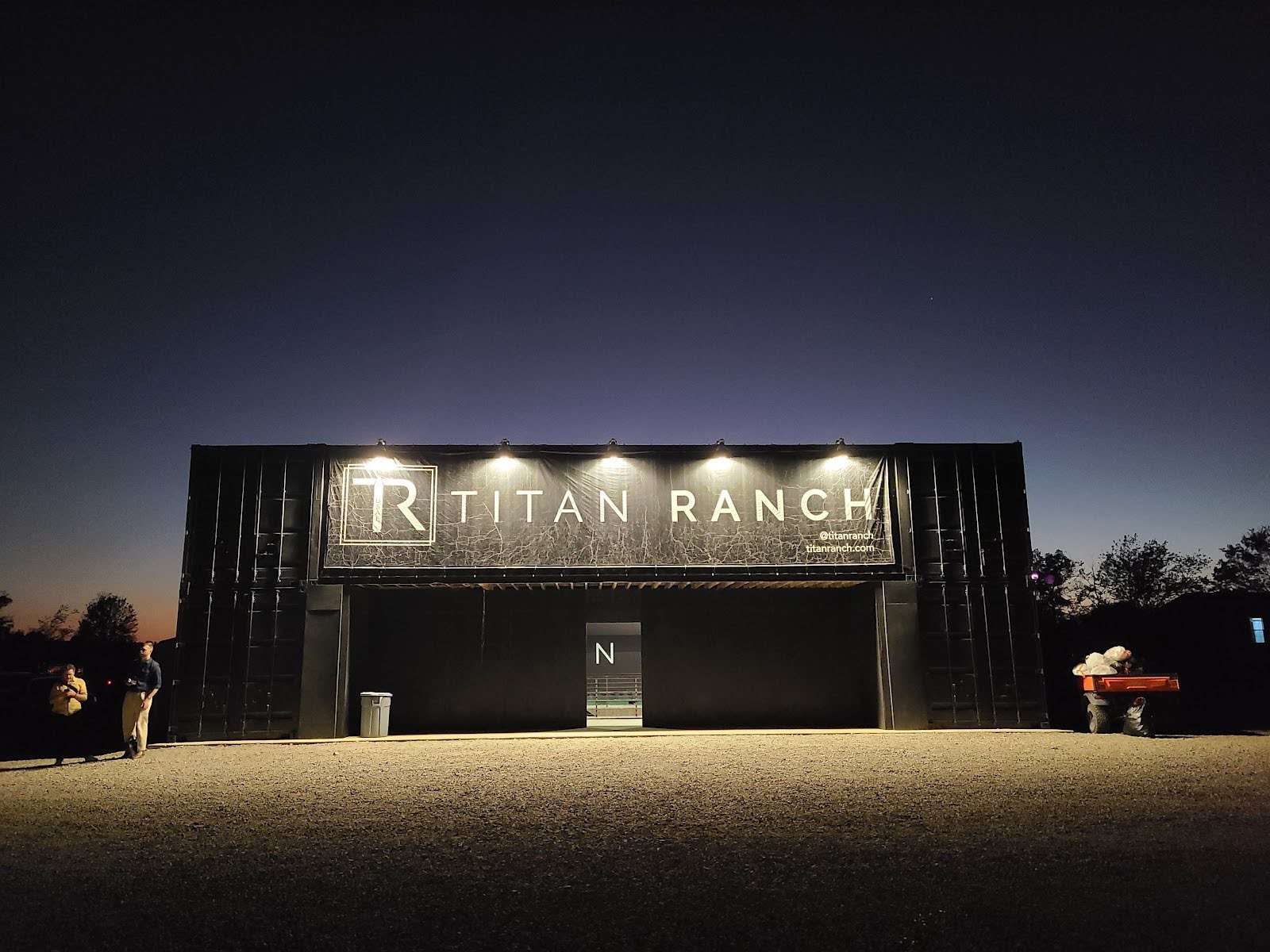
 The Outrider Nuclear Reporting Summit convened Oct. 9-10 at Titan Ranch near Vilonia, Ark. Photo by Marlene Wilden/ladailypost.com
By MARLENE WILDEN
Los Alamos Daily Post
marlene@ladailypost.com
Beneath the Arkansas plains, in a Cold War-era launch control center once designed to withstand nuclear blasts, a new generation of journalists, scientists and policy experts gathered to confront a different kind of detonation—the collision of nuclear risk and artificial intelligence.
Outrider Foundation’s 2025 Nuclear Reporting Summit at the decommissioned Titan II intercontinental ballistic missile (ICBM) Complex 373-9 brought together specialists for two days to discuss how nuclear issues affect energy, the environment, and public safety, and how journalists can dutifully cover these topics.
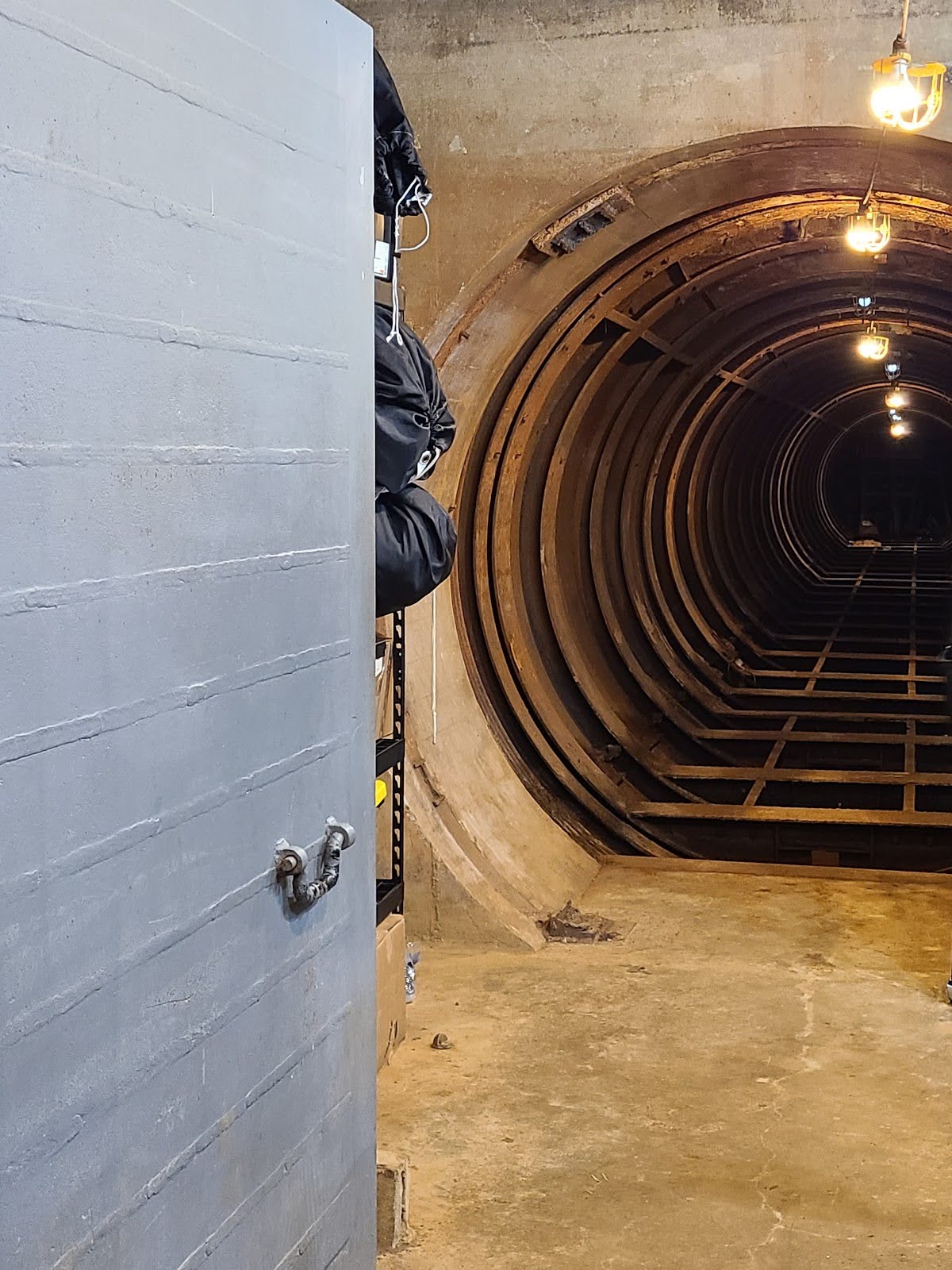 A view down a Titan II missile complex cableway tunnel—a pressurized, blast-resistant corridor that once carried power, communications and environmental control lines between the underground launch control center and the missile silo. Photo by Marlene Wilden/ladailypost.com
Seeing Science as a Human Endeavor
In a session titled “Interrogating the Experts,” author Alec Nevala-Lee explored one of journalism’s perennial challenges: how to question scientific authority responsibly. Drawing from his book Collisions: A Physicist’s Journey From Hiroshima to the Death of the Dinosaurs, Nevala-Lee warned blind deference to expertise can obscure error, while reckless skepticism can feed conspiracy theories.
“We should see science as something that people do, as a way of solving problems,” Nevala-Lee said. “We should hold experts to high standards, even when—and maybe especially when—we happen to agree with them.”
His message resonated at a time when both science and journalism face crises of trust. Attendees discussed how to frame questions that illuminate uncertainty without undermining credibility, and how to remind audiences that science, like journalism, is a process of continual revision.
When Energy and Security Converge
The next panel, “Where Nuclear Energy and Nuclear Threats Overlap,” explored the connections between civilian energy production and nuclear weapons policy. Experts including Joyce Connery, former chair of the Defense Nuclear Facilities Safety Board; Theo Kalionzes of the Oppenheimer Project; and Cindy Vestergaard, senior fellow at the Stimson Center, examined how nuclear energy’s promise as a clean power source coexists uneasily with its military legacy.
Connery cautioned that while innovation and private investment—particularly venture capital—are essential for revitalizing the nuclear energy sector, regulatory integrity must not erode.
“One thing we all have to do is build the next generation of people who understand the technology,” she said. “We need the engineers, we need the physicists, we need the philosophers … and we need them willing to go and work for the government, because we need expertise [and capacity] in the U.S. government.”
Kalionzes, speaking from a philanthropic perspective, urged greater investment in nuclear research as a climate solution, noting that philanthropy lags far behind funding for renewables. He also highlighted the dual-use nature of nuclear technology.
“Philanthropy has the advantage of built-in academic freedom and independence of thought. That’s really critical, especially when you have radiation,” Kalionzes said.
He added, “Capability is not the same as intent,” reminding the audience that the proliferation risks tied to nuclear expansion depend as much on human and political choices as on technology.
Vestergaard said, “What’s happening right now in geopolitics has nothing to do with nuclear energy expansion.”
Connery also addressed the geopolitics of the fuel cycle, underscoring Russia’s entrenched role through Rosatom, its state-owned nuclear corporation, and its vertically integrated operations in uranium enrichment and fuel fabrication. As nations seek to move away from Russian supply chains, she noted, new players such as Australia and Canada are stepping in, but the transition will be slow and strategically delicate.
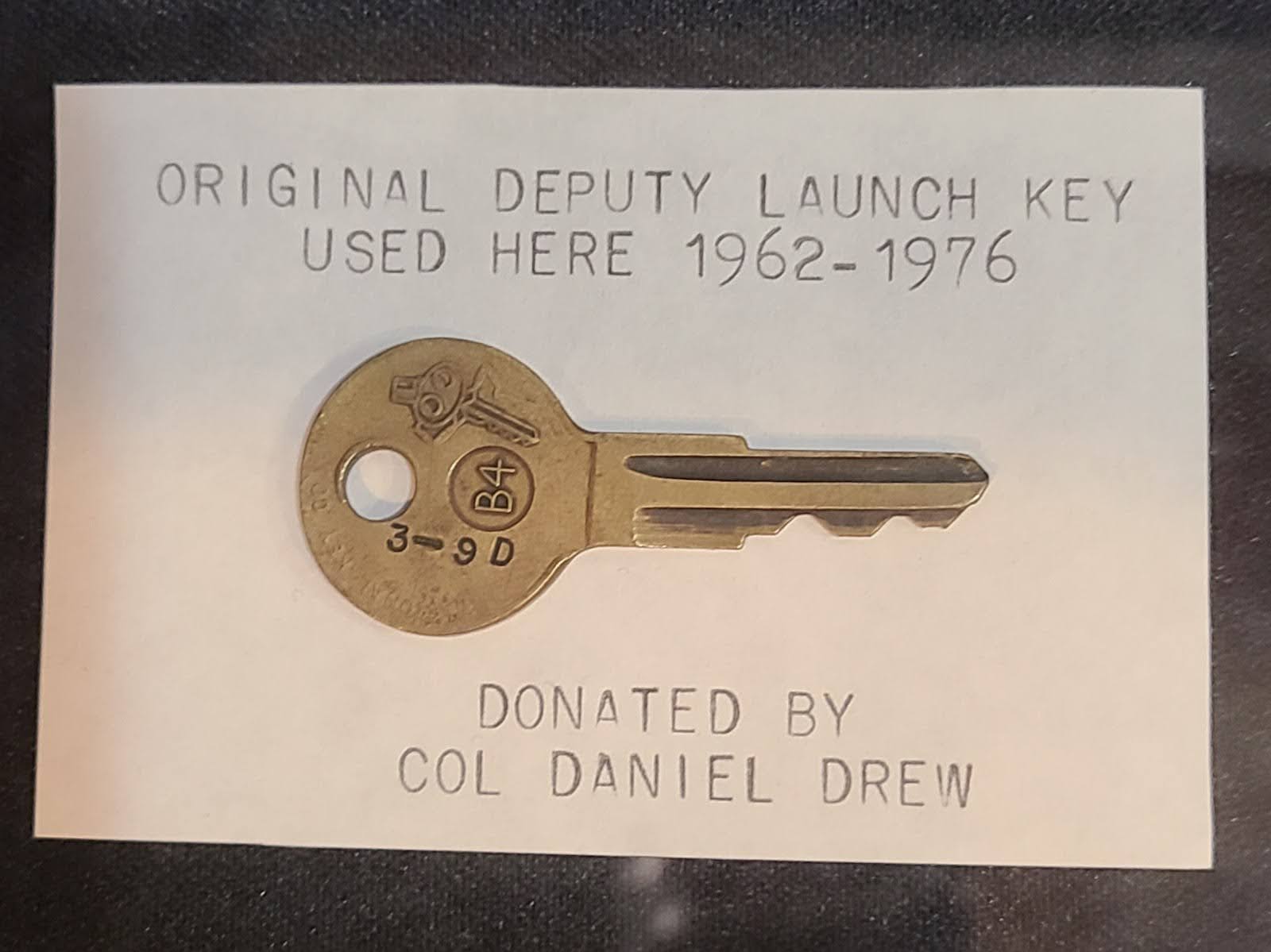 The deputy launch key, one of two required to initiate a Titan II missile launch, was part of a dual-key system designed to ensure that no single person could launch a nuclear weapon. Both the missile combat crew commander and the deputy had to turn their keys simultaneously to begin the launch sequence. Photo by Marlene Wilden/ladailypost.com
Artificial Intelligence in Command and Control
“New Developments: Military Applications of AI,” moderated by Vox reporter Joshua Keating, discussed the integration of AI into nuclear systems. Panelists included Sylvia Mishra of the Institute for Security and Technology and former State Department adviser Jane Kim Coloseus. Both experts stressed the irreplaceable need for human oversight in any system involving nuclear command and control.
With recently announced partnerships such as the OpenAI–Los Alamos National Laboratory collaboration and the Pentagon’s Thunderforge project with Scale AI, it was said the fusion of artificial intelligence and nuclear systems is no longer speculative—it is operational.
Mishra warned AI’s unpredictability could amplify nuclear risks. “A lot of these AI tools being trained on data could have downstream errors or automation biases,” she said. “We don’t really know how AI models interact with each other—and that creates a huge black box of challenge.”
Coloseus added that even advanced neural networks remain opaque. “We don’t know how [AI] is making those rational, logical decisions,” she said. “There’s kind of no idea yet how to open the lid and look into it.”
Challenges for journalists were also discussed: secrecy at national labs, proprietary barriers, and public misconceptions shaped by science fiction. Panelists urged reporting that connects technical details to human stakes, emphasizing that the primary risk lies in compressed decision timelines and miscalculation, not in rogue machines.
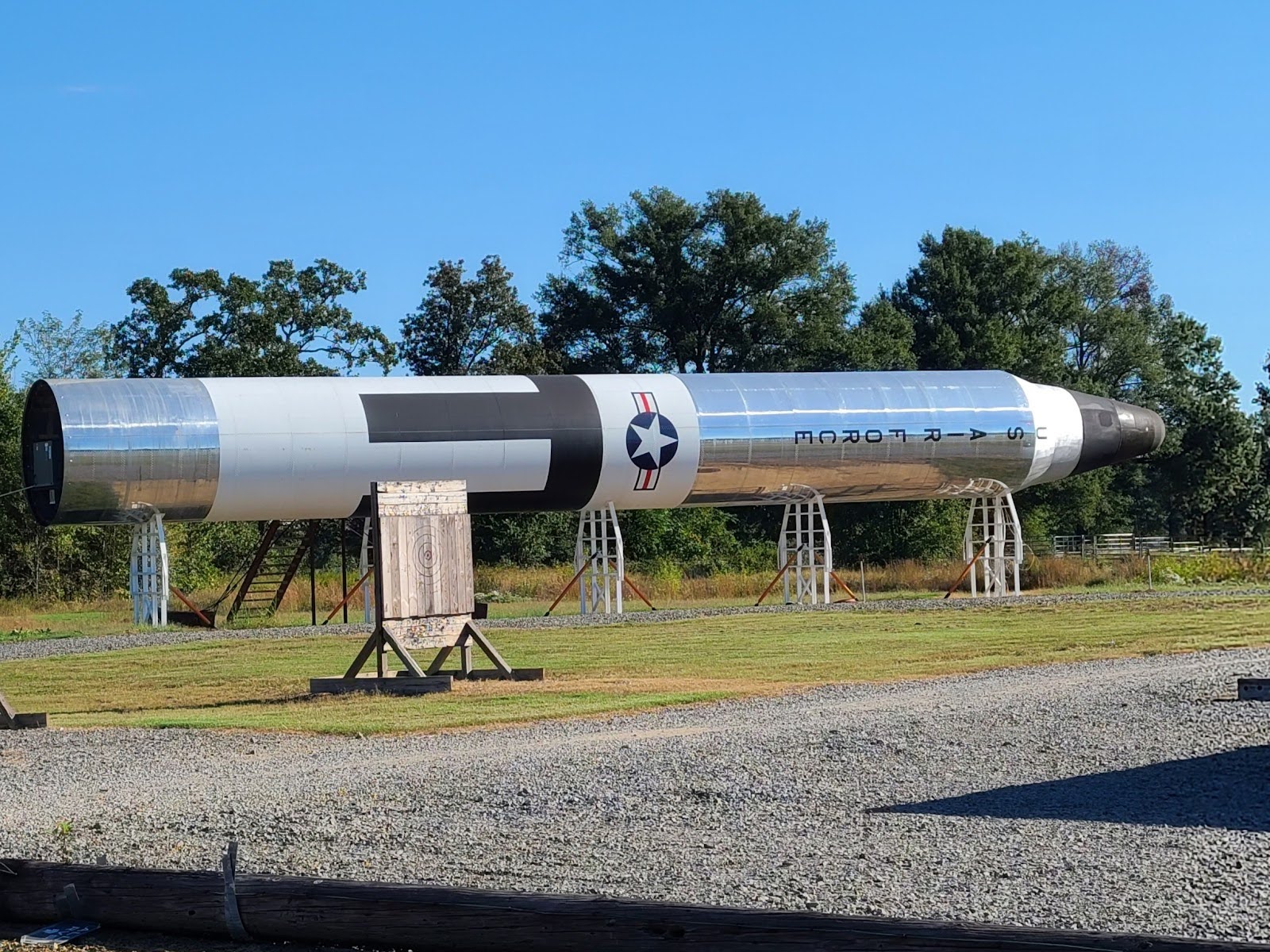 A Titan II missile, part of the second-generation ICBM program in service 1963–1987, could launch in about a minute. Weighing 340,000 pounds with a 10,000-mile range, each carried a 9-megaton warhead, roughly 600 times the power of the Hiroshima bomb—embodying the principle of peace through deterrence. Photo by Marlene Wilden/ladailypost.com
Asking the Right Questions
In the final workshop, “Asking the Right Questions: Overlooked Nuclear Stories,” summit participants discussed how to make nuclear reporting more accessible, relevant and trustworthy. Whether covering the environmental toll of uranium mining or the ethical dilemmas of artificial intelligence in warfare, journalists agreed on one goal: connecting abstract policy to lived experience.
François Diaz-Maurin, associate editor of nuclear affairs at the Bulletin of the Atomic Scientists, asked, “How do you question a decision that is based on a scientific basis that you don’t have free access to?”
An examination of human decision-making behind nuclear command, including how options are presented to the president and how biases shape those choices, was highlighted to be a shared responsibility among all participants.
Ambassador Bonnie Denise Jenkins, former undersecretary of state for arms control and international security, emphasized context and relationship-building. “I wish the relationship was a little less stilted—and that is something both sides need to work on,” Jenkins said. “These are life-and-death issues. You can’t get more serious.”
As the summit concluded, its setting carried symbolic weight—a Cold War command center once built to launch missiles in minutes, now used as a classroom for peace and inquiry. Organizers said the setting underscored the event’s central theme: in an age of rapid technological change, the strongest safeguard remains not code or machinery, but informed and courageous human judgment.