
 NMED News:
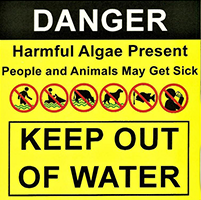
CATRON AND RIO ARRIBA counties — The New Mexico Environment Department is warning visitors to use caution at Quemado Lake, Snow Lake, and Hopewell Lake due to the formation of harmful algae blooms.
Harmful algae blooms, or HABs, occur when certain types of algae grow excessively in water, posing potential health risks to people and animals. HABs can appear blue, bright green, brown or red and may resemble scum or floating grass clippings on the water’s surface. These blooms can produce toxins that are harmful to humans and animals.
NMED is urging visitors to take the following precautions:
- Do not drink untreated surface water.
- Do not swim in algae blooms.
- Rinse fish with clean water prior to cooking thoroughly and eat only the fillet portion.
- Keep pets and livestock out of the water and rinse them with clean water if contact occurs.
- Avoid algae on the shoreline and do not let animals eat it.
- Supervise children and pets and do not let them ingest water and algae.
If you suspect an algae-related illness, call the New Mexico Poison Information Center at 800.222.1222.
For illness in animals, call 888.426.4435 or the Pet Poison Helpline at 855.764.7661.
NMED continues to actively monitor lake conditions as resources allow. The department reminds the public: if the water smells bad or looks scummy — like grass clippings floating on the surface, thick like paint, or pea-green, blue-green or brownish red in color — it’s best to stay out. When in doubt, stay out.
More information about HABs can be found on NMED’s HABs webpage, the New Mexico Department of Health’s factsheets on harmful algae blooms and human health and animal health, and the Oregon Department of Fish & Wildlife’s website on fishing during blue-green algae blooms.